Can jurists be appointed as Supreme Court Judges? | Explained
Source Entity
India Latest News: Top National Headlines Today & Breaking News | The Hindu
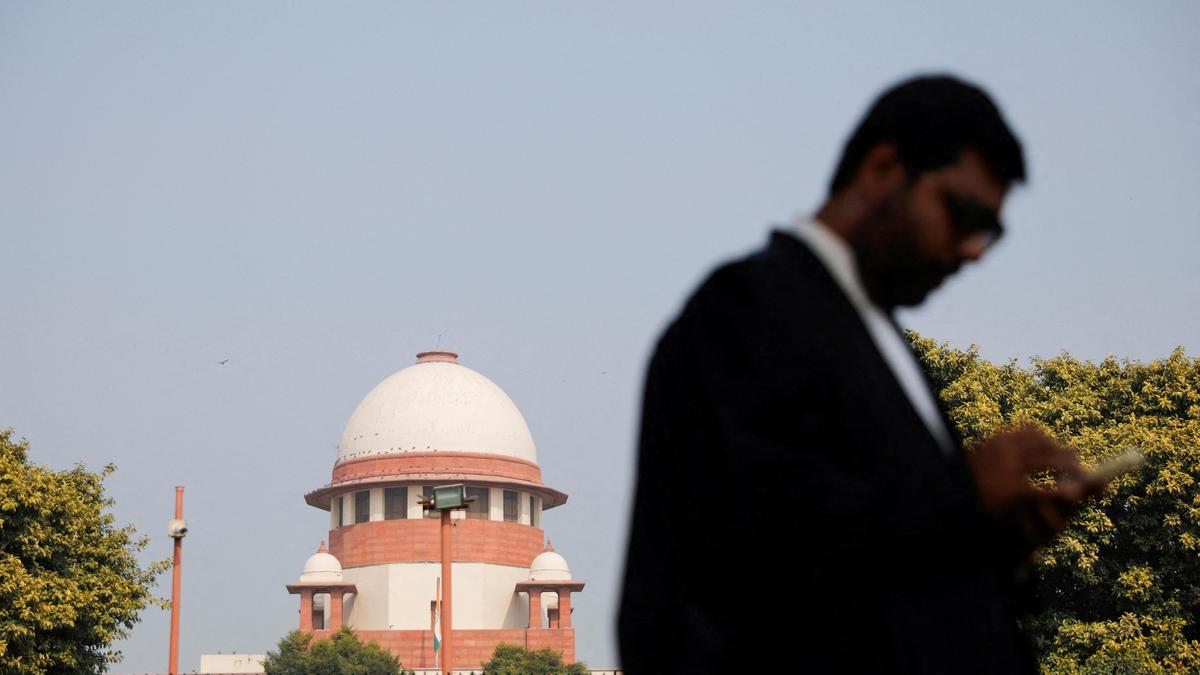
Supreme Court Justice Ujjal Bhuyan has highlighted the long-standing failure to utilize the 'distinguished jurist' provision under Article 124(3) of the Indian Constitution. This constitutional route, which allows for the appointment of legal experts to the bench, has remained dormant for over 76 years.
The Unused Mandate: Revisiting Article 124(3)
For over 76 years, the Indian Constitution has contained a provision that remains entirely untapped: the appointment of a "distinguished jurist" to the Supreme Court of India. This constitutional route, enshrined in Article 124(3), was designed to provide an alternative pathway to the bench beyond the traditional promotion of High Court judges or senior advocates. Recently, Supreme Court Judge Justice Ujjal Bhuyan brought this issue to the forefront during the 13th convocation address at the National Law University, Delhi, highlighting that this mandate has been neglected since the inception of the Constitution.
Understanding the Constitutional Framework
Article 124(3) of the Indian Constitution outlines the eligibility criteria for a person to be appointed as a Supreme Court judge. It provides three primary pathways: being a judge of a High Court for at least five years, being an advocate of a High Court for at least ten years, or being, in the opinion of the President, a “distinguished jurist.” While the first two criteria have been the standard bedrock of judicial appointments, the third remains an "unused mandate" that Justice Bhuyan argues deserves serious attention.
The Need for Judicial Diversity
Justice Bhuyan’s critique centers on the potential for institutional enrichment. By limiting the appointment pool to career judges and practicing advocates, the Supreme Court may be inadvertently narrowing its perspective. The inclusion of a distinguished jurist—someone who has spent their career in legal academia or deep theoretical research—could significantly "diversify the Bench." Such an appointment would bring a unique, scholarly viewpoint to the interpretation of complex laws, potentially bridging the gap between abstract legal theory and practical judicial application.
Historical Context and Institutional Inertia
Since the Constitution came into force, the judiciary has relied heavily on the institutional hierarchy of the High Courts to fill vacancies. This reliance has created a culture where the "distinguished jurist" pathway is viewed as theoretically possible but practically improbable. The lack of clarity or consensus on what precisely constitutes a "distinguished jurist" has likely contributed to this hesitation, as the term remains subject to the subjective opinion of the President (acting on the advice of the executive and the judiciary).
Broader Implications for Legal Academia
If the judiciary were to finally exercise this constitutional power, it would send a powerful signal to the legal academic community. It would validate the role of law professors and researchers as vital contributors to the development of law, rather than mere observers of judicial output. This could incentivize a more robust engagement between academic circles and the highest court, fostering a more intellectually rigorous environment within the Indian legal system.
Future Trends and Conclusion
As the Indian legal system continues to evolve, the demand for a more diverse and multi-faceted Supreme Court will likely grow. Justice Bhuyan’s call for reflection on this 76-year-old provision highlights a growing desire to modernize the appointment process. Whether the judiciary and the executive will move toward utilizing this provision remains to be seen, but the conversation has effectively shifted from academic curiosity to a genuine debate about constitutional intent and institutional evolution.
Verification Required?