UPSC Mains Answer Practice — GS 3: role of AI in transforming disaster management and Vulnerability of subsea cables (Week 174)
Source Entity
Nitendra Pal Singh
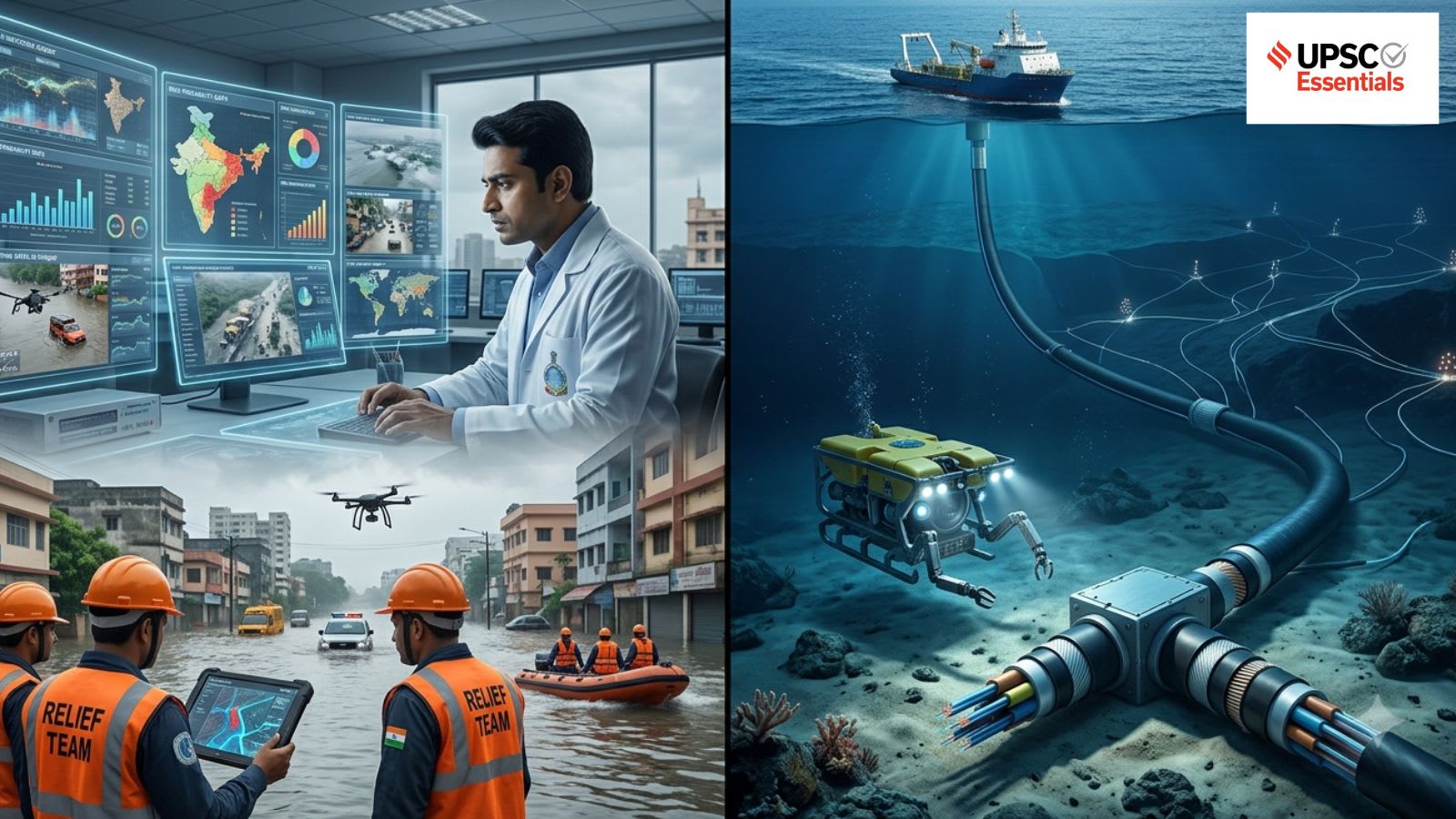
UPSC Essentials is celebrating its 3rd anniversary by offering targeted Mains answer writing practice for GS Paper 3. This week's focus centers on the intersection of AI in disaster management and the geopolitical vulnerability of subsea cables.
Enhancing Civil Services Preparation: The Role of UPSC Essentials
For aspirants of the Union Public Service Commission (UPSC) Civil Services Examination, the transition from theoretical knowledge to analytical writing is a critical hurdle. The UPSC Essentials initiative serves as a bridge, providing structured practice for Mains answer writing that spans across the General Studies (GS) syllabus. By curating topics that reflect both static concepts and dynamic current affairs, the platform ensures that candidates remain aligned with the evolving nature of the examination process.
Analyzing GS-3: AI and Disaster Management
This week’s focus on the role of Artificial Intelligence (AI) in disaster management highlights a transformative technological application. AI-driven predictive modeling can process vast datasets—ranging from meteorological patterns to geological shifts—to provide early warning systems that save lives. By integrating machine learning into disaster response, authorities can optimize resource allocation and improve real-time decision-making, shifting the paradigm from reactive disaster management to proactive resilience.
The Strategic Vulnerability of Subsea Cables
Beyond AI, the curriculum addresses the critical infrastructure concern regarding the vulnerability of subsea cables. As the backbone of the global internet, these fiber-optic networks are essential for international communications and financial markets. Their physical vulnerability to sabotage, natural disasters, or technical failure poses significant national security risks. Understanding this vulnerability is essential for civil servants who must consider the intersection of technology, geopolitical stability, and infrastructure protection.
The Value of Consistent Answer Writing
Success in the UPSC Mains is rarely the result of rote memorization; it is the product of clarity, structural integrity, and the ability to synthesize complex information under pressure. The UPSC Essentials initiative facilitates this by presenting candidates with thematic questions that demand a high level of critical thinking. Regular practice allows students to refine their arguments, improve time management, and develop a coherent writing style required for high-scoring responses.
Celebrating Three Years of Academic Support
As UPSC Essentials marks its 3rd anniversary, the initiative’s longevity underscores the importance of consistent, high-quality educational resources. The platform's commitment to evolving based on reader feedback demonstrates a responsive approach to the needs of the student community. This milestone is a testament to the trust placed in the magazine as a reliable tool for navigating the rigorous demands of the CSE syllabus.
Conclusion: Looking Ahead
By engaging with topics like AI integration and infrastructure security, aspirants are not just preparing for an exam; they are developing the analytical depth required for future governance. The synthesis of static syllabus knowledge with contemporary global challenges ensures that candidates are well-equipped to handle the complexities of modern policy-making. Continued practice remains the most effective strategy for those aiming to secure a position in the Indian civil services.