Supreme Court asks Centre to consider exempting Class 6 students from CBSE three-language policy this year
Source Entity
India Latest News: Top National Headlines Today & Breaking News | The Hindu
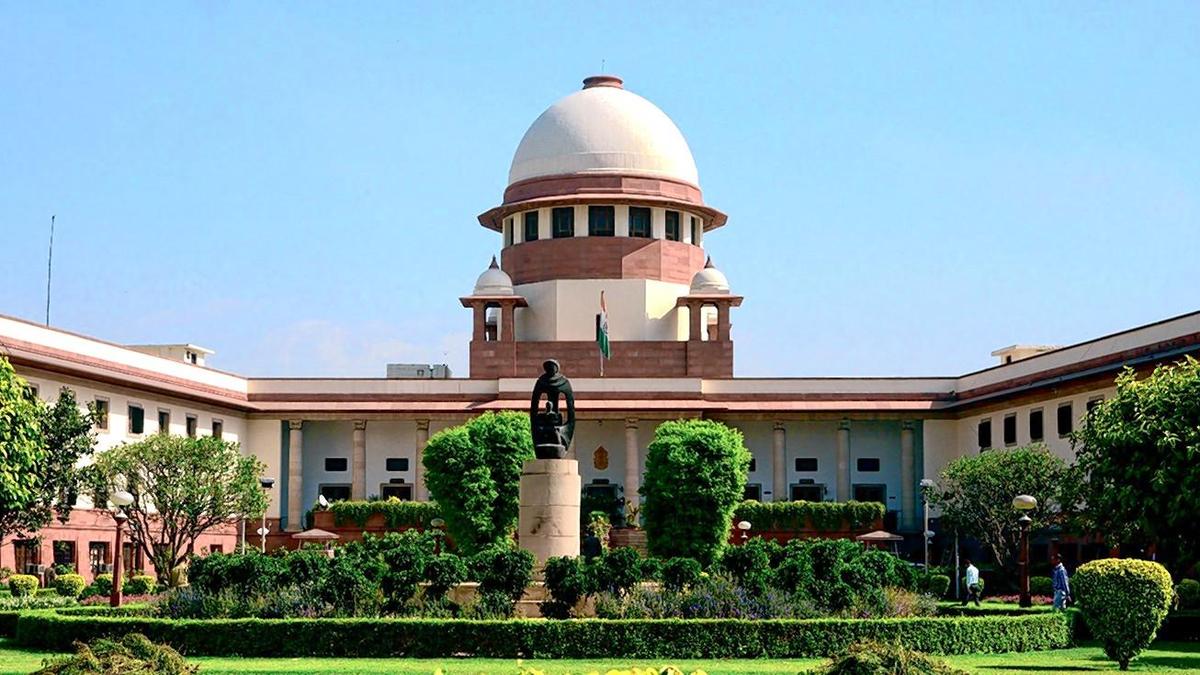
The Supreme Court of India has directed the CBSE to exempt Class 6 students from the mandatory three-language policy for the current academic year. This decision aligns Class 6 with the existing transitional relaxation already granted to students in Classes 7, 8, and 9.
Supreme Court Directs CBSE to Extend Language Policy Exemptions
In a significant legal development affecting India’s secondary education framework, the Supreme Court of India has intervened in the implementation of the Central Board of Secondary Education’s (CBSE) three-language policy. A bench led by Chief Justice of India Surya Kant, alongside Justices Joymalya Bagchi and V. Mohana, issued a directive requiring the CBSE to exempt Class 6 students from the mandate for the current academic year. This ruling effectively delays the implementation of the policy for this specific grade until the next academic cycle.
Contextualizing the Transitional Relief
The court’s decision is rooted in the principle of consistency regarding transitional relief. Previously, the CBSE had established that students currently enrolled in Classes 7, 8, and 9 would be exempt from taking a board examination in their third language upon reaching Class 10. Instead, these students are subject to internal school-based evaluations. By extending this same logic to Class 6, the court has prioritized a uniform transition period for students adjusting to the updated curriculum requirements.
Legal Arguments and Government Stance
The proceedings saw active participation from the Union government, represented by Solicitor General Tushar Mehta and Additional Solicitor General Aishwarya Bhati. While the government initially sought to implement the policy for Class 6, the Supreme Court’s intervention highlights the judiciary's role in balancing administrative policy mandates with the practical needs of the student population. The court’s request for the CBSE to reconsider its timeline reflects a cautious approach to educational reform, ensuring that abrupt changes do not unduly burden learners.
Implications for CBSE Curriculum Standards
The three-language formula is a cornerstone of India's national education policy, designed to promote linguistic diversity and cultural integration. However, the operationalization of such policies often requires phased implementation to avoid academic disruption. By mandating that the third language be assessed through internal school-based evaluation rather than a centralized board exam for these cohorts, the court is maintaining the focus on internal scholastic development rather than high-stakes standardized testing for language acquisition.
Broader Educational Trends
This ruling underscores a broader trend in Indian education policy where the judiciary acts as a mediator between systemic curriculum changes and the immediate implementation challenges faced by schools and students. As the CBSE moves toward modernizing its assessment frameworks, the reliance on internal evaluation for language subjects suggests a shift toward continuous, comprehensive evaluation (CCE) models. This approach aims to reduce the stress associated with board examinations while ensuring that students maintain proficiency in their chosen languages.
Future Outlook
Looking ahead, the delay of the three-language policy for Class 6 students provides a necessary buffer for schools to align their teaching resources and pedagogical strategies. As the CBSE prepares to integrate these requirements in the next academic year, the focus will likely remain on providing adequate support to schools to ensure that the transition is seamless. The Supreme Court’s intervention ensures that students are not subjected to sudden policy shifts, thereby fostering a more stable environment for academic growth.
Verification Required?