UPSC Mains Answer Practice — GS 2: Community participation in water governance and Legislative privileges (Week 175)
Source Entity
Nitendra Pal Singh
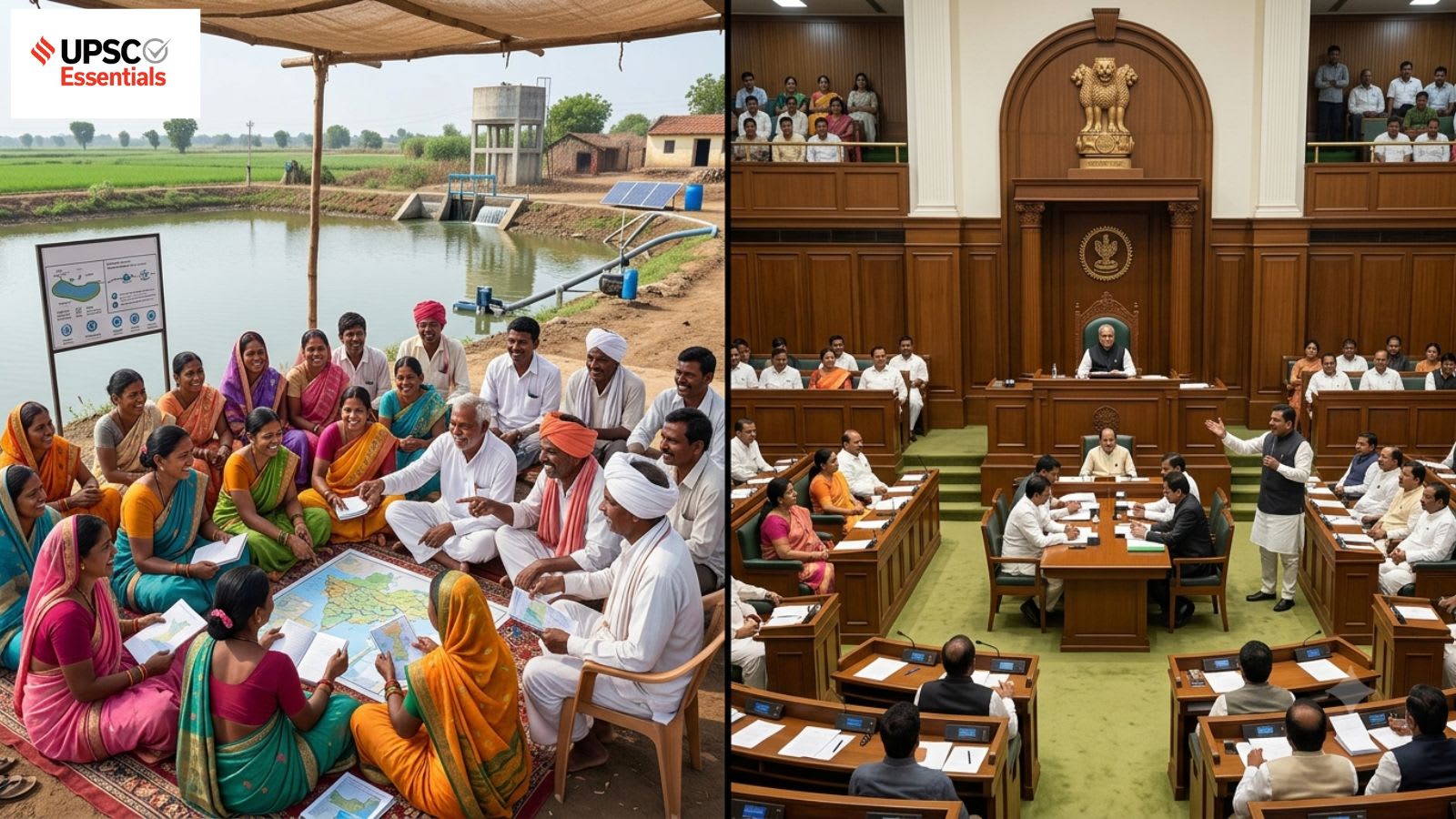
The UPSC Essentials platform has reached its third anniversary, continuing its mission to support civil services aspirants with structured answer-writing practice. The latest edition focuses on critical GS-2 topics, specifically community-led water governance and legislative privileges.
Enhancing Civil Services Preparation: The UPSC Essentials Initiative
The UPSC Essentials platform has officially marked its third anniversary, a milestone that underscores its role as a vital resource for aspirants preparing for the Civil Services Examination (CSE). Over the past three years, this initiative has provided a consistent framework for candidates to engage with both the static and dynamic components of the UPSC syllabus. By focusing on General Studies (GS) papers, the platform aims to bridge the gap between theoretical knowledge and the application-oriented demands of the Mains examination.
Focusing on Governance and Legislative Frameworks
In its most recent curriculum for Week 175, the platform has highlighted two critical themes within the GS-2 syllabus: community participation in water governance and the nuances of legislative privileges. These topics are not merely academic; they represent the core of contemporary Indian administration. Understanding how local communities can play a decisive role in resource management, particularly regarding water, is essential for sustainable development and decentralized governance, which aligns with constitutional mandates for local self-government.
The Role of Legislative Privileges in Democracy
Furthermore, the examination of legislative privileges is a cornerstone of parliamentary study. These privileges, designed to protect the independence and efficacy of the legislature, often intersect with fundamental rights and judicial oversight. By prompting aspirants to write on these subjects, the UPSC Essentials initiative encourages a deeper analytical understanding of how these legal protections function within the broader context of the Indian Constitution, ensuring that candidates are prepared to address complex governance dilemmas in their future administrative roles.
The Evolution of Answer Writing Methodology
Answer writing is widely considered the most challenging aspect of the UPSC CSE Mains. The platform’s approach of providing regular practice sessions allows candidates to refine their articulation, structure, and time management skills. By treating these questions as a 'value addition,' the initiative helps aspirants move beyond rote memorization toward a more critical, evidence-based style of writing that is required to secure high marks in the competitive examination environment.
Looking Ahead: Continuous Improvement and Community Feedback
As the platform enters its post-anniversary phase, it continues to solicit feedback from its user base to refine its content delivery. The transition into the September 2026 edition reflects a commitment to keeping material updated with current legal and administrative developments. This feedback loop between the educators and the aspirants is crucial for maintaining the relevance of study materials in an ever-evolving examination landscape.
Conclusion: Sustaining Academic Excellence
In summary, the third-anniversary milestone of UPSC Essentials highlights the importance of structured, syllabus-aligned preparation. By focusing on high-impact topics like water governance and legislative privileges, the initiative ensures that the next generation of civil servants is not only well-versed in theoretical concepts but also capable of applying those insights to real-world administrative challenges. For aspirants, consistent engagement with these practice modules remains an essential strategy for success in the rigorous UPSC selection process.