Breaking: US unleashes new attack wave on Iran; Mojtaba vows fierce retaliation as 7 troops killed
Source Entity
Latest News: Today's Latest News Headlines from India & World | Hindustan Times | Hindustan Times
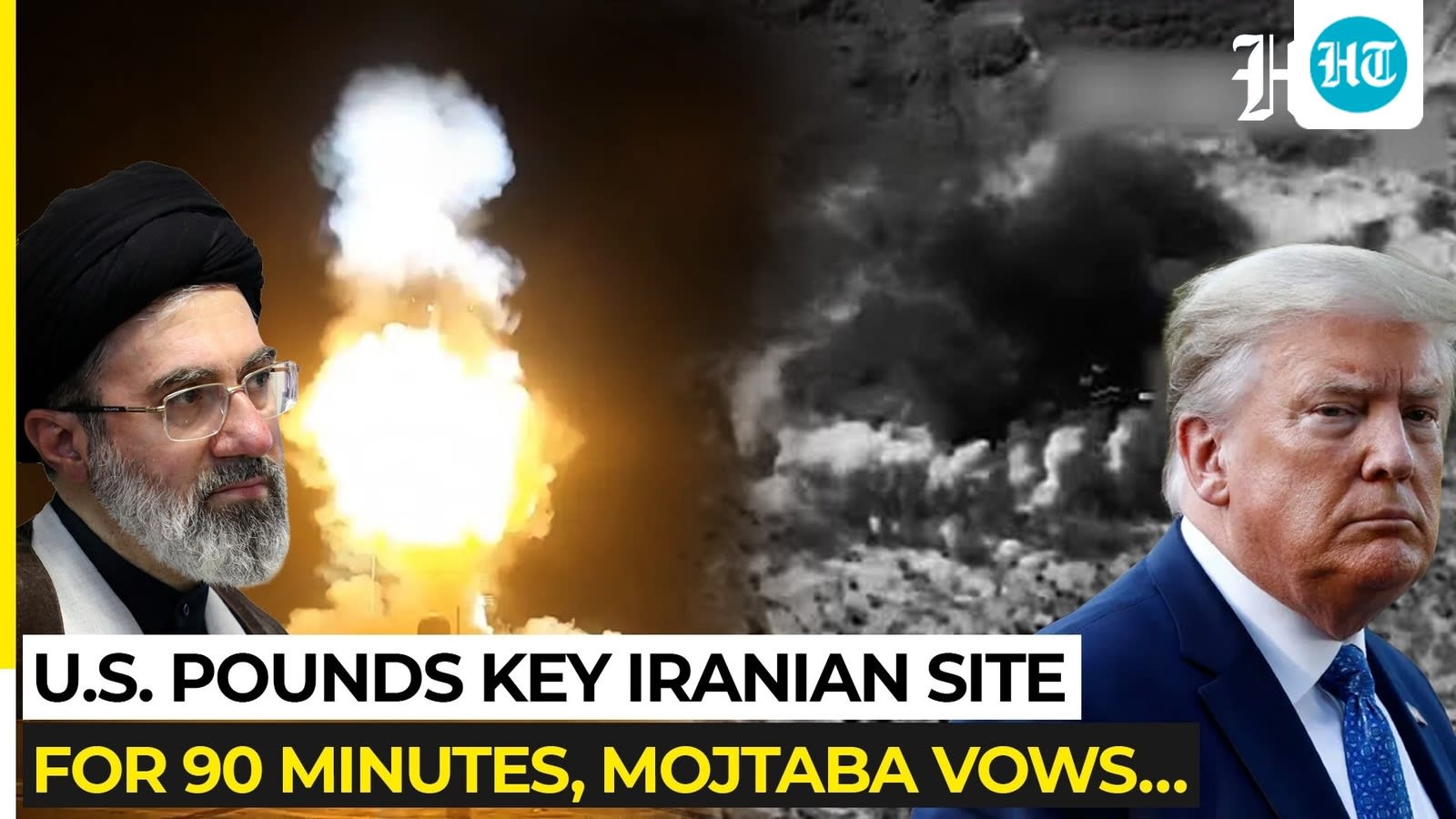
US Central Command has conducted a series of strikes against Iranian military assets, specifically targeting coastal defenses and missile infrastructure on Greater Tunb Island to protect shipping in the Strait of Hormuz. Iran reports seven soldiers killed and has vowed retaliation, while President Trump warns of potential future strikes on Iran's power grid and bridges.
Escalation in the Gulf: Analysis of US-Iran Military Confrontation
The recent wave of strikes launched by the United States against Iranian military installations marks a critical escalation in the long-standing geopolitical rivalry between Washington and Tehran. By targeting specific military capabilities, the U.S. Central Command (CENTCOM) has signaled a shift toward a more proactive containment strategy, specifically aimed at neutralizing threats to international maritime commerce. The focus on the Strait of Hormuz—one of the world's most vital oil transit chokepoints—underscores the strategic priority of ensuring the free flow of energy resources and preventing any single regional power from exerting total control over the waterway.
Strategic Degradation of A2/AD Capabilities
The precision of the strikes on coastal defense systems, radar sites, and cruise missile infrastructure suggests a deliberate effort to dismantle Iran's 'Anti-Access/Area Denial' (A2/AD) capabilities. By targeting Greater Tunb Island, the U.S. has hit a key node in Iran's surveillance and strike network. Radar sites and launch positions on these islands allow Iran to monitor and potentially engage naval traffic with little warning; their destruction significantly reduces Iran's ability to project power into the Gulf and increases the operational freedom of U.S. naval forces currently tightening their presence in the region.
The Human Cost and the Cycle of Retaliation
Beyond the strategic infrastructure, the human toll of this conflict is already manifesting. The report of seven Iranian troops killed at a southeastern barracks introduces a volatile emotional element to the conflict. In the context of Iranian military doctrine, such losses often necessitate a 'symmetric' or 'asymmetric' response to maintain domestic prestige and regional deterrence. The vow of 'fierce retaliation' from Iranian officials, including Mojtaba, suggests that the conflict may now move beyond static targets to active engagements, potentially involving proxy forces or direct strikes on U.S. assets in the region.
The Trump Doctrine: Infrastructure as a Target
President Donald Trump's warning that future attacks could target Iran's power grid and bridges represents a significant escalation in the scope of potential warfare. Moving from purely military targets (like radar sites) to dual-use infrastructure (like power grids) shifts the conflict toward a 'maximum pressure' campaign that impacts the civilian population and the state's basic functionality. This strategy is designed to create internal pressure within Iran, but it also carries the extreme risk of triggering a full-scale war, as attacks on national infrastructure are often viewed as existential threats by the Iranian leadership.
Global Economic and Regional Implications
The tightening of U.S. naval presence around Iran is a clear indicator that this is not a one-off operation but the beginning of a heightened state of alert. The global economy remains hypersensitive to any disruption in the Strait of Hormuz; even a temporary closure or a spike in insurance premiums for tankers could lead to a global surge in oil prices. This creates a precarious balance where the U.S. must project enough strength to deter Iran without accidentally triggering a conflict that would destabilize global energy markets.
Conclusion and Future Outlook
In summary, the U.S. strikes have successfully degraded key Iranian military assets, but they have also set the stage for a dangerous cycle of retaliation. The combination of troop fatalities and threats to national infrastructure has pushed the two nations to the brink of a broader confrontation. Future trends likely include an increase in 'gray zone' warfare—such as cyberattacks or maritime harassment—as both sides test the other's resolve before deciding whether to commit to a full-scale military engagement. The stability of the Middle East now hinges on whether the current escalation serves as a deterrent or a catalyst for total war.
Verification Required?