Iran’s F-15E kill forces US boots on ground: Watch America’s high-risk rescue of ‘Alpha’ & ‘Bravo’
Source Entity
Latest News: Todays Latest News Headlines from India & World | Hindustan Times | Hindustan Times
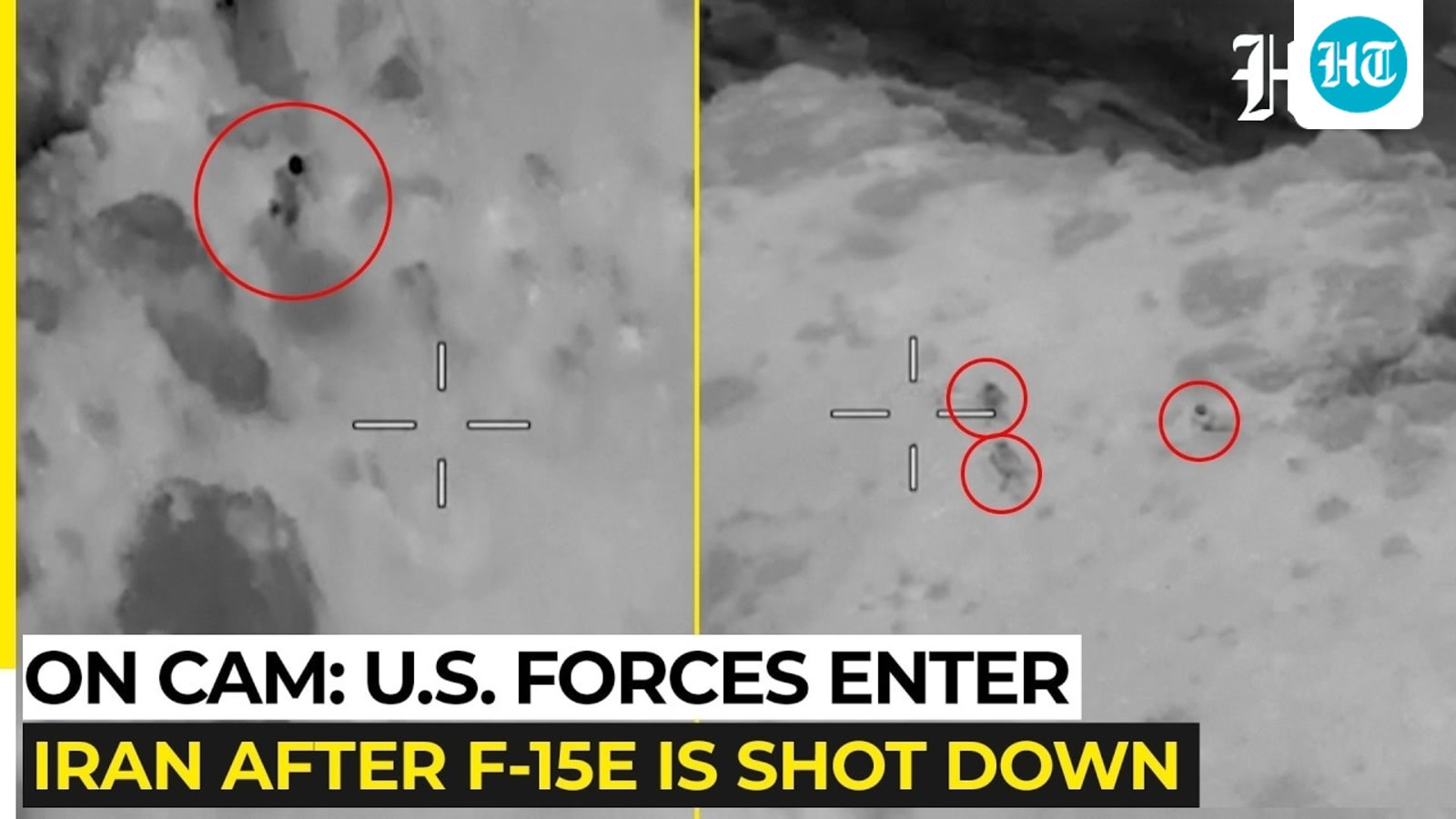
Newly declassified Pentagon footage details a high-risk rescue mission of two U.S. airmen after their F-15E Strike Eagle was downed in Iran. The operation involved 21 aircraft and successful extraction of the crew after a 50-hour evasion period.
The High-Stakes Rescue of Alpha and Bravo: An Analysis
The Incident and Immediate Aftermath
On April 3, a significant escalation in regional tensions occurred when an American F-15E Strike Eagle was shot down over Iranian territory. The incident necessitated an immediate and complex combat search-and-rescue (CSAR) operation to retrieve the two-member crew, identified by the call signs Alpha and Bravo. The pilots ejected and landed approximately five miles apart, forcing the U.S. military to execute a split-recovery strategy in a highly hostile environment.
Complexity of the Extraction
The rescue mission was a massive undertaking, characterized by the deployment of 21 U.S. aircraft to ensure air superiority and extraction capability deep within Iran. The declassified footage highlights the extreme precision of American para-rescue forces. Alpha was recovered in the initial phase of the operation, but the situation for Bravo became increasingly precarious. The injured pilot was forced to evade capture for approximately 50 hours, navigating the terrain while avoiding detection by Iranian forces, until a successful extraction occurred at sunrise on April 5.
Strategic Implications of the CSAR Mission
This event underscores the inherent risks of aerial operations in contested airspace. The decision to commit ground forces into Iranian territory for a rescue mission reflects a rigid U.S. military doctrine regarding the 'no man left behind' policy. By deploying such a significant air armada, the U.S. demonstrated both the capability and the resolve to project power deep behind enemy lines, potentially altering the regional calculus regarding engagement rules for both nations.
Operational Risks and Technological Factors
The loss of an F-15E Strike Eagle—a platform known for its advanced electronic warfare and strike capabilities—raises questions regarding the effectiveness of Iranian air defense systems. The fact that the crew was able to survive and evade for over two days suggests a high degree of training in Survival, Evasion, Resistance, and Escape (SERE) protocols. The success of the rescue, despite the injured status of Bravo, serves as a testament to the tactical proficiency of the para-rescue teams involved.
Future Trends in Regional Security
This incident is likely to have long-lasting diplomatic and military repercussions. The brazen nature of the rescue mission inside sovereign Iranian territory will likely lead to heightened security alerts and intensified rhetoric between Washington and Tehran. Moving forward, both nations may re-evaluate the risks of kinetic engagement, as the potential for rapid escalation—from an aerial loss to a full-scale ground-based rescue operation—has now been demonstrated in real-time.
Conclusion
The successful recovery of Alpha and Bravo remains a pivotal moment in recent military history. While the loss of the aircraft presents a strategic setback, the mission's success in retrieving the crew minimizes the potential political fallout that would have resulted from the capture of American service members. This event serves as a stark reminder of the fragile balance of power in the region and the extreme measures required to protect personnel in modern combat environments.
Verification Required?