US senators propose tariffs up to 100% on top Russian oil buyers
Source Entity
Latest News: Today's Latest News Headlines from India & World | Hindustan Times | Hindustan Times
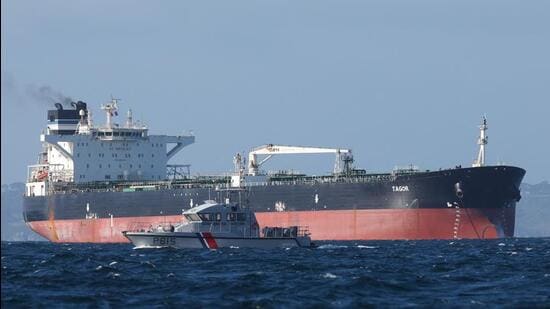
US senators have introduced a proposal to impose tariffs of up to 100% on the primary buyers of Russian oil. This legislation is a moderated version of the Sanctioning Russia Act from April 2025, which originally sought tariffs as high as 500% but failed to pass.
Escalating Economic Pressure: Analysis of Proposed Tariffs on Russian Oil Buyers
The United States Senate is intensifying its economic strategy to curtail Russia's ability to fund its military operations by shifting the focus of sanctions toward the third-party nations that facilitate the trade of Russian crude. The current proposal to impose tariffs of up to 100% on top Russian oil buyers represents a strategic pivot in US foreign policy, aiming to close the loopholes that have allowed Russian energy exports to persist despite existing G7 price caps and direct sanctions.
From 500% to 100%: A Strategic Calibration
The current bill is a significantly softened version of the 'Sanctioning Russia Act' introduced in April 2025. The previous iteration of the bill was an aggressive attempt to essentially decouple the US economy from any nation trading in Russian oil, proposing astronomical tariffs of up to 500%. However, that version failed to advance to a vote, likely due to concerns over extreme market volatility and the potential for severe diplomatic fallout with key strategic partners. By lowering the ceiling to 100%, senators are attempting a more 'pragmatic' approach—one that remains highly punitive but is more likely to garner the necessary legislative support to pass into law.
Impact on Global Trade and 'Top Buyers'
The targeting of 'top Russian oil buyers' places several major economies in a precarious position. These nations, which have increased their imports of discounted Russian Urals crude, now face a stark choice: align with US sanctions or face a doubling of the cost for their own exports entering the American market. A 100% tariff would act as a massive trade barrier, potentially erasing the profit margins that made Russian oil attractive in the first place. This creates a secondary layer of economic warfare where the US leverages its position as a primary consumer market to force global compliance.
Broader Geopolitical Implications
This legislative move signals a willingness by the US to risk friction with non-Western allies to achieve its geopolitical goals. By penalizing the buyers rather than just the seller, the US is effectively attempting to isolate Russia completely from the global energy financial system. Historically, oil sanctions have been difficult to enforce due to the 'shadow fleet' and complex ship-to-ship transfers; however, by applying tariffs to the destination countries, the US is targeting the end-user's economic interests, which is a much more direct and enforceable mechanism of pressure.
Potential Market Volatility and Future Trends
If enacted, these tariffs could lead to a significant reconfiguration of global energy flows. We may see a surge in oil redirected toward markets that are less susceptible to US trade pressure, or a forced transition where buyers rapidly seek alternatives to Russian crude to avoid the 100% tariff penalty. This could lead to short-term spikes in global oil prices as the market adjusts to the loss of efficiently routed Russian supply. In the long term, this trend suggests a move toward a 'bifurcated' global economy, where trade is dictated more by political alignment than by market efficiency.
Conclusion
The transition from the failed 500% tariff proposal to the current 100% proposal reflects a calculated effort by US senators to find a viable legislative path toward crippling Russian oil revenues. By focusing on the buyers, the US is expanding the scope of its economic arsenal. Whether this measure will succeed in drastically reducing Russian exports depends on the resilience of the target buyers and their willingness to absorb the cost of tariffs in exchange for continued access to cheap energy.
Verification Required?