The start-ups hoping to return battery making to the US
Source Entity
BBC News
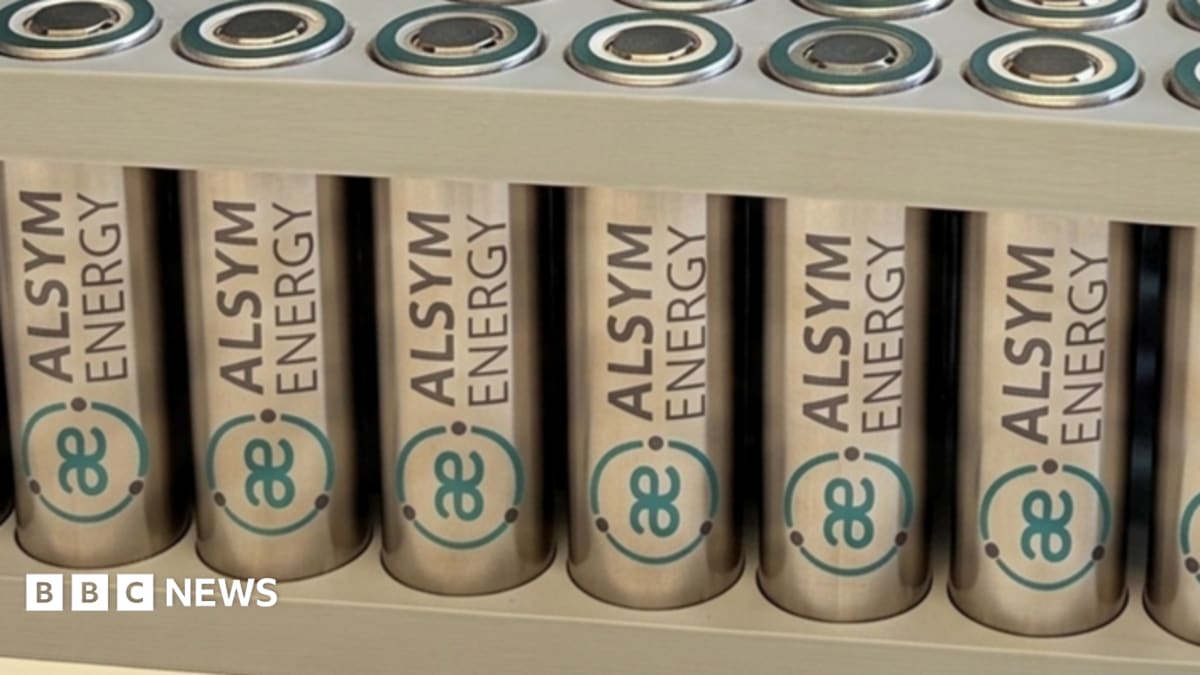
US startups are exploring sodium-ion battery technology to reduce reliance on Chinese-dominated lithium-ion supply chains. While the potential for 100% US-sourced production is significant, companies face challenges regarding design standards and intense international competition.
The Shift Toward Domestic Sodium-Ion Battery Production
As the global energy transition accelerates, the United States is increasingly focused on securing its battery supply chain. A burgeoning sector of startups is now pivoting toward sodium-ion technology, a promising alternative to the conventional lithium-ion batteries that currently power everything from consumer electronics to electric vehicles. By leveraging sodium—an abundant and inexpensive material—these companies hope to establish a manufacturing ecosystem that is entirely domestically sourced, potentially insulating the US from the geopolitical vulnerabilities inherent in the current global market.
The Strategic Advantage of Sodium
The primary appeal of sodium-ion technology lies in its independence from the lithium-ion supply chain. Currently, China exerts significant dominance over both the raw material processing and the mass manufacturing of lithium-ion batteries. Transitioning to sodium-ion offers the US a rare opportunity to bypass these established dependencies. Because sodium can be sourced locally, the prospect of creating a battery with 100% US-sourced materials is not merely an environmental goal but a cornerstone of national industrial strategy and economic security.
Technical Hurdles and Market Volatility
Despite the clear strategic benefits, the path to commercialization is fraught with technical and financial obstacles. Industry experts and engineers remain locked in a debate over which sodium-ion design represents the safest and most efficient configuration for large-scale adoption. Furthermore, the sector has seen several high-profile attempts by US companies to enter this space end in failure, underscoring the extreme difficulty of scaling battery manufacturing in a market that demands high performance and rigorous safety standards.
Navigating Global Competition
The competitive landscape is currently tilted heavily in favor of China, which leads the world in existing sodium-ion manufacturing infrastructure. Startups like Unigrid face a complex dilemma: while they aim for long-term US-based production, many currently rely on Chinese-made cells to reach the market quickly. This hybrid approach, as described by industry leaders, allows companies to remain agile by switching between cell sources, but it also highlights the uphill battle US firms face in achieving true domestic manufacturing parity.
Future Trends and Outlook
Looking ahead, the success of the US sodium-ion industry will depend on its ability to move beyond prototyping and establish high-volume, cost-effective domestic production facilities. The integration of local supply chains will be critical for long-term viability. If these startups can standardize their designs and overcome the historical trend of corporate failures, they could potentially reshape the energy storage landscape. However, they must do so while simultaneously competing against an entrenched international leader that has already achieved significant economies of scale.