Mohan Bhagwat billboard appears in Times Square ahead of RSS chief’s New York event
Source Entity
Latest News: Todays Latest News Headlines from India & World | Hindustan Times | Hindustan Times
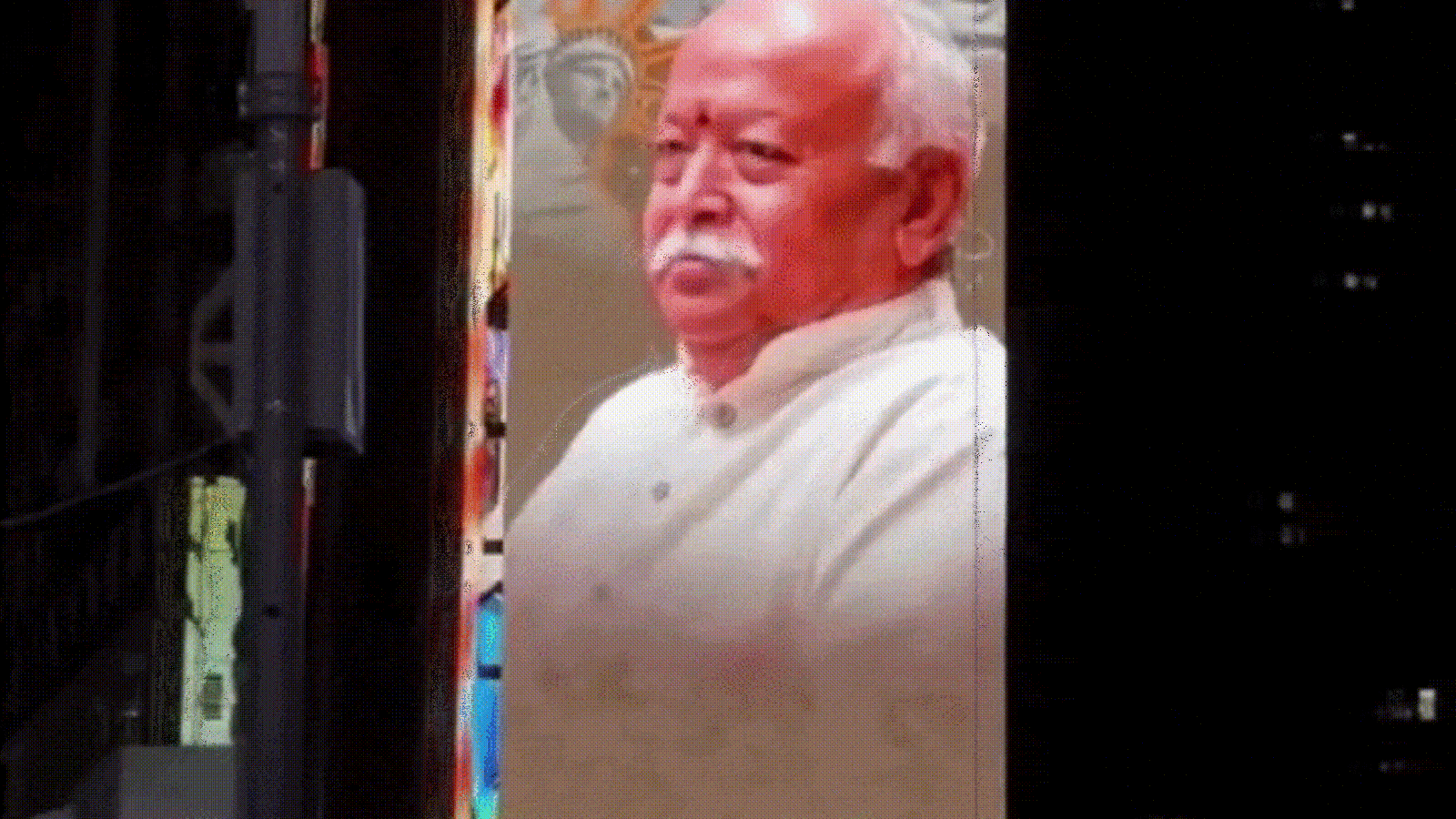
The U.S. Commission on International Religious Freedom has called for sanctions against RSS chief Mohan Bhagwat and his organization ahead of a scheduled New York event. Simultaneously, the platform X has suspended the account of the event's organizers, AHEAD Forum, amid growing public and political scrutiny.
Tensions Escalate Ahead of RSS Chief’s New York Visit
The upcoming visit of Rashtriya Swayamsevak Sangh (RSS) chief Mohan Bhagwat to New York City has become a focal point of intense diplomatic and social scrutiny. Scheduled to address an event titled the "Universal Oneness Celebration" at the Infosys Theater at Madison Square Garden on August 29, 2026, the visit has triggered significant pushback from both government-appointed oversight bodies and digital platforms.
USCIRF Calls for Targeted Sanctions
In a formal statement released on August 26, the U.S. Commission on International Religious Freedom (USCIRF), a bipartisan federal government commission, expressed deep concern regarding Bhagwat’s presence in the United States. Chair Asif Mahmood explicitly urged the U.S. government to consider implementing targeted sanctions against RSS members and Indian officials alleged to be complicit in religious freedom violations. Central to this request is a recommendation to revoke the visa currently held by Mohan Bhagwat, signaling a hardening stance from federal monitors regarding the ideological parent organization of India’s ruling Bharatiya Janata Party (BJP).
Digital Censorship and Platform Governance
Compounding the controversy surrounding the event, the social media platform X (formerly Twitter) suspended the account of the American Hindus for Engagement and Dialogue (AHEAD) forum, the primary organizer of the New York rally. While X has not publicly disclosed the specific rationale for this suspension, the move has effectively silenced one of the main digital channels promoting the gathering. AHEAD has since appealed for the restoration of its account, maintaining that the event is intended as a celebration of Raksha Bandha, yet the suspension underscores the volatile nature of the discourse surrounding this visit.
Political Atmosphere in New York
The atmosphere surrounding the event is further complicated by local political reactions. New York official Zohran Mamdani recently voiced his opposition to the RSS and the scheduled event. Despite his public stance, Mamdani acknowledged the limitations of local government, noting that the city lacks the legal jurisdiction to unilaterally cancel a private event held at a venue like Madison Square Garden. This creates a complex scenario where political rhetoric and federal policy recommendations intersect with the realities of freedom of assembly and private venue management.
Broader Implications for U.S.-India Relations
This sequence of events highlights the increasing friction between transnational ideological movements and U.S. foreign policy oversight. The involvement of the USCIRF suggests that the activities of organizations like the RSS are being subjected to rigorous scrutiny by U.S. human rights advocates. As the August 29 date approaches, the convergence of federal sanction requests, the suspension of promotional social media accounts, and local political resistance suggests that the event has transcended its original purpose to become a significant test of diplomatic and social boundaries between the two nations.
Future Trends and Conclusion
Looking ahead, this incident serves as a bellwether for how the U.S. government may handle high-profile visits from individuals associated with contentious global movements. The trend toward digital platform intervention and increased pressure from independent oversight bodies suggests that future international engagements will likely face higher hurdles regarding public relations and official scrutiny. As these tensions persist, the ability of both the organizers to navigate institutional opposition and the government to balance international relations with human rights advocacy will remain a critical area of observation.
Multiple Citing Sources
Verification Required?