Uttarakhand CM Dhami says over 25,000 women in Chamoli became ‘Lakhpati Didis’, Congress MLA praises development
Source Entity
Latest News: Today's Latest News Headlines from India & World | Hindustan Times | Hindustan Times
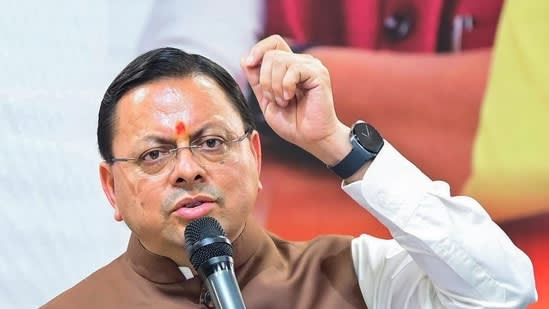
Uttarakhand Chief Minister Pushkar Singh Dhami announced that over 25,000 women in the Chamoli district have achieved financial independence, becoming 'Lakhpati Didis' through government empowerment initiatives. The development has received rare bipartisan support, with a Congress MLA praising the impact on the region.
Financial Empowerment in the Himalayas: The Rise of Lakhpati Didis in Chamoli
Chief Minister Pushkar Singh Dhami's recent announcement regarding the financial elevation of over 25,000 women in Chamoli marks a significant milestone in Uttarakhand's rural development strategy. By designating these women as 'Lakhpati Didis'—a term referring to women in Self-Help Groups (SHGs) who earn an annual income of at least ₹1 lakh—the state government is highlighting a shift from subsistence living to sustainable entrepreneurship. This achievement is particularly noteworthy given the challenging geographical terrain of Chamoli, where traditional employment opportunities are often limited by accessibility and infrastructure.
The Mechanism of Rural Empowerment
The 'Lakhpati Didi' initiative is not merely a financial target but a comprehensive approach to socio-economic upliftment. By leveraging the network of Self-Help Groups, the government provides women with access to micro-credit, vocational training, and market linkages. In the context of Chamoli, this likely involves the promotion of local handicrafts, organic farming, and the processing of mountain-specific produce. By empowering women to manage their own finances and lead small-scale enterprises, the state is effectively decentralizing economic power and fostering a culture of grassroots entrepreneurship.
Overcoming Geographical and Social Barriers
Chamoli, situated in the high altitudes of the Himalayas, has historically struggled with 'ghost villages'—settlements abandoned due to mass migration of youth seeking better opportunities in urban centers. The success of 25,000 women in achieving 'Lakhpati' status suggests a potential reversal of this trend. When women become the primary earners or significant contributors to the household income, the economic viability of staying in rural areas increases. This development suggests that the government's focus on 'Nari Shakti' (Women Power) is being utilized as a tool to combat rural depopulation and stabilize the mountain economy.
Rare Bipartisan Consensus
One of the most striking aspects of this announcement is the public praise from a Congress MLA. In the often-polarized landscape of Indian politics, the opposition's acknowledgment of a government scheme's success indicates that the impact on the ground is tangible and undeniable. This bipartisan support underscores the universal appeal of financial independence and suggests that the benefits of the SHG model are crossing political divides, focusing instead on the actual improvement of the quality of life for the marginalized residents of Uttarakhand.
Broader Implications for the State Economy
Beyond the individual success of these women, the systemic impact of 25,000 new micro-entrepreneurs in a single district is profound. Increased household income typically leads to higher spending on education and healthcare, creating a positive feedback loop for the next generation. Furthermore, as these women scale their businesses, they create local employment for others, further diversifying the economy of Chamoli away from a sole reliance on seasonal tourism or government subsidies.
Future Outlook and Scalability
Looking ahead, the success in Chamoli serves as a blueprint for other hilly districts across Uttarakhand. If the state can replicate this model in regions like Pithoragarh or Uttarkashi, it could lead to a systemic shift in the state's GDP contribution from rural areas. The next challenge for the administration will be ensuring the sustainability of these incomes by expanding market reach through digital platforms and e-commerce, allowing the products of Chamoli's 'Lakhpati Didis' to reach a global audience.
Conclusion
The transformation of 25,000 women in Chamoli into financially independent entrepreneurs is a testament to the efficacy of targeted rural interventions. By combining financial literacy with institutional support, the Uttarakhand government is not only empowering women but is also strengthening the socio-economic fabric of the Himalayan region. The rare political synergy surrounding this achievement highlights the critical importance of grassroots economic development in ensuring long-term regional stability.
Verification Required?