Full Vande Mataram rendition triggers fresh Congress-BJP clash
Source Entity
TNN
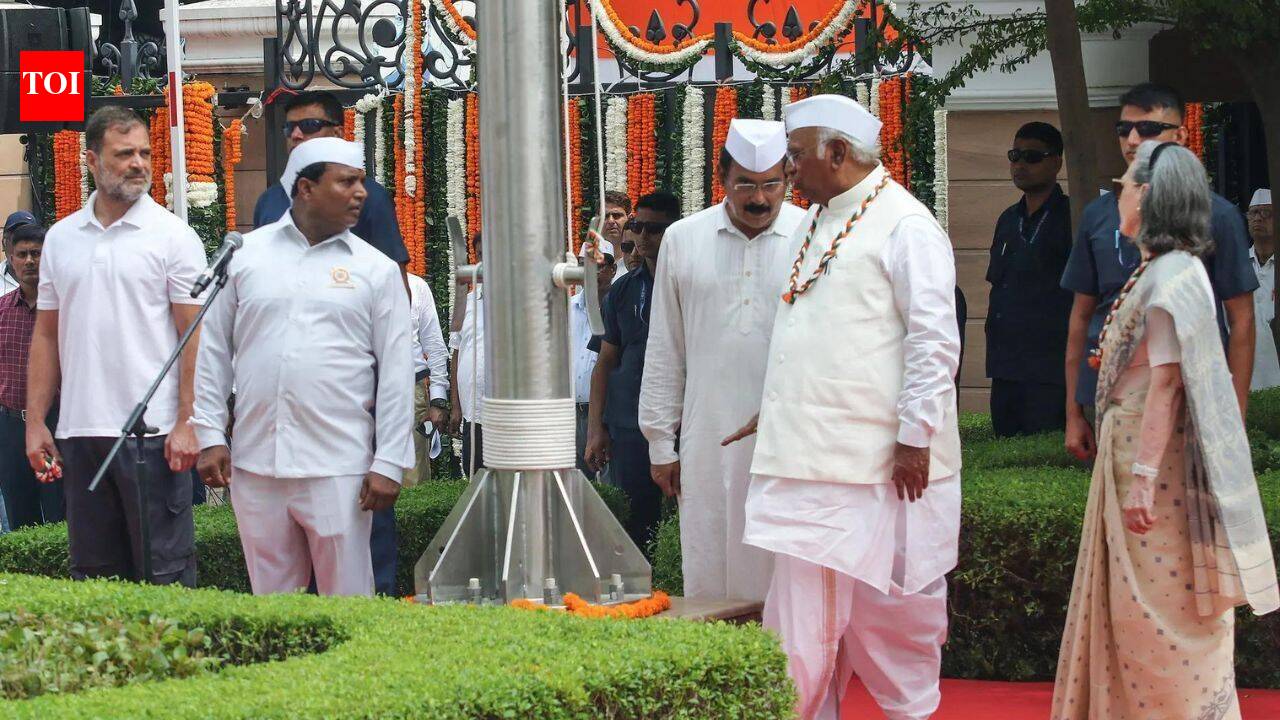
Prime Minister Narendra Modi and President Droupadi Murmu led tributes to the late Atal Bihari Vajpayee on his death anniversary. Meanwhile, a political dispute has emerged between the BJP and Congress regarding the rendition of Vande Mataram.
Honoring a Statesman: The Legacy of Atal Bihari Vajpayee
On the anniversary of his passing, the Indian political landscape paused to commemorate the life and contributions of former Prime Minister Atal Bihari Vajpayee. President Droupadi Murmu, Prime Minister Narendra Modi, and various senior BJP leaders gathered to pay their respects, underscoring the enduring influence of the leader who was the first from the Bharatiya Janata Party to hold the nation's highest executive office. Born in Gwalior in 1924, Vajpayee’s tenure is often characterized by significant strides in infrastructure, economic liberalization, and the strengthening of India’s global diplomatic standing.
Leadership and Visionary Governance
Prime Minister Modi’s tribute highlighted Vajpayee not merely as a political figure, but as an extraordinary statesman whose vision continues to inform contemporary policy. By emphasizing Vajpayee's dedication to "good governance and public welfare," the current administration seeks to anchor its developmental agenda in the historical successes of the Vajpayee era. This continuity is vital for the BJP, as it reinforces the party’s ideological lineage and its commitment to the foundational principles established by its most prominent early leader.
The Intersection of Memory and Political Friction
While the nation reflected on Vajpayee’s legacy, the political climate remained charged. Concurrent reports indicate that a fresh clash has erupted between the Congress and the BJP, centered on the full rendition of the national song, Vande Mataram. This incident serves as a reminder that even during moments of national remembrance, the deep-seated ideological differences between India’s primary political parties often surface, turning symbolic gestures into battlegrounds for national identity.
Historical Context and Symbolic Politics
Symbolism plays a critical role in Indian politics, where the interpretation of national songs, anniversaries, and historical figures is frequently contested. The disagreement over the Vande Mataram rendition reflects a broader, ongoing debate regarding the definition of nationalism and cultural adherence. Such clashes are rarely isolated; they are indicative of the wider polarization that characterizes the discourse between the ruling coalition and the opposition, where every ceremonial act is scrutinized for its political signaling.
Implications for Future Political Discourse
As the BJP continues to invoke the memory of Vajpayee to inspire future generations, the opposition's focus on issues like the Vande Mataram controversy suggests that the upcoming political cycles will remain intense. The ability of parties to balance respectful commemoration of past leaders with aggressive legislative and ideological debate will likely define the trajectory of the country’s parliamentary proceedings. The juxtaposition of these two events—a solemn tribute to a past leader and an active dispute over national symbols—perfectly encapsulates the duality of modern Indian political life.
Multiple Citing Sources