Van Gogh painting sells for record $190.4m after row over its Nazi history
Source Entity
BBC News
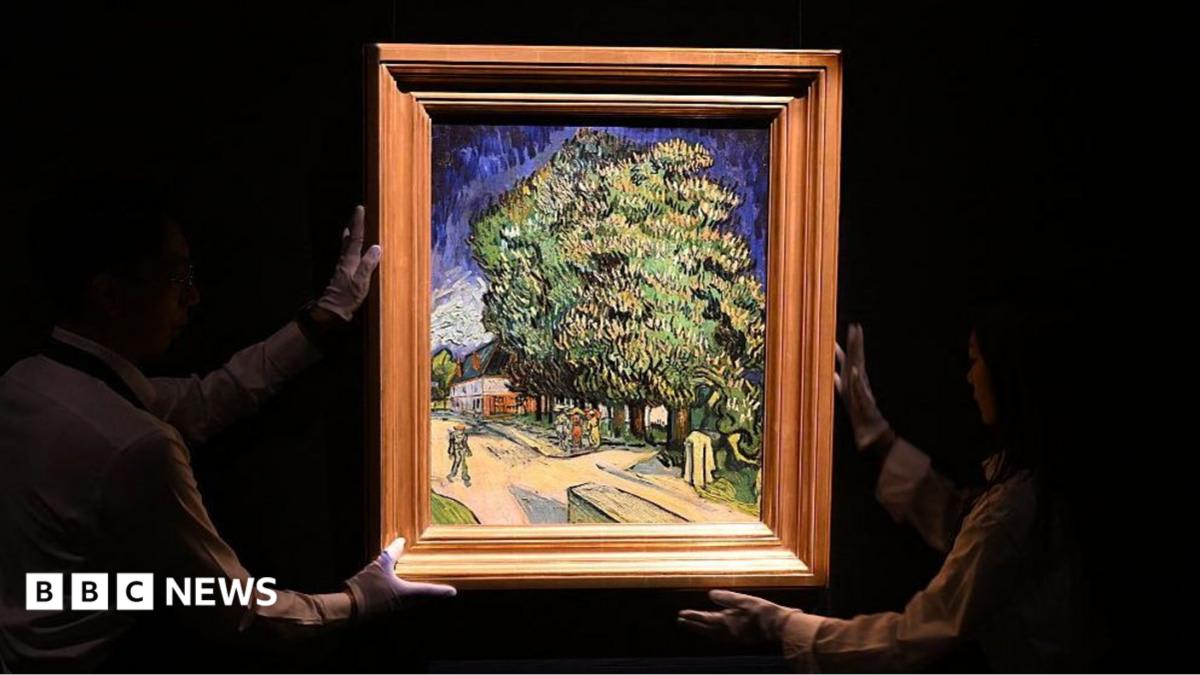
Vincent van Gogh's 1890 painting, 'Châtaigniers en fleurs', has set a new record price of $190.4 million at a Sotheby's auction. The sale proceeded after a legal dispute regarding the painting's potential Nazi-era provenance was settled.
A Record-Breaking Masterpiece
Vincent van Gogh’s 1890 masterpiece, Châtaigniers en fleurs (Chestnut Trees in Blossom), has shattered financial benchmarks for the artist, fetching a staggering $190.4 million at a recent Sotheby’s evening auction in New York. Painted during the final two months of the artist’s life, the work represents the pinnacle of his post-impressionist output. This sale not only underscores the enduring market demand for Van Gogh’s late-career works but also highlights the complex intersection of high-stakes art investment and historical accountability.
Navigating Historical Provenance
The road to this record-breaking sale was fraught with controversy regarding the painting's provenance. The work was part of the Blaquier-Arrieta Collection, which had held the piece for over half a century. However, the auction was preceded by a legal dispute involving the heirs of Samuel Fischer, a prominent German publisher who had originally acquired the painting in Paris in 1909. Representatives for the Fischer heirs raised critical concerns that the painting might have been sold under duress during the rise of the Nazi regime in the 1930s.
The Resolution of a Nazi-Era Claim
Before the gavel fell, Sotheby's intervened to resolve the conflict between the Blaquier-Arrieta family and the Fischer heirs. The claim centered on the fact that the painting was sold by the Fischer family in 1936, a period marked by the systemic persecution of Jewish individuals and the seizure or forced liquidation of assets under Nazi pressure. By settling the dispute ahead of the sale, the auction house managed to mitigate legal risks that often loom over pieces with ambiguous mid-20th-century histories, allowing the auction to proceed with a sense of restored legitimacy.
Market Dynamics and Valuation
Prior to the sale, market analysts had estimated the painting’s value at approximately $180 million. The final price of $190.4 million reflects a significant premium, driven by the scarcity of high-quality Van Gogh works in the private market. The auction house’s ability to secure a settlement suggests that transparency and the thorough vetting of provenance are becoming increasingly vital components of the modern art trade, particularly for works that changed hands in Europe during the pre-World War Two era.
Broader Implications for the Art World
The successful auction of Châtaigniers en fleurs serves as a case study for how auction houses handle restitution claims and historical grievances. As more families seek to recover assets lost during the Nazi era, institutions are under greater pressure to perform rigorous due diligence. This transaction proves that even when historical shadows exist, proactive legal negotiation can clear the path for market transactions, though it also signals that provenance research will remain a permanent, high-priority fixture in the world of fine art collection.
Future Trends in High-End Auctions
Looking forward, the record-setting nature of this sale reinforces the status of Van Gogh as a blue-chip asset in the global art market. Investors continue to view rare, historically significant works as reliable stores of wealth. However, as the industry evolves, one can expect increased scrutiny on the history of such pieces, with collectors demanding airtight documentation to avoid future litigation. The resolution of the Fischer case provides a blueprint for how future disputes might be handled, balancing the rights of original owners with the stability of the international art market.
Multiple Citing Sources