In A First, Vijay Leaves Chief Minister's Seat, Sits With Ministers In Assembly
Source Entity
NDTV News Search Records Found 1000
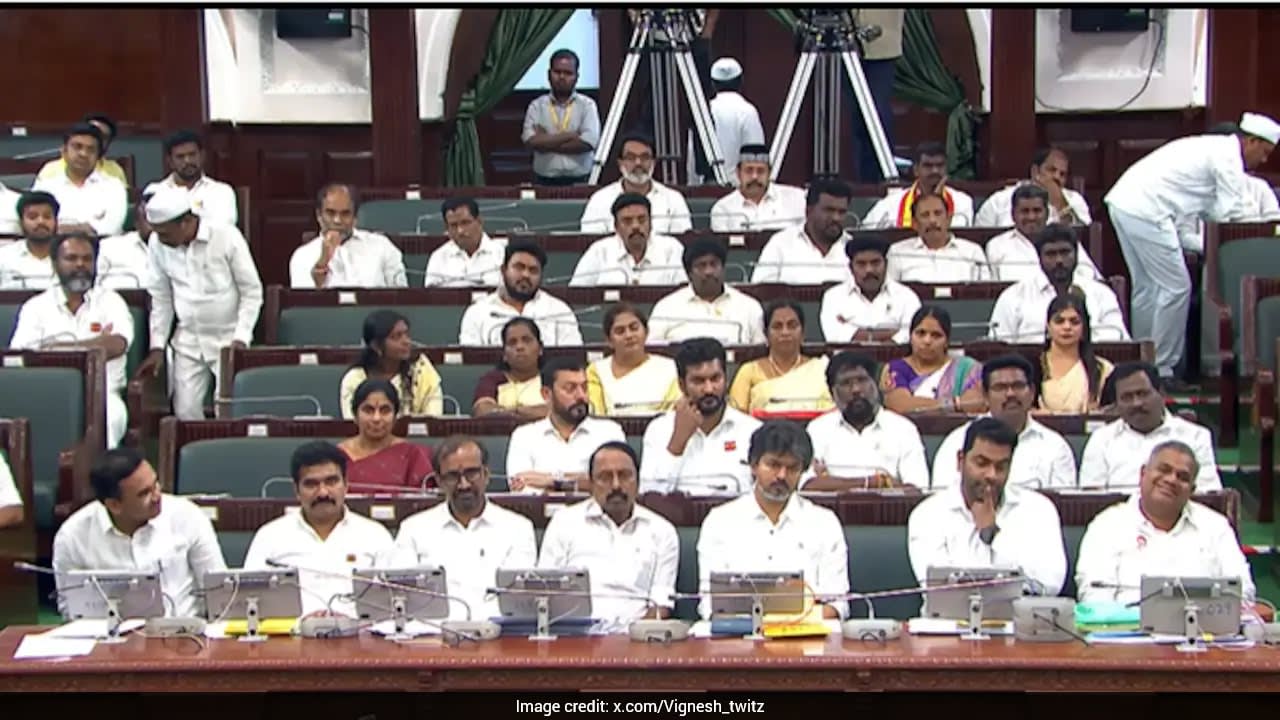
Actor-turned-politician Vijay has made a notable departure from political tradition by opting to sit among his ministers in the Assembly. This unprecedented gesture challenges long-standing hierarchical norms in legislative seating protocols.
A Shift in Legislative Protocol
In a significant departure from established political decorum, the actor-turned-politician Vijay has captured public attention by choosing to sit among his ministers in the Assembly rather than occupying the traditional seat reserved for the Chief Minister. This move, which marks the first time such an act has been recorded in the legislative body's history, signals a deliberate attempt to project a different style of governance that prioritizes accessibility and collective participation over traditional, hierarchical displays of power.
Breaking the Protocol
The historical precedent for legislative seating has always been rigid, with the Chief Minister’s seat acting as a symbolic focal point of authority. By vacating this designated position to sit with the cabinet, Vijay is effectively dismantling a physical manifestation of political hierarchy. This decision is not merely a logistical change; it is a profound symbolic statement that challenges the status quo, suggesting a governance model that emphasizes horizontal collaboration rather than top-down executive command.
The Symbolism of Proximity
Political experts suggest that this move is deeply rooted in the need to redefine the relationship between the executive leadership and the cabinet. In the past, the physical distance between the Chief Minister's seat and the ministerial benches served as a constant reminder of the power gap. By closing this physical distance, the current administration may be attempting to signal a shift toward a more inclusive, team-oriented legislative process, where the leader is physically integrated with the decision-making body.
Public Perception and Political Branding
For a figure like Vijay, whose transition from the entertainment industry to the political arena has been closely watched, such gestures are essential for building a distinct political brand. By eschewing the traditional trappings of the Chief Minister's office, he is crafting a narrative of humility and service. This strategy serves to humanize the political figurehead, potentially resonating with a demographic that is increasingly skeptical of traditional, distant political elites.
Broader Implications for Governance
While this action is a departure from historical norms, its long-term impact on the actual functioning of the assembly remains to be seen. If this becomes a trend, it could lead to more dynamic cabinet meetings and a shift in how legislative debates are conducted. However, critics may argue that such gestures, while performative, do not address the systemic challenges of governance. The true test will be whether this physical proximity translates into more effective, collaborative policy-making in the future.
Future Trends in Political Performance
Looking ahead, we may see other political figures adopting similar unconventional behaviors to distinguish themselves from predecessors. As the nature of political communication evolves, the 'performative' aspect of governance—how leaders sit, speak, and interact in public spaces—is becoming just as important as the legislation itself. Vijay's choice to sit with his ministers may set a new benchmark for what the public expects from a modern, approachable leader.
Verification Required?