Trump Helicopter Came Close To Jet Due To Radio Failure: Report
Source Entity
NDTV News Search Records Found 1000
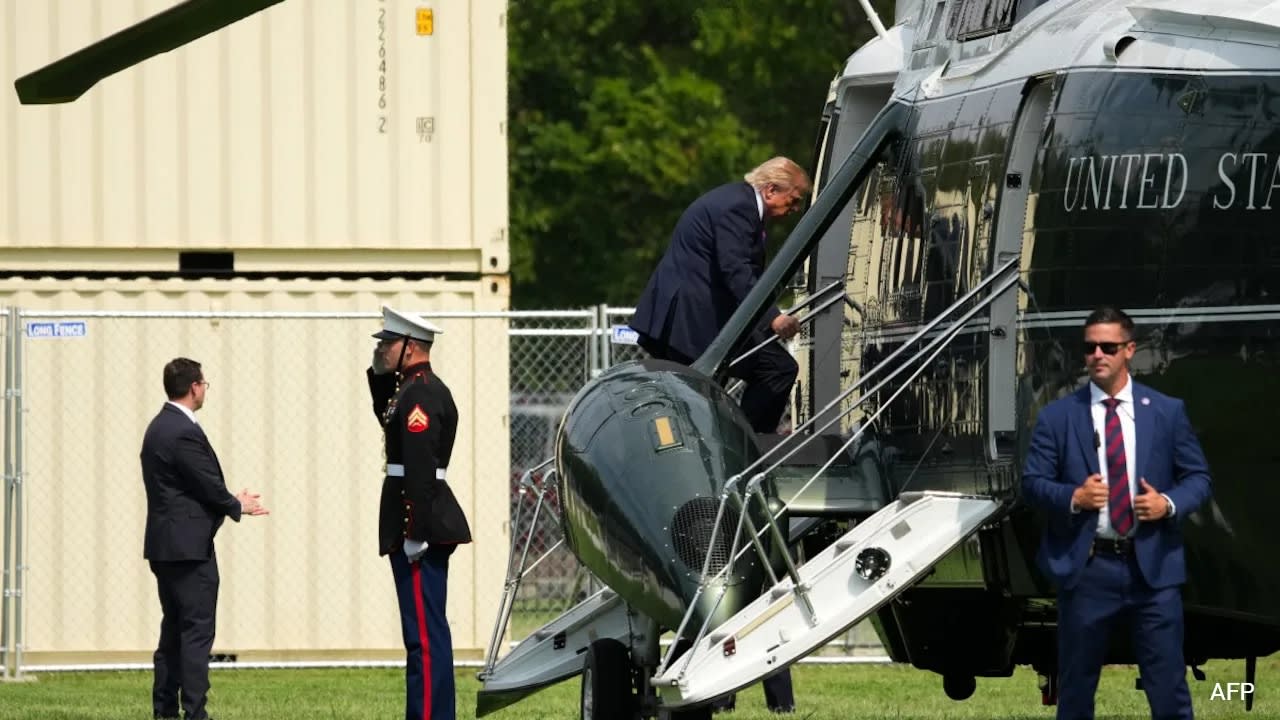
A preliminary NTSB report reveals that radio communication failures, potentially caused by White House construction, led to a near-miss between Marine One and an Envoy Air jet. While the aircraft came within 0.8 miles horizontally, officials confirmed that Donald Trump was never in immediate danger.
Anatomy of an Aviation Near-Miss
On August 4, a significant aviation incident involving Marine One, the helicopter transporting then-President Donald Trump, and an Envoy Air passenger jet occurred near Reagan National Airport. According to a preliminary report by the National Transportation Safety Board (NTSB), the incident was precipitated by a critical breakdown in communication between the helicopter crew and air traffic control towers.
The Role of Infrastructure and Radio Interference
Investigators have identified that ongoing construction at the White House may have played a pivotal role in this technical failure. The physical environment surrounding the executive residence is dense with sensitive communications infrastructure, and it appears that structural work or associated equipment may have disrupted the radio signals of Marine One. This interference prevented the crucial three-minute pre-departure warning from reaching air traffic controllers, creating a dangerous informational vacuum.
Operational Failures and Air Traffic Control
Because the air traffic controllers did not receive the mandatory warning signal, they proceeded with standard operations, clearing the Envoy Air passenger jet for takeoff. This lack of situational awareness created a convergence of flight paths that brought the two aircraft into an alarming proximity. The NTSB report specifies that the aircraft came within 0.8 miles horizontally and 700 feet vertically of each other, a distance that constitutes a serious breach of standard separation protocols.
Safety Protocols and Risk Assessment
Despite the alarming proximity of the two aircraft, government officials have emphasized that Donald Trump was never in actual, direct danger during the event. This distinction is vital in aviation safety; while the separation standards were violated, the flight paths did not result in a collision or an immediate threat to the structural integrity of either aircraft. However, the incident serves as a stark reminder of the complexities involved in managing airspace within the high-security environment of the nation's capital.
Broader Implications for Aviation Security
This incident highlights the fragility of air traffic management when external variables—such as urban construction—interfere with established communication channels. The reliance on clear, uninterrupted radio frequencies for VIP transport is absolute, and any degradation of that capability poses risks to both the high-profile passengers and the general public utilizing commercial aviation.
Conclusion and Future Outlook
Moving forward, the NTSB's findings will likely necessitate a review of how proximity to major construction projects affects the secure communication systems used by the executive branch. Ensuring that such infrastructure projects do not compromise the radio-frequency environment surrounding the White House is essential to preventing similar near-misses in the future. The event underscores the necessity for redundant communication systems that remain impervious to localized environmental interference.
Multiple Citing Sources
Verification Required?