Indian-American entrepreneur laments report on fall in visas to international students: 'Hurting the USA'
Source Entity
Latest News: Today's Latest News Headlines from India & World | Hindustan Times | Hindustan Times
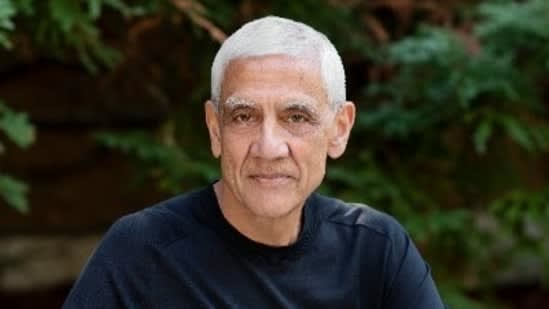
Entrepreneur Vinod Khosla warns that a sharp decline in U.S. student visas threatens American innovation and economic competitiveness. He criticizes policies that discourage international talent, citing a recent Hoover Institution report showing a one-third drop in visa issuances.
The Erosion of American Talent Pipelines
Indian-American billionaire and entrepreneur Vinod Khosla has sounded a stark alarm regarding the trajectory of American immigration policy, specifically focusing on the recent one-third decline in U.S. student visas. By highlighting this data, sourced from a recent Hoover Institution report, Khosla argues that the United States is systematically undermining its own competitive advantage. For decades, the U.S. has served as the global epicenter for higher education, drawing the brightest minds to its institutions, many of whom transition into the workforce to drive the nation's technological and economic engine.
The Mechanics of the Decline
The decline in student visas is not merely a statistical anomaly but reflects a tightening regulatory environment. The Hoover Institution report specifically points to the finalized changes to the Duration of Status (D/S) rule as a primary catalyst for this downward trend. By introducing more rigid constraints on how long international students can remain in the country, the U.S. creates an atmosphere of uncertainty. This volatility discourages prospective students who are weighing the long-term viability of their educational and professional paths against the unpredictable nature of visa renewals.
Innovation and Long-term Competitiveness
Khosla’s critique centers on the concept of 'human capital' as a finite but essential resource. Historically, the U.S. tech sector has been built on the contributions of immigrants who arrived via the student-to-workforce pipeline. When the flow of international talent is restricted, the immediate impact is felt in university laboratories and research departments, but the long-term consequences manifest as a stagnation in domestic innovation. If the brightest global talent is incentivized to pursue education in competing markets, the U.S. risks losing its edge in critical sectors like AI, biotechnology, and clean energy.
Policy Implications and Structural Risks
The broader implications of these visa trends suggest a misalignment between national security concerns and economic pragmatism. While immigration policy often fluctuates based on political cycles, the current contraction appears to be creating a permanent structural shift. If the D/S rule changes remain in place, they may institutionalize a lower baseline for international enrollment, effectively closing doors that were once considered the primary gateway for global talent to integrate into the American economy.
Future Outlook: A Call for Reform
Looking ahead, the debate sparked by Khosla underscores a growing tension between protectionist immigration sentiments and the needs of a globalized innovation economy. If the U.S. intends to maintain its leadership in high-tech industries, it must reconcile its regulatory framework with the reality of international competition. Failure to do so may result in a 'brain drain' scenario, where the U.S. no longer serves as the default destination for the world’s most ambitious innovators, ultimately ceding its competitive advantage to nations more eager to attract and retain global talent.
Verification Required?