Vivo’s X500 Pro Max has 17 stops of dynamic range and 4K240 slo-mo
Source Entity
Dominic Preston
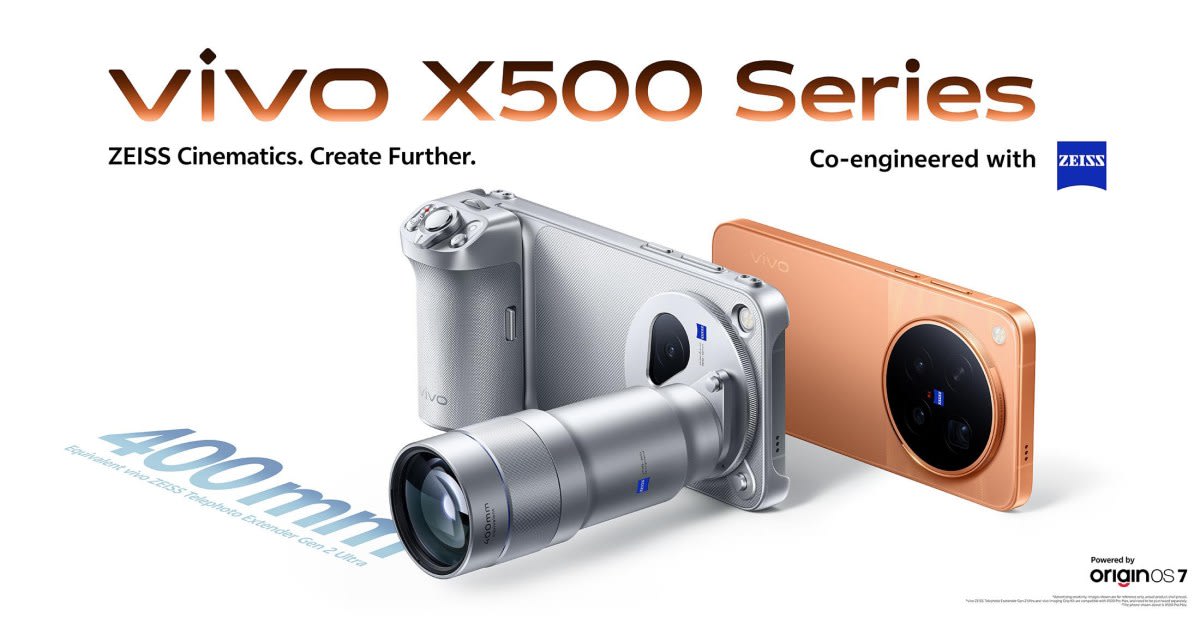
Vivo has launched the X500 Pro Max in China, featuring the innovative Sony Lytia L910 sensor. This new flagship device pushes mobile photography boundaries with 17 stops of dynamic range and 4K240 slow-motion recording.
Vivo Redefines Mobile Imaging with the X500 Pro Max
Vivo has officially introduced its latest flagship series in China, with the X500 Pro Max emerging as a significant new tier in its high-end smartphone lineup. Consistent with the brand's long-standing strategy, the primary focus of this release is a substantial leap forward in mobile photography and videography performance. By integrating cutting-edge hardware from key industry partners, Vivo aims to solidify its position as a leader in the competitive smartphone imaging market.
The Power of Sony's Lytia L910 Sensor
At the core of the X500 Pro Max's imaging capabilities is the debut of Sony’s Lytia L910 image sensor. This 50-megapixel, 1/1.28-inch-type sensor represents a technical milestone for the industry, as it is the first to utilize LOFIC (Lateral Overflow Integration Capacitor) technology. This architectural shift is pivotal for mobile sensors, as it addresses the historical limitations of pixel capacity in compact smartphone camera hardware, allowing for significantly better light management.
Achieving 17 Stops of Dynamic Range
The implementation of LOFIC technology allows the X500 Pro Max to deliver what Vivo describes as "true 17 EV ultra-high dynamic range." By surpassing the 16.5-stop threshold previously seen in the industry, the device is capable of capturing a wider gamut of highlights and shadows simultaneously. This capability is essential for high-contrast scenes, ensuring that users can capture professional-grade detail that was previously reserved for dedicated mirrorless or cinema cameras.
High-Performance Silicon and Video Capabilities
Beyond still photography, the device leverages new silicon from MediaTek to enable advanced video features, most notably 4K240 slow-motion recording. This high frame rate at a 4K resolution provides videographers with unprecedented flexibility in post-production. The synergy between the MediaTek processor and the Sony sensor demonstrates a deep level of hardware-software integration, allowing for the processing power required to handle such intense data throughput.
Market Implications and Future Trends
The launch of the X500 Pro Max signifies a broader industry trend where smartphone manufacturers are moving beyond simple megapixel counts toward improving the fundamental physics of light capture. As brands continue to collaborate with sensor giants like Sony, we can expect the gap between professional cameras and mobile devices to continue narrowing. The X500 Pro Max serves as a benchmark for what consumers should expect from future flagship devices, particularly regarding extreme dynamic range and high-fidelity video recording.
Conclusion
By prioritizing sensor technology like LOFIC and high-performance chipsets, Vivo has positioned the X500 Pro Max as a formidable tool for mobile creators. As this technology matures and potentially trickles down to more accessible price points, the standard for mobile photography will undoubtedly be elevated, marking a new era of high-dynamic-range imaging in our pockets.