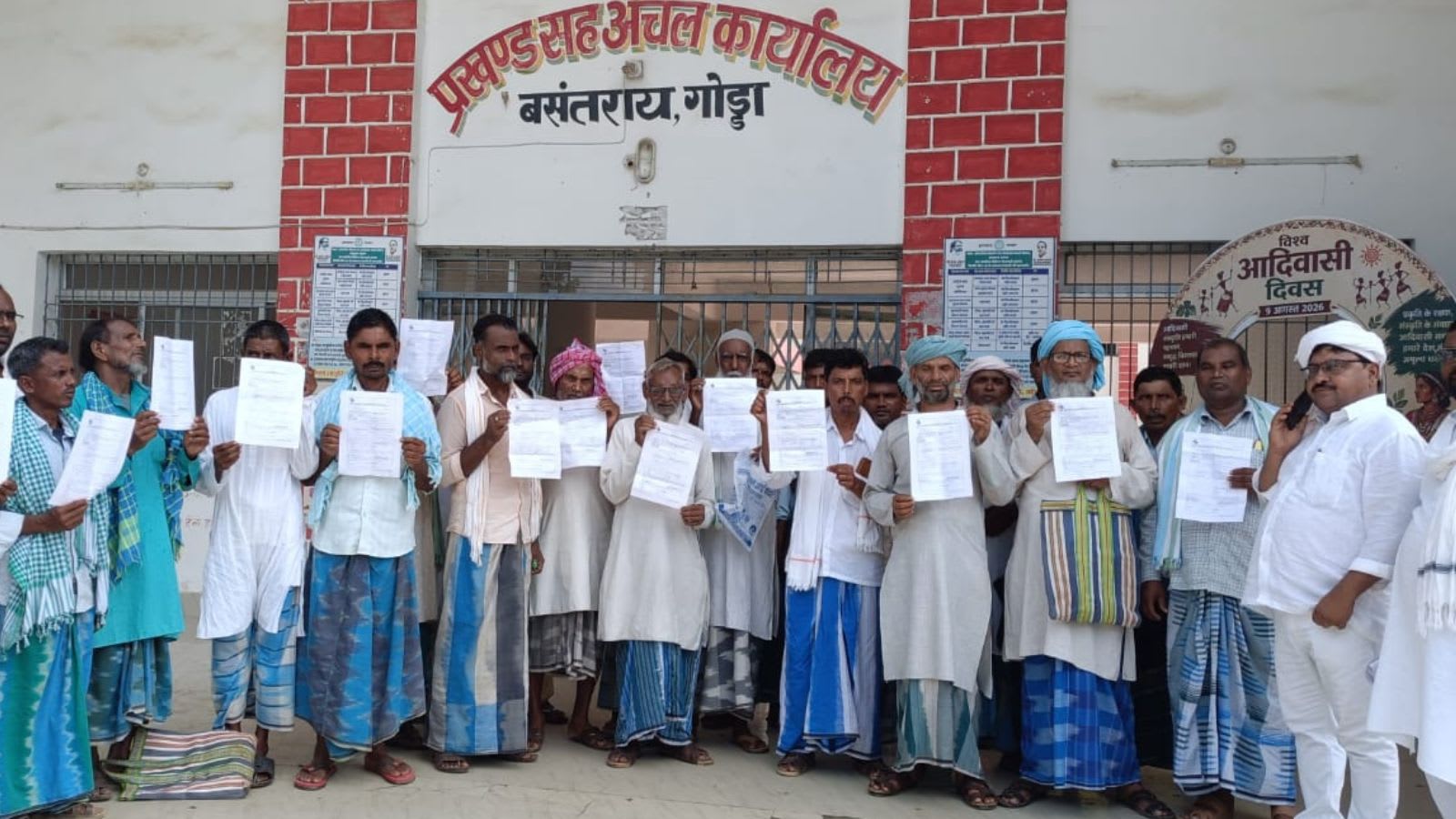
Jharkhand SIR: BJP BLA held, out on bail, over 200 Form 7s against minority voters
Source Entity
Shubham Tigga
Voter lists across 17 Indian states and UTs have shrunk by 15.7% following the Election Commission's Special Intensive Revision (SIR) process. The exercise has triggered concerns over administrative errors, such as marking living voters dead, and allegations of politically motivated voter deletions.
The Shrinking Electorate: An Analysis of India's Voter Roll Revisions
Recent data from the Election Commission of India (ECI) regarding the Special Intensive Revision (SIR) process reveals a significant contraction in the electoral rolls across 17 States and Union Territories. Since the 2024 Lok Sabha elections, the cumulative voter count in these regions has plummeted from approximately 35.5 crore to 29.9 crore, representing a 15.7% decline. While the ECI conducts these revisions to maintain the integrity of the electoral process, the scale of this reduction—particularly in states like Maharashtra and territories like Delhi—has raised significant questions regarding administrative oversight and the accuracy of voter database management.
Disparities in State-Level Data
The geographic distribution of these deletions is stark. Maharashtra has reported the most substantial decline in absolute numbers, with over 15.8 million electors removed from the rolls. Meanwhile, urban centers like Delhi and Chandigarh have seen the most drastic percentage-based drops, at 35.89% and 31.84% respectively. These figures suggest that the SIR process, while intended to clean up rolls by identifying the 'Absent, Shifted, Dead, Duplicate' (ASDD) categories, is resulting in a massive churn that necessitates a closer examination of the verification protocols being employed by local authorities.
The Human Cost of Administrative Errors
The practical implications of these mass deletions are best illustrated by individual cases, such as that of Kanta Prasad in Delhi. Despite being a resident at his registered address, Prasad found himself marked as 'Dead' in the draft rolls. This error, categorized under the ASDD protocol, highlights a systemic vulnerability where legitimate voters are disenfranchised due to faulty data entry or inadequate field verification. When individuals are forced to present physical identification at hearings just to prove their existence, it points to a breakdown in the bureaucratic chain that the ECI must address to maintain public confidence.
Political Allegations and Integrity Concerns
Beyond administrative incompetence, the SIR process has become a theater for political controversy. In Jharkhand’s Godda district, the arrest of a Booth Level Agent (BLA) for allegedly filing 200 Form 7 applications—specifically targeting minority voters—has cast a shadow over the impartiality of the revision exercise. The fact that even the local Booth Level Officer (BLO) was among those targeted for deletion underscores the potential for abuse of the Form 7 process, which is designed for legitimate deletions but can be weaponized to suppress specific voter bases.
Broader Implications for Democracy
The integrity of the electoral roll is the bedrock of any democratic system. While the ECI must balance the need for updated, accurate rolls with the rights of the citizenry, the current data suggests a process that is currently causing more exclusion than precision. As the SIR enters its later phases, the ECI faces the urgent task of reconciling these massive deletions with the constitutional right to vote. Future trends will likely require more robust, transparent, and digitally-auditable verification processes to prevent the systemic disenfranchisement of voters currently being observed in these 17 states.
Multiple Citing Sources