‘Marked dead’: Residents flag deletions, missing names from Delhi SIR draft rolls
Source Entity
Sophiya Mathew
Voter lists across 17 Indian states and UTs have shrunk by 15.7% following the Election Commission's Special Intensive Revision process. The exercise has sparked controversy due to reports of erroneous 'dead' labels and allegations of politically motivated mass deletions.
The Contraction of India's Electoral Rolls: An Analysis of the SIR Process
A Significant Statistical Shift
The Election Commission of India (ECI) has initiated the third phase of the Special Intensive Revision (SIR), resulting in a striking 15.7% contraction of voter rolls across 17 states and Union Territories. Data reveals that the cumulative voter base has plummeted from approximately 35.5 crore during the 2024 Lok Sabha elections to roughly 29.9 crore in the current draft rolls. While electoral roll maintenance is a standard administrative procedure, the scale of this reduction—nearly 56 million names removed—highlights the volatility of voter registration data in the post-election period.
Geographic Disparities and Administrative Impact
The impact of this revision is not uniform, with specific regions experiencing drastic fluctuations. Maharashtra has seen the largest absolute decline, shedding nearly 15.9 million electors. Meanwhile, Delhi and Chandigarh have faced the most severe percentage-based reductions, at 35.89% and 31.84% respectively. These figures suggest that the ECI’s drive to clean the rolls is being applied with high intensity, though the rapid nature of these deletions raises questions regarding the robustness of the verification protocols used to identify voters as 'Absent, Shifted, Dead, or Duplicate' (ASDD).
The Human Cost: The 'Marked Dead' Phenomenon
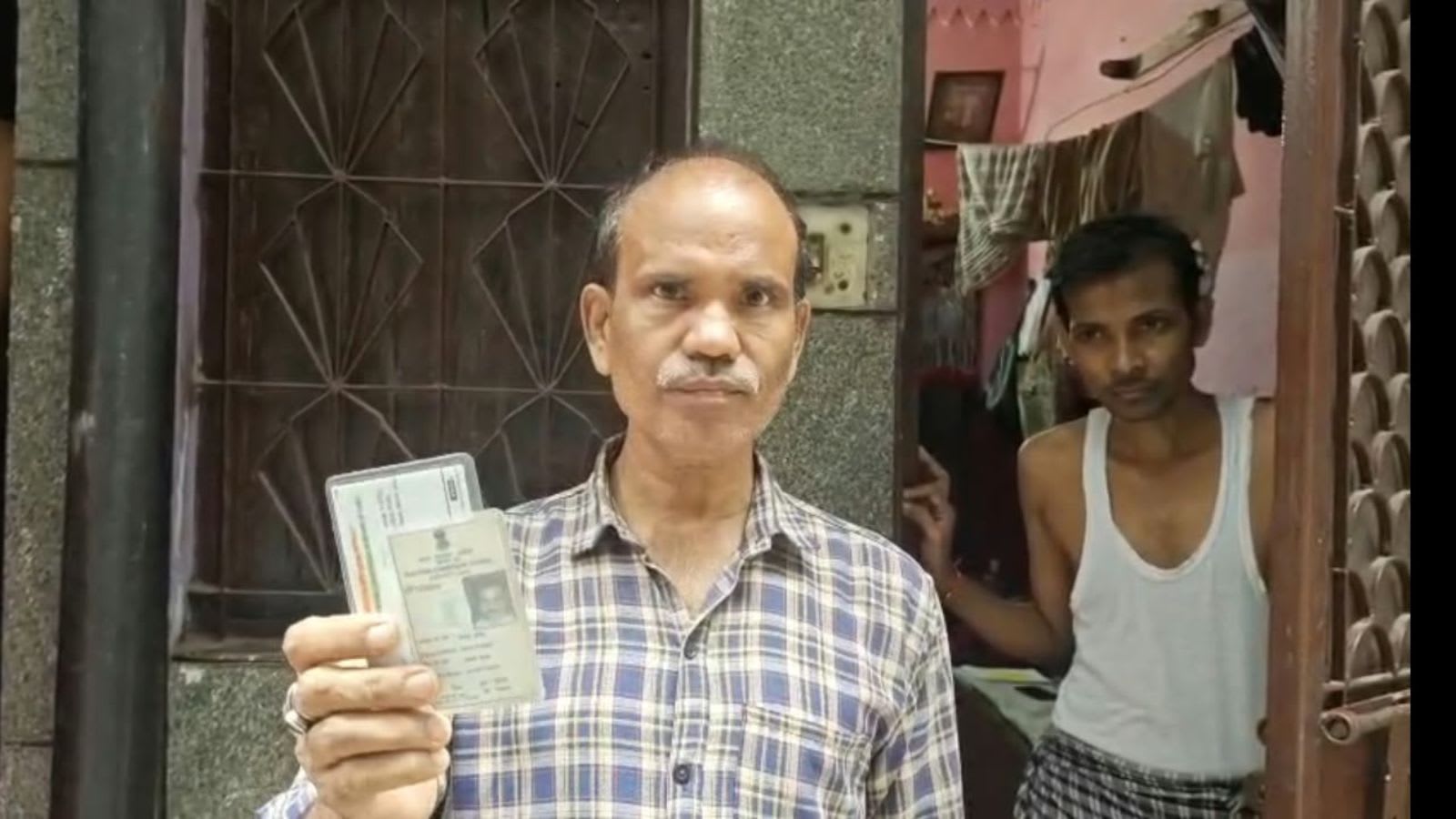
The integrity of the SIR process has been challenged by individual experiences on the ground. Reports from Delhi highlight instances where eligible citizens, such as Kanta Prasad, have been erroneously marked as 'dead' in the draft rolls. Despite residing at their registered addresses and possessing valid identification like Aadhaar, these citizens find themselves disenfranchised due to administrative errors. Such cases underscore the risks associated with automated or poorly verified deletion processes, which can inadvertently strip active voters of their constitutional rights.
Political Allegations and Electoral Integrity
Beyond administrative errors, the revision process has become a theater for political friction. In Jharkhand’s Godda district, the arrest of a Booth Level Agent (BLA) for allegedly submitting 200 Form 7 applications—specifically targeting minority voters—suggests that the SIR process is susceptible to partisan manipulation. The fact that the Booth Level Officer (BLO) herself was among those marked for deletion indicates a potential breakdown in the checks and balances designed to prevent the weaponization of voter roll purges.
Broader Implications for Democracy
The systematic removal of names from electoral rolls is a critical administrative function, yet it carries profound implications for democratic participation. When the process lacks transparency or is perceived as biased, it erodes public trust in the electoral machinery. The incident in Jharkhand and the widespread errors in Delhi suggest that the ECI faces a dual challenge: maintaining the accuracy of rolls to prevent fraud while ensuring that no eligible citizen is disenfranchised by administrative oversight or malicious intent.
Future Trends and Conclusion
As the ECI moves forward with the finalization of these rolls, the focus must shift toward more rigorous grievance redressal mechanisms. The current data shows that while the ECI added 5.77 million voters during the enumeration phase, the net loss remains substantial. Future trends will likely see increased scrutiny of the 'ASDD' category, with civil society and political stakeholders demanding greater accountability in how names are struck off. Ensuring the accuracy of these lists is not merely a bureaucratic task; it is the bedrock upon which the legitimacy of future electoral outcomes rests.
Multiple Citing Sources