‘Drone at St Petersburg airport changed our plan’: How wars are reshaping Indian travel
Source Entity
Himakshi Panwar
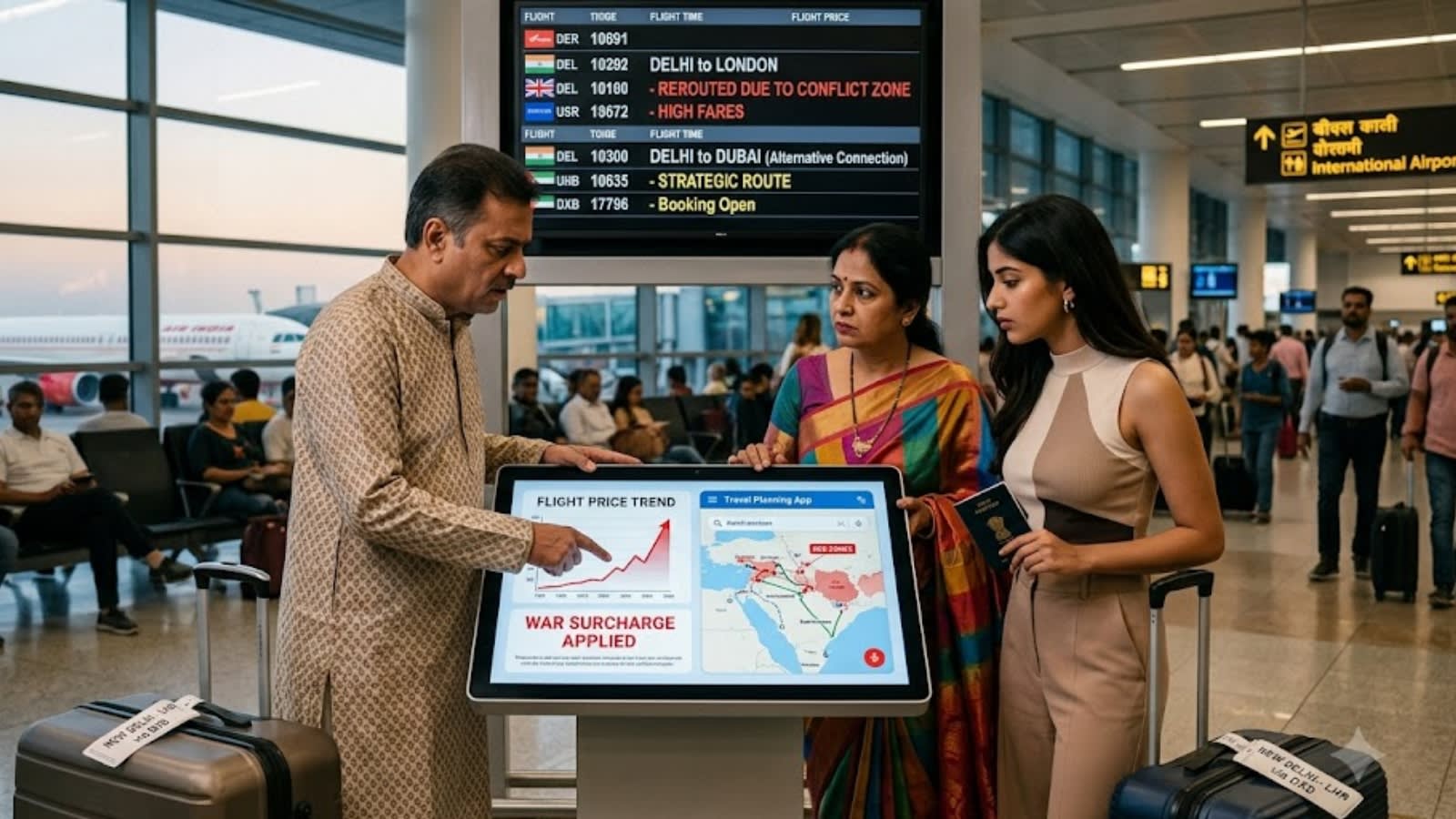
The ongoing geopolitical conflicts in the Middle East and parts of Europe are creating ripple effects across the global travel ecosystem, prompting Indian travellers to rethink how, when, and where th...
The Geopolitical Pivot: How Global Conflict is Redefining Indian Tourism
The anecdotal evidence of a drone sighting at St. Petersburg airport serves as a potent symbol for a broader, more systemic shift in the global travel ecosystem. For the modern Indian traveler, the allure of international exploration is increasingly being weighed against the volatility of geopolitical stability. The incident in Russia highlights a new era of 'asymmetric threats' where drone technology and localized conflicts can instantaneously disrupt travel plans, forcing a rapid re-evaluation of destination safety. This is not merely about avoiding active war zones, but about the anxiety surrounding the 'periphery' of conflict, where infrastructure—such as airports—becomes a target.
The Ripple Effect of Airspace Instability
Beyond the immediate fear of security breaches, the conflicts in Europe and the Middle East have created a logistical nightmare for aviation. When airspace is closed or deemed high-risk, airlines are forced to reroute flights, leading to longer journey times and increased fuel consumption. For Indian travelers, this manifests as higher ticket prices and more grueling transit experiences. The Middle East, in particular, serves as a critical transit hub for Indians traveling to Europe and Africa. Any instability in this region doesn't just affect those visiting the Levant; it creates a bottleneck that ripples across the entire global flight network, making travel more expensive and less predictable.
Shifting Destinations and the Rise of 'Safe-Haven' Tourism
As a result of these tensions, there is a noticeable pivot in destination preference. Indian tourists, traditionally fond of the cultural richness of Eastern Europe and the luxury of the Middle East, are increasingly diversifying their portfolios. We are seeing a trend toward 'safe-haven' tourism—destinations perceived as politically neutral or geographically isolated from current conflict zones. This shift suggests a psychological transition where the 'bucket list' mentality is being replaced by a 'risk-assessment' mentality. Travelers are now more likely to research the geopolitical climate of a country as thoroughly as they research its hotel ratings.
Historical Context: Travel in the Shadow of Conflict
Historically, Indian international travel was often limited by economic constraints; however, the current era is defined by a surplus of aspiring travelers facing a deficit of stability. Unlike the Cold War era, where 'Iron Curtains' created clear, static boundaries of where one could and could not go, modern conflicts are fluid and unpredictable. The digitalization of news means that a drone sighting in St. Petersburg or a missile strike in the Middle East reaches an Indian traveler's smartphone in seconds, triggering immediate cancellations. This real-time feedback loop has accelerated the speed at which travel trends shift in response to global politics.
Economic Implications for the Travel Industry
The economic fallout is significant for travel agencies and tour operators specializing in these regions. The unpredictability of war-adjacent travel has led to a surge in demand for comprehensive travel insurance and flexible booking policies. Agencies are now having to act as quasi-intelligence analysts, providing clients with safety briefings and alternative itineraries. This adds a layer of operational cost and complexity to the business of tourism, as the value proposition shifts from 'curating experiences' to 'managing risks.'
Future Trends: The New Normal of Risk-Aware Travel
Looking ahead, it is likely that the 'risk-aware' travel paradigm will become the new normal. We can expect a rise in the use of AI-driven safety monitors that provide real-time alerts to travelers based on geopolitical triggers. Furthermore, the Indian market may see a surge in 'near-shore' luxury travel—exploring high-end destinations within Asia that offer a similar sense of adventure without the geopolitical baggage of the West. The drone incident at St. Petersburg is a harbinger of a future where travel is no longer decoupled from global politics, but is instead an intimate reflection of the world's stability.
Summary
In conclusion, the intersection of drone warfare, airspace closures, and regional instability is fundamentally reshaping how Indians engage with the world. The shift from traditional hotspots to safer alternatives, coupled with increased costs and psychological anxiety, marks a turning point in global tourism. As geopolitics continue to fluctuate, the ability to adapt itineraries in real-time will become the most critical skill for both the traveler and the travel provider.