Waste transfer on KR Road leaves pedestrians battling stench
Source Entity
India Latest News: Top National Headlines Today & Breaking News | The Hindu
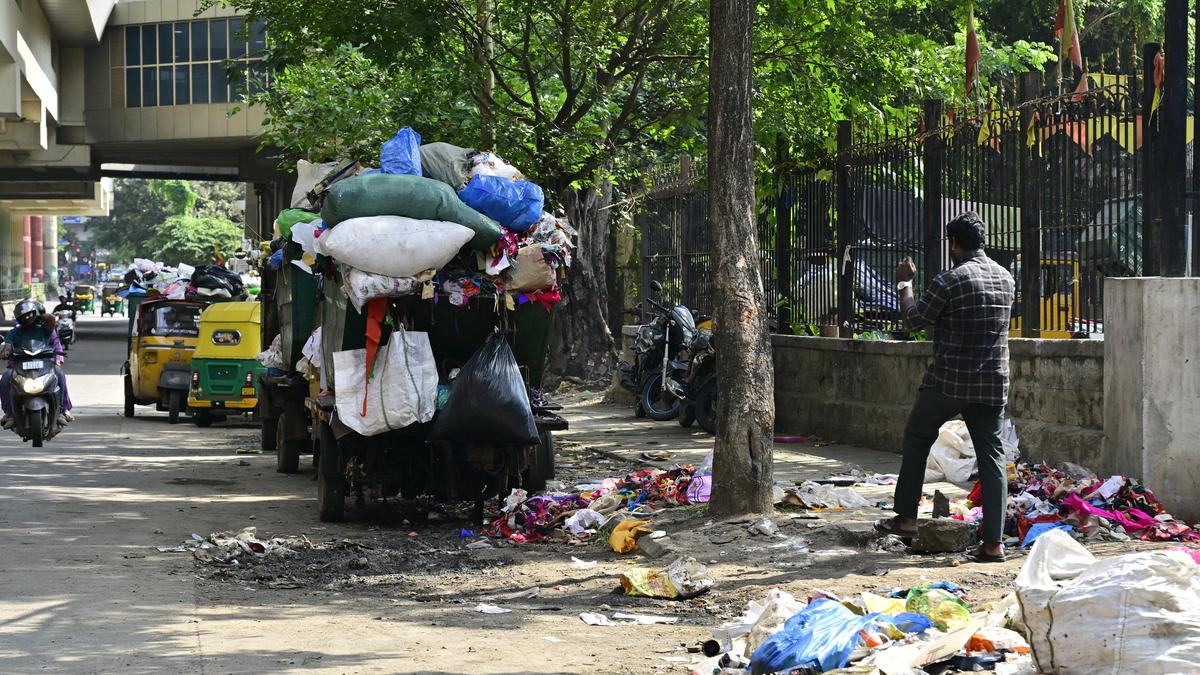
Pedestrians on Bengaluru's K.R. Road are facing severe health and safety risks due to unauthorized waste transfer operations and stagnant leachate. Authorities have acknowledged the issue, noting that a private contractor is responsible for the illegal activity.
The Crisis of Urban Sanitation on K.R. Road
Recent reports from Bengaluru’s V.V. Puram neighborhood highlight a growing public health and infrastructure crisis on Krishna Rajendra (K.R.) Road. The thoroughfare, which serves as a vital artery for the city, has been compromised by the unauthorized transfer of waste directly onto the carriageway. This practice has resulted in the accumulation of hazardous leachate on footpaths, creating a foul-smelling, unsanitary environment that effectively forces pedestrians to abandon the walkways and risk their safety by walking in active traffic lanes.
The Impact on Pedestrian Infrastructure
K.R. Road is not merely a transit route; it is a critical pedestrian corridor connecting major landmarks such as Gandhi Bazaar, Vani Vilas Road, and South End Road. The presence of the National College metro station, coupled with numerous bus stops, makes this stretch one of the most heavily trafficked areas in South Bengaluru. By allowing waste to obstruct these paths, the city’s walkability and urban accessibility are being severely undermined, turning a vital public space into a public health hazard.
Accountability and Institutional Response
In response to the deteriorating conditions, officials from Bengaluru Solid Waste Management Ltd. (BSWML) have identified that the waste transfer is being conducted by a private commercial contractor. While BSWML has confirmed that this activity is unauthorized, the reliance on an 'oral police complaint' raises questions regarding the efficacy of current enforcement mechanisms. The lack of formal, documented legal action against the contractor reflects a broader systemic issue in holding private entities accountable for public sanitation violations.
Broader Implications for Urban Management
This incident serves as a microcosm of the challenges facing rapidly urbanizing cities like Bengaluru. The mismanagement of solid waste, particularly when private contractors bypass established disposal protocols, directly threatens public health and environmental hygiene. When leachate—a liquid that has percolated through solid waste—is allowed to stagnate on public footpaths, it introduces the risk of disease transmission and environmental contamination that affects the entire local ecosystem.
Future Trends and Necessary Interventions
To prevent such occurrences, municipal bodies must transition from reactive measures to proactive, technology-driven monitoring of waste disposal sites. The reliance on manual surveillance or ad-hoc complaints is insufficient for a city of Bengaluru's scale. Future urban planning must prioritize the integration of designated, enclosed waste transfer stations that do not interfere with pedestrian traffic, ensuring that the city’s growth does not come at the expense of its basic hygiene and public safety standards.
Conclusion
Ultimately, the situation on K.R. Road is a call to action for stricter oversight of private waste management contracts. Until the city enforces robust penalties and ensures that waste logistics are separated from public movement corridors, the quality of life for daily commuters will continue to suffer. Restoring the utility of the K.R. Road footpaths is essential for maintaining the city's status as a functional, pedestrian-friendly urban center.
Verification Required?