Red, pink, yellow and orange — Kolkata roads adorn new colours in BJP govt’s first Puja celebrations
Source Entity
Tanusree Bose
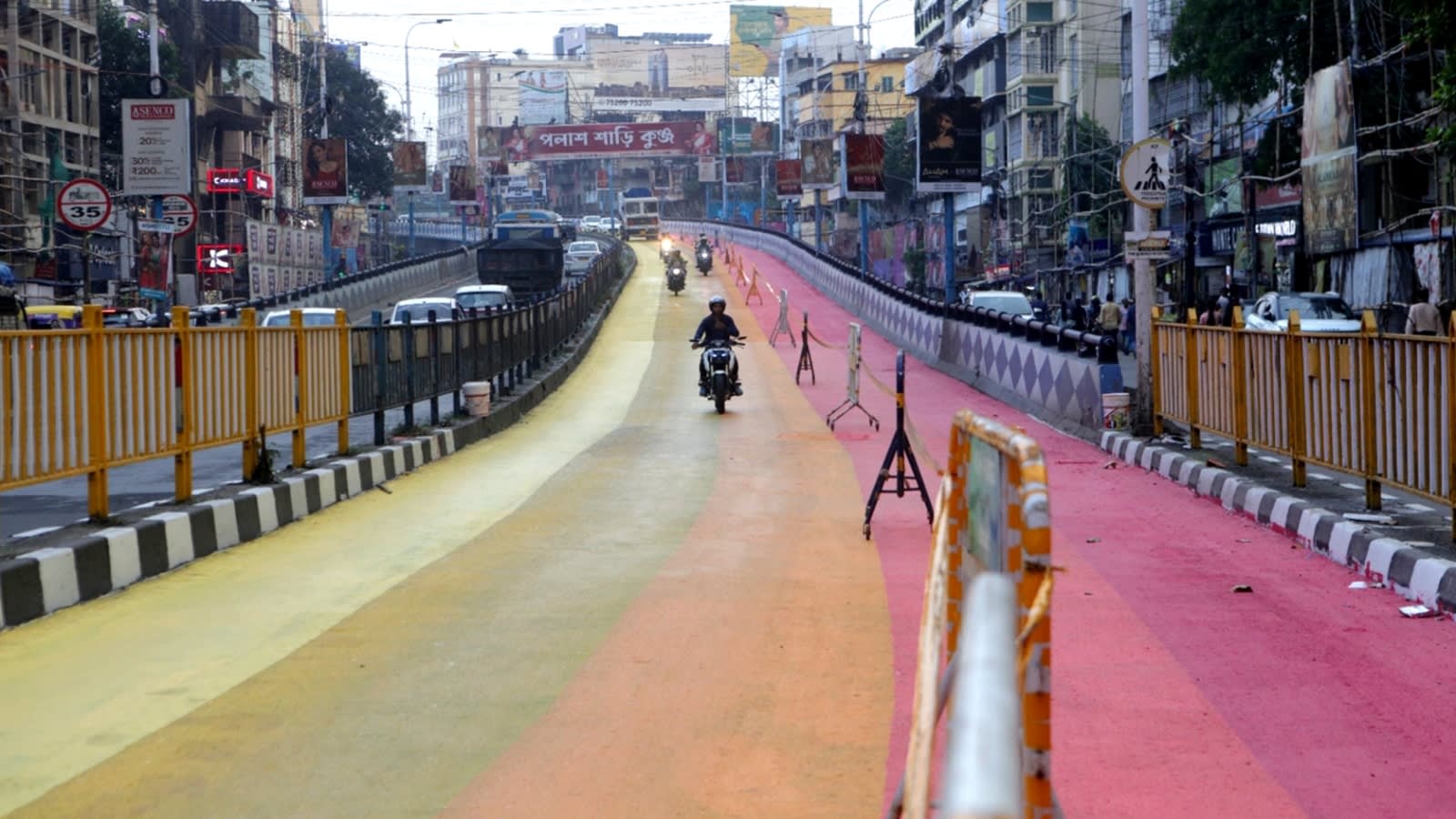
Tensions have emerged in West Bengal as posters in Siliguri urge residents to patronize only Hindu traders during Durga Puja. Simultaneously, the state government is emphasizing themes of unity and celebration through aesthetic urban beautification initiatives.
Tensions and Celebrations: West Bengal’s Complex Durga Puja Landscape
As West Bengal approaches its most significant cultural festival, Durga Puja, the social landscape of the state is witnessing a dichotomy of festive preparation and ideological friction. In North Bengal’s Siliguri, the appearance of hundreds of posters urging citizens to purchase goods and consume non-vegetarian food—specifically Biryani—only from Hindu traders has sparked a polarized debate. These posters, attributed to the Hindu Jagran Manch, explicitly target the economic choices of the public during the festive season, framing the act of consumption as a matter of communal preference.
The Economic and Communal Discourse
The messaging on these posters, which includes directives such as "buy meat from a Hindu shop" and "listen to the seller’s name," represents a shift in the traditional discourse surrounding Bengal's inclusive cultural festivities. While the Hindu Jagran Manch maintains that their objective is to ensure that Hindu traders benefit economically during the peak festival period, critics and opposition leaders argue that such exclusionary tactics are antithetical to the secular fabric of the nation. The incident has reignited concerns regarding how communal identity is increasingly being leveraged to influence local market dynamics.
Government Beautification Efforts
In contrast to the localized tensions in Siliguri, the state government is actively managing the atmosphere of the capital through extensive beautification projects. Roads, flyovers, and intersections across Kolkata are being transformed with vibrant colors, including red, pink, yellow, and orange, while floral motifs replace traditional gray infrastructure. This initiative, spearheaded by the new BJP government, aims to project a festive and orderly image of the city to the public.
Symbols of Unity vs. Political Messaging
Cabinet Minister Agnimitra Paul’s participation in creating 'alpona'—the traditional rice flour art—at the Park Circus Crossing serves as a centerpiece for the administration's current branding strategy. By framing these urban improvements as a "road of love and brotherhood," the administration is attempting to solidify its mandate. However, the juxtaposition of this state-led aesthetic campaign with the exclusionary posters in Siliguri highlights a significant divide in how the festival is being navigated by different political and social factions.
Broader Implications and Future Trends
These events underscore the rising trend of using religious festivals as platforms for both economic nationalism and political signaling. As political parties continue to vie for influence in West Bengal, the intersection of cultural celebration and identity politics is likely to become more pronounced. Moving forward, the challenge for the state will be to maintain the communal harmony historically associated with Durga Puja while addressing the growing demands of various advocacy groups that seek to compartmentalize the festive economy.
Conclusion
Ultimately, the current situation in West Bengal reflects a state in transition, where the joy of Durga Puja is being framed by competing narratives of economic exclusion and state-sanctioned unity. The coming days will be critical in determining whether the spirit of inclusivity can prevail over the divisive rhetoric appearing in the northern districts, or if these polarizing trends will continue to shape the state's socio-political environment.
Multiple Citing Sources