Who is a citizen of India, after all?
Source Entity
Latest News: Today's Latest News Headlines from India & World | Hindustan Times | Hindustan Times
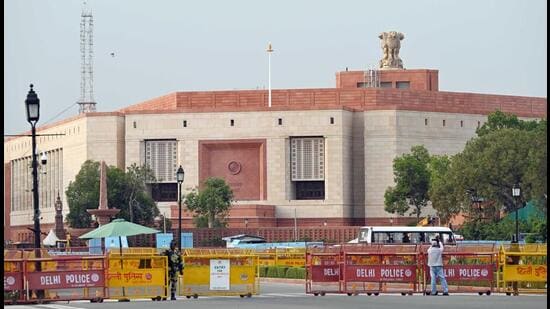
An analysis of the critical debate surrounding the definition of Indian citizenship and the contention that existing legal frameworks are too vague to provide definitive clarity.
The Crisis of Identity: Questioning the Definition of Indian Citizenship
The question of "Who is a citizen of India?" is not merely a legal inquiry but a profound existential and political challenge. At its core, citizenship defines the relationship between an individual and the state, granting rights, protections, and a sense of belonging. When the legal frameworks governing this status are perceived as ambiguous or insufficient, it creates a precarious environment for millions. The assertion that references to existing laws are inadequate highlights a systemic failure to provide clear, accessible, and indisputable criteria for citizenship in a diverse and populous nation.
The Limitations of Existing Legal Frameworks
Historically, Indian citizenship has been governed by the Citizenship Act of 1955 and subsequent amendments. However, as the provided context suggests, these laws are often criticized for being "short on details." The complexity arises from the various ways citizenship can be acquired—by birth, descent, registration, naturalization, or incorporation of territory. When the law lacks granular detail, the interpretation is left to administrative discretion, which can lead to inconsistent applications. This lack of specificity becomes a critical vulnerability when the state seeks to identify "non-citizens," as the burden of proof often shifts to the individual to prove a negative—that they are not an illegal immigrant.
The Documentation Dilemma and Socio-Economic Barriers
One of the primary reasons why existing laws are deemed insufficient is the disconnect between legal requirements and the ground reality of documentation in India. For a significant portion of the population, especially those in rural or marginalized communities, formal birth certificates or land records from several decades ago are non-existent. When the law demands specific proofs without accounting for the historical lack of record-keeping, it effectively disenfranchises those who are legally citizens but lack the "paper trail" to prove it. This gap between the de jure law and de facto capability to comply creates a state of legal limbo.
Political Implications and the Nature of Belonging
The debate over citizenship is rarely just about law; it is deeply intertwined with political identity and nationalism. The push for more rigid or redefined citizenship criteria often reflects broader political agendas regarding national security and cultural homogeneity. By questioning the adequacy of current laws, critics argue that the vagueness is sometimes intentional, allowing for the selective inclusion or exclusion of certain groups. This transforms the legal process of citizenship verification into a tool for political signaling, where the definition of a "true citizen" shifts based on the prevailing political climate.
Future Trends: Toward a Digital and Transparent Registry
Looking forward, the tension between vague legislation and the need for clarity is likely to drive a push toward more digitized identity systems. While initiatives like Aadhaar provide a biometric identity, they do not inherently prove citizenship. The future of this debate will likely center on whether India can develop a transparent, judicial-led process for citizenship verification that prioritizes human rights over administrative convenience. There is an urgent need for a legal framework that is not only detailed but also inclusive, ensuring that no genuine citizen is rendered stateless due to a lack of archival documentation.
Conclusion
Ultimately, the statement that existing laws "will not suffice" serves as a call for a comprehensive overhaul of how citizenship is defined and verified in India. To resolve the ambiguity, the state must move beyond opaque references to outdated statutes and instead establish a clear, transparent, and empathetic system. Only by bridging the gap between legal theory and the lived reality of its people can India ensure that the question of citizenship is answered with justice and certainty for all.
Verification Required?