Why airplane window shades must stay open during take-off and landing
Source Entity
TOI LIFESTYLE DESK
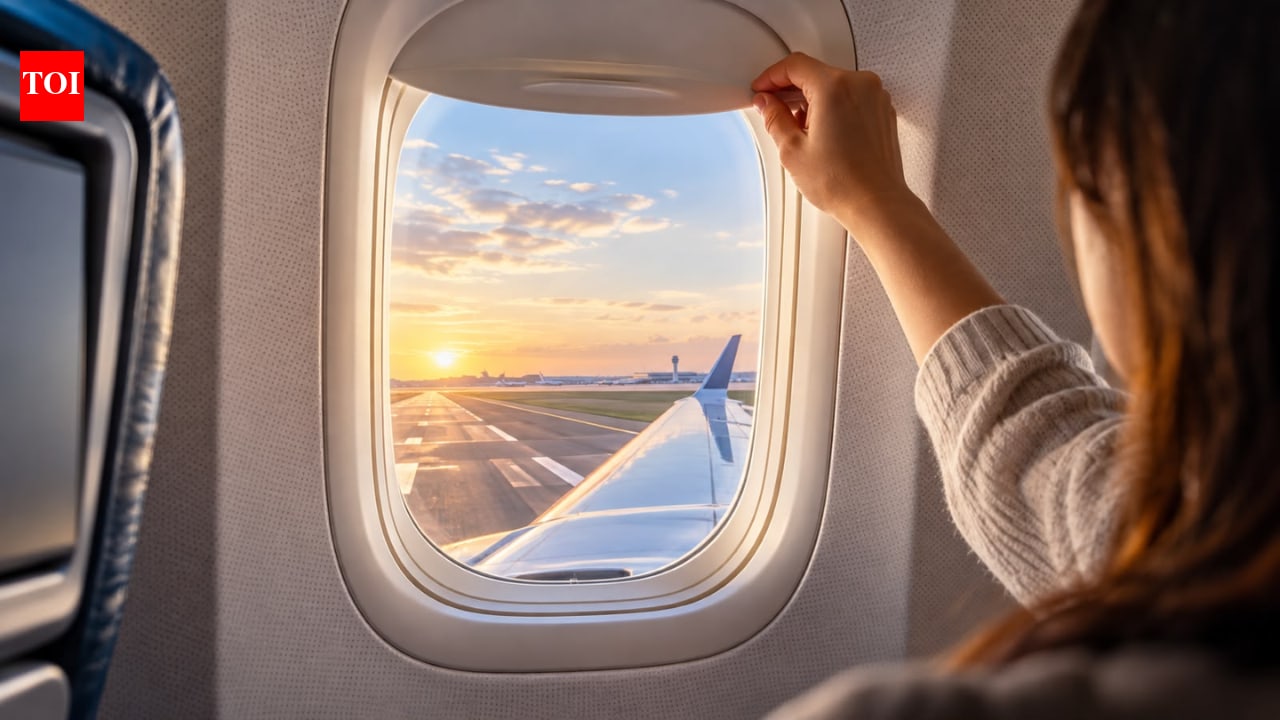
Keeping airplane window shades open during take-off and landing is a critical safety protocol. This practice allows crew and passengers to monitor external conditions and ensures eyes are adjusted to ambient light for emergency evacuations.
The Critical Importance of Airplane Window Shades
For many air travelers, the instruction to keep window shades open during take-off and landing is viewed as a minor nuisance or an arbitrary cabin regulation. However, aviation safety experts and regulatory bodies, such as the European Union Aviation Safety Agency (EASA), emphasize that this is a fundamental component of flight safety. These two phases—take-off and landing—are statistically the most critical periods of a flight, where the vast majority of incidents occur. By mandating open shades, airlines ensure that the cabin environment remains transparent to external conditions.
Enhancing Situational Awareness for Crew
A primary reason for this requirement is the need for cabin crew to maintain constant situational awareness. In the event of an engine malfunction, fire, or structural issue, the cabin crew must be able to assess the outside environment immediately. An open window allows staff to identify external hazards or damage to the wing and fuselage from multiple vantage points within the cabin, facilitating faster decision-making and communication with the flight deck during emergencies.
Empowering Passenger Vigilance
Beyond the crew's responsibilities, passengers play an unintentional but vital role in flight safety. When window shades are open, passengers can act as additional sets of eyes, alerting staff to anomalies such as smoke, debris, or fluid leaks that might otherwise go unnoticed. This collective vigilance creates a more robust safety net, as passengers are often the first to report issues occurring outside their immediate vicinity, thereby increasing the speed of emergency response.
Physiological Readiness and Evacuation
Safety is also a matter of physiological preparedness. If an emergency evacuation is required, the transition from the cabin to the outside environment can be jarring. By keeping shades open, passengers' eyes have the necessary time to adjust to the ambient light levels outside the aircraft. This reduction in visual shock is critical for ensuring that passengers can exit the aircraft quickly and safely, avoiding the disorientation that occurs when moving from a dimly lit cabin to bright daylight or vice-versa.
Moving Beyond Accident Prediction
It is important to clarify that this protocol is not intended to predict or prevent accidents, but rather to maximize survival and efficiency when an incident does occur. The practice is strictly about preparation and risk mitigation. By ensuring that the cabin is not an isolated bubble, airlines maintain a link to the exterior environment, allowing for a more controlled reaction to unforeseen circumstances during the most vulnerable segments of a flight.
Conclusion: A Standard for Global Safety
In summary, the mandate to keep airplane window shades open is a proven safety measure designed to optimize response times and passenger readiness. While it may seem like a trivial rule, it represents a core pillar of modern aviation safety culture. By fostering a transparent cabin environment, airlines empower both crew and passengers to act effectively, ensuring that if a critical situation arises, everyone on board is as prepared as possible to handle it.