Trio of economic forces could boost electric vehicles, WoodMac says
Source Entity
Yahoo Finance
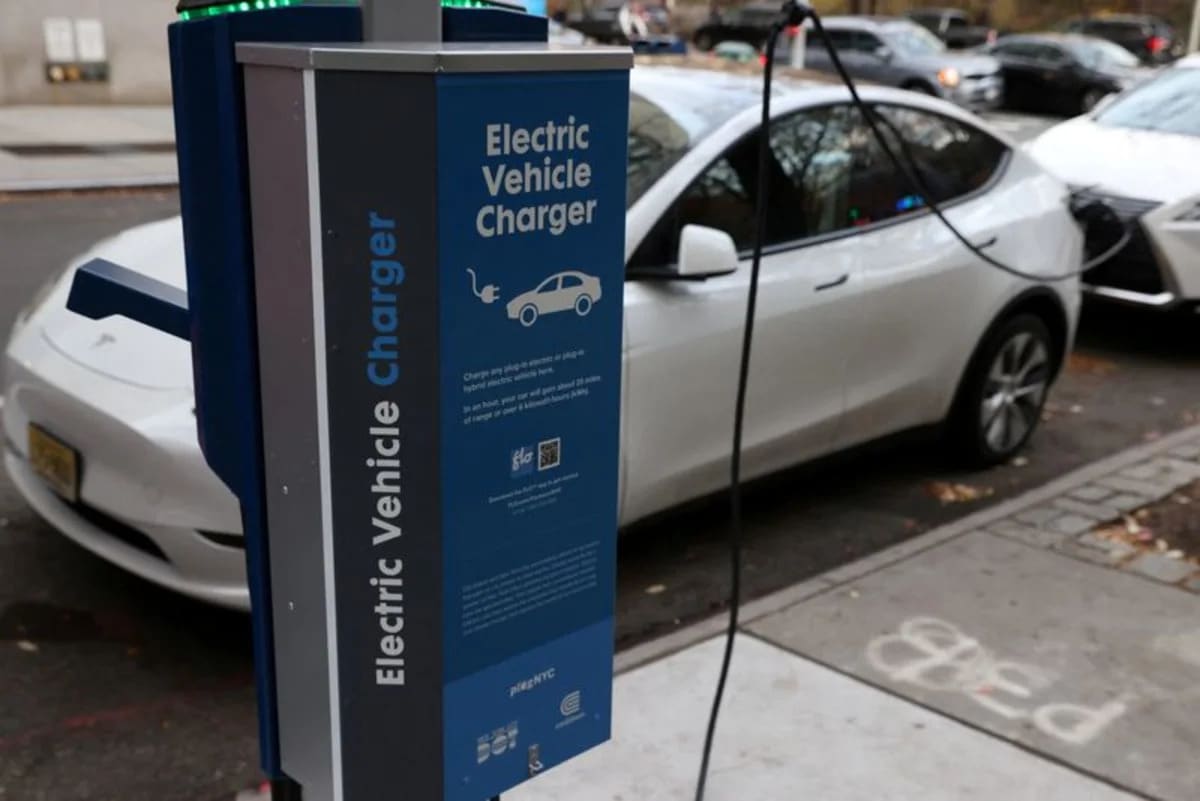
A new Wood Mackenzie report identifies three key economic drivers—geopolitical oil shocks, high fuel costs, and rapid battery innovation—that are accelerating global electric vehicle adoption. The findings emphasize the need for Western nations to match China's technological advancements in battery efficiency to remain competitive.
The Triad Driving the Global EV Transition
A recent analysis by Wood Mackenzie identifies a convergence of three distinct economic catalysts that are poised to fundamentally reshape the global automotive landscape. By examining the intersection of geopolitical volatility, consumer economic behavior, and rapid technological maturation, the report highlights how the electric vehicle (EV) sector is transitioning from a niche market to a central pillar of global industrial strategy.
Geopolitical Instability as a Catalyst
One of the primary drivers identified is the recurring instability in major petroleum-producing regions, specifically Russia and Iran. These supply shocks have historically created price volatility that destabilizes global markets. By highlighting these tensions, Wood Mackenzie underscores how governments are now viewing EV adoption not merely as an environmental goal, but as a critical component of national energy security. Reducing reliance on volatile oil markets is prompting a strategic pivot toward domestic EV supply chain investments.
Economic Pressure and Consumer Behavior
Beyond state-level strategy, the report points to the role of high fuel prices as a direct motivator for individual consumer behavior. When traditional combustion engine vehicles become prohibitively expensive to operate due to fuel costs, the total cost of ownership (TCO) calculation shifts rapidly in favor of electric alternatives. This economic pressure acts as a powerful market force that accelerates the transition, regardless of purely regulatory incentives, by making the switch to EVs a pragmatic financial decision for the average household.
The Technological Frontier: China's Lead
Technological innovation remains the bedrock of this transition. The report specifically highlights China's aggressive development in battery chemistry, noting advancements such as 5-minute charging capabilities and the commercialization of sodium-ion and lithium iron phosphate (LFP) batteries. These innovations address two of the largest hurdles to mass adoption: range anxiety and charging duration. China’s ability to scale these technologies presents a significant competitive challenge to Western automotive sectors.
Strategic Implications for Western Policymakers
To maintain industrial competitiveness, the report suggests that Western nations must rethink their approach to innovation. This includes potential government support to foster domestic research and development, as well as the strategic licensing of existing Chinese EV technology. Policymakers are faced with a complex trade-off: balancing the need for rapid decarbonization and consumer affordability against the desire to build domestic manufacturing capabilities that can compete with established global leaders.
Conclusion: A Shift in Global Resource Markets
The implications of this shift extend far beyond the automotive industry, signaling a major realignment in global power and metal markets. As the world moves toward an electrified fleet, demand for critical minerals and power generation will surge, necessitating a fundamental reorganization of global supply chains. The transition is no longer a theoretical future goal but an active economic movement driven by the necessity of energy independence and technological efficiency.