Trump says he and Putin have a 'great relationship' at meeting
Source Entity
BBC News
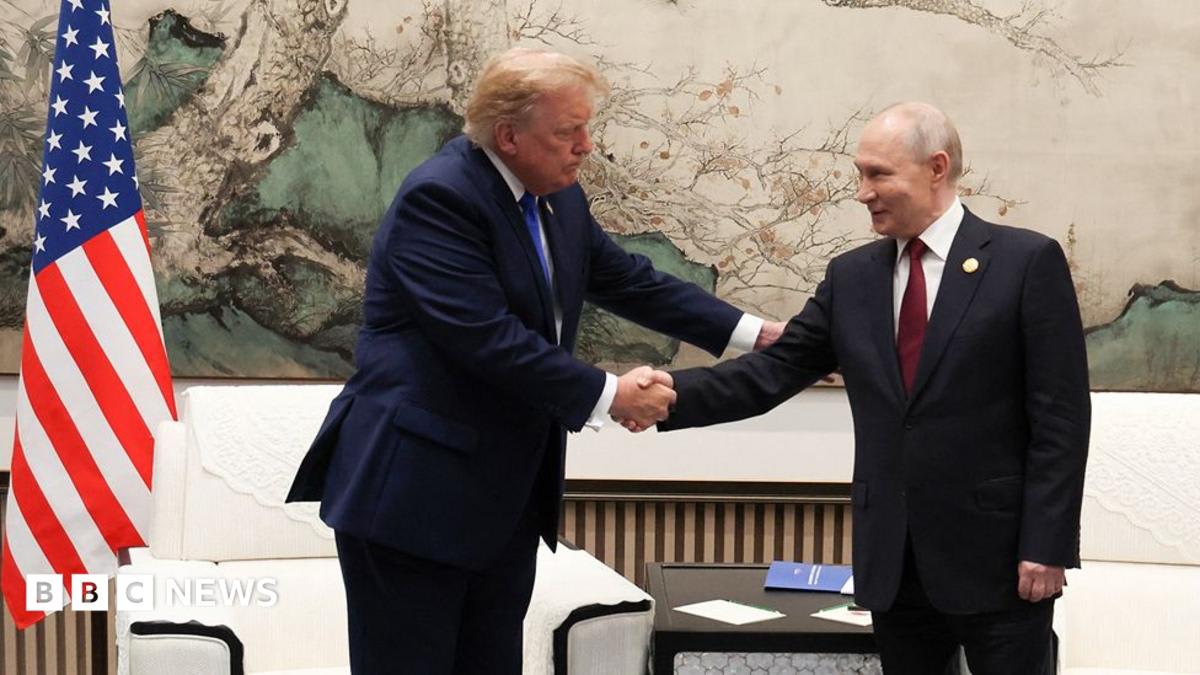
US President Donald Trump is meeting with Xi Jinping and Vladimir Putin in Shenzhen to address nuclear arms control and ongoing regional conflicts. The summit coincides with the APEC leaders' meeting as the world navigates complex trade tensions and geopolitical instability.
A New Global Architecture: The Shenzhen Trilateral
The gathering of US President Donald Trump, Chinese President Xi Jinping, and Russian President Vladimir Putin in Shenzhen marks a pivotal moment in contemporary geopolitics. By converging on the sidelines of the APEC Economic Leaders Summit, these three leaders are attempting to address the most volatile elements of the current international security landscape. The historic nature of this meeting invites comparisons to the Yalta Conference of 1945, suggesting an intent to redefine the spheres of influence and governance that will dictate the remainder of the 21st century.
The Challenge of Nuclear Proliferation
Central to the agenda is the daunting task of nuclear arms control. President Trump has identified the trilateral engagement on nuclear weapons as a top priority, acknowledging that achieving a substantive agreement between Washington, Moscow, and Beijing will be difficult. As the existing architecture of arms control treaties faces obsolescence, the inclusion of China—a nation rapidly expanding its nuclear capabilities—into a formal dialogue with the US and Russia is seen as a necessary, albeit fragile, step toward preventing a new arms race.
Navigating Proxy Wars and Regional Instability
Beyond nuclear concerns, the meeting is tasked with addressing two major, ongoing conflicts: the Russia-Ukraine war and the nine-month-old Iran war. The latter has exerted significant pressure on global energy markets, creating economic ripple effects that transcend regional borders. The ability of these three leaders to find common ground or establish a de-escalation framework will be a litmus test for whether personal diplomacy can overcome the entrenched strategic interests that currently fuel these prolonged hostilities.
Tech Rivalries and Economic Tensions
Adding to the complexity of the security discussions are the deep-seated trade disputes and the intensifying global race for artificial intelligence dominance. The context of the Shenzhen summit is heavily influenced by Washington’s recent scrutiny regarding Nvidia’s chip exports to China, highlighting the intersection of national security and high-tech commerce. These economic frictions are not merely side issues; they are foundational to the strategic distrust that currently characterizes US-China relations.
The APEC Context and Regional Dynamics
The summit occurs amidst a broader regional backdrop of heightened tension, including escalating frictions between China and Japan. The Shenzhen skyline, lit for the APEC summit, serves as a backdrop for a world where international institutions are being tested by the competing interests of major powers. The outcomes of these meetings will likely determine whether the global order moves toward a period of renewed cooperation or deepens into a more fractured, multipolar system defined by technological and military competition.
Conclusion: The Future of Global Diplomacy
Ultimately, the Shenzhen meeting represents a high-stakes effort to manage a world in transition. While the personal relationships between the leaders provide a channel for communication, the disparity in their strategic goals remains a significant hurdle. Whether this trilateral dialogue results in concrete policy shifts or serves merely as a forum for statecraft, its impact on the future of global diplomacy will be profound and long-lasting.
Multiple Citing Sources