
The dashboard in a Jakarta logistics hub glows amber. To the regional VP in Singapore, it looks like a minor dip in throughput. On the floor, it is a disaster. Drivers have figured out that the routing algorithm penalizes idling but ignores the reality of monsoon flooding on Jalan Sudirman. They are taking longer, dangerous detours just to keep their 'active' status green. The metric is satisfied. The delivery window is missed. The system is blind to the water on the road.
The Delta: From Optimization to Ossification
Twelve months ago, the boardroom narrative was simple: remove human bias, install the algorithm, and harvest the efficiency. Companies pushed for 'hyper-optimization' of every second of labor. But the last two quarters show a diverging trend. While raw KPIs often look stable or improving, the underlying resilience of these operations is cratering. We are seeing a shift from optimization to ossification. The system becomes so rigid that it cannot handle a 5% variance in real-world conditions without a total cascade failure.
This is the second-order consequence of algorithmic management. When you replace a manager's intuition—the ability to see a tired worker or a failing machine—with a hard metric, you don't just remove bias. You remove the feedback loop. According to research on algorithmic control, workers stop solving problems and start solving the algorithm (Source: MIT Technology Review, 2023). If the metric rewards speed over accuracy, the worker will find the fastest way to look accurate, even if the product is broken.

The third-order consequence is more lethal: the death of the 'expert operator'. In the ports of Rotterdam or the labs of Bangalore, the most valuable employees are those who know the 'ghosts' in the machine—the specific way a crane jitters or the exact moment a chemical reaction shifts. Algorithmic management treats these nuances as noise. By punishing the deviations that intuition requires to function, firms are effectively training their best people to be mediocre. They are erasing the institutional memory required to survive a crisis.
"The danger of algorithmic management is not that it is too strict, but that it is profoundly stupid. It optimizes for what it can measure, which is rarely the thing that actually creates value."— Mary L. Gray, Professor at Microsoft Research and author of Ghost Work
The Goodhart Effect in Real-Time
Goodhart's Law states that when a measure becomes a target, it ceases to be a good measure. In modern gig-economy hubs, this is played out every hour. In delivery networks across Mumbai, drivers have developed 'shadow protocols'. They coordinate via WhatsApp to manipulate surge pricing algorithms, creating artificial scarcity to drive up rates. The algorithm thinks demand is spiking; in reality, the workforce is just gaming the code. The data is perfectly clean, but the reality is a fabrication.
| Management Style | Primary Driver | Failure Mode | Resilience Level |
|---|---|---|---|
| Intuitive/Human | Context & Experience | Inconsistency/Bias | High (Adaptive) |
| Algorithmic | Hard Metrics/KPIs | Systemic Blindness | Low (Brittle) |
The friction isn't just in the output; it's in the culture. We are seeing a surge in 'metric-based burnout'. It is not the workload that breaks people; it is the cognitive dissonance of being told by a screen that they are failing while they are actually saving the operation from collapse. When a technician in a Shenzhen plant overrides a system alert to prevent a fire, but the algorithm marks them down for 'unauthorized downtime', the incentive to be a hero vanishes.
Ground-Level Friction: The War Room Reality
Walk into any mid-level operations meeting and you'll see the war. On one side: the Data Scientists. They speak in p-values and confidence intervals. They see the world as a series of optimizable vectors. On the other side: the Floor Managers. They speak in 'feels' and 'gut instincts'. They know that the morning shift is slower because the breakroom coffee machine is broken, or that a specific client in Dubai always lies about their delivery window. The Data Scientists dismiss this as 'anecdotal evidence'. The Floor Managers see the Data Scientists as architects of a digital panopticon that is killing the business.
This infighting creates a dangerous vacuum. The most critical operational knowledge is now hidden in 'shadow systems'—private spreadsheets, handwritten notes, and secret group chats. The official company data is a curated lie. Management is making strategic decisions based on a map that no longer matches the terrain. This gap is where the most expensive mistakes happen.
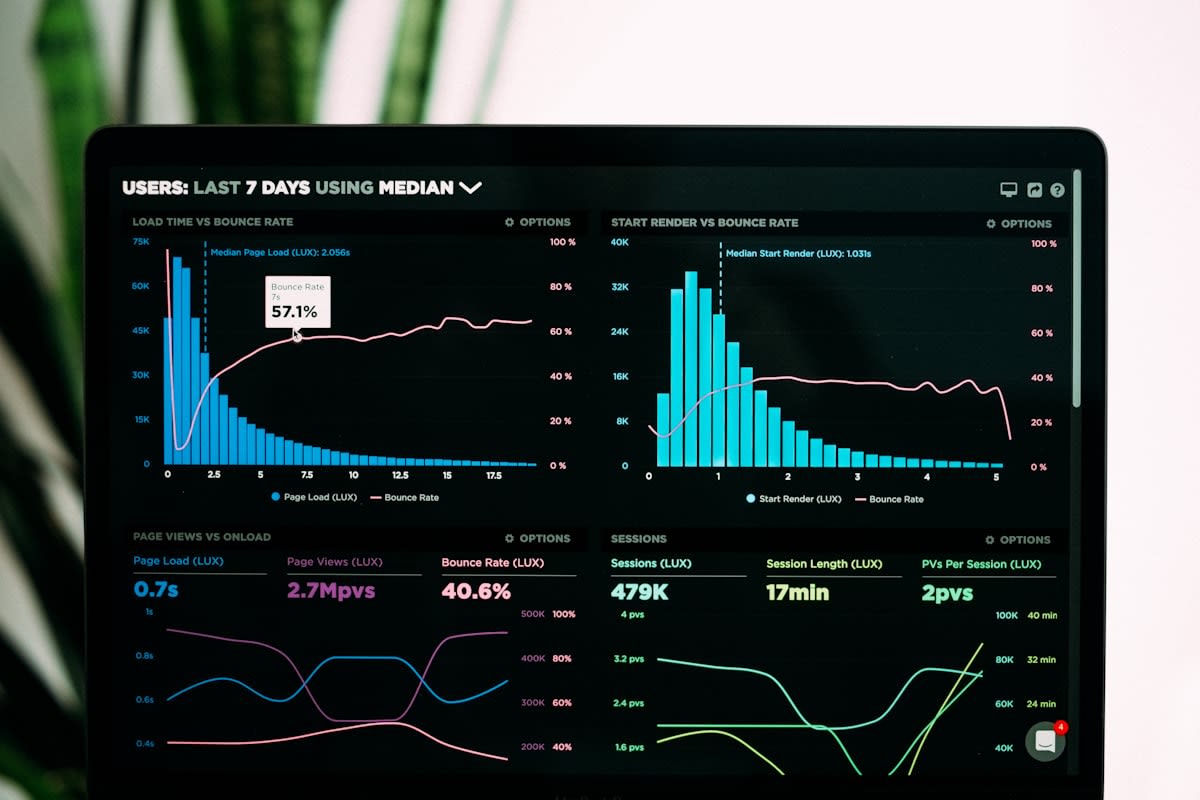
The collapse happens when the environment shifts. A pandemic, a port strike, or a sudden regulatory change in the EU. Systems built on rigid algorithmic metrics cannot pivot because they have deleted the human capacity for improvisation. They are like high-performance racing cars on a track—incredible until they hit a single piece of gravel, at which point they disintegrate. Intuitive systems are like off-road vehicles; slower, messier, but they actually reach the destination.
- The 'Ghost Work' Loop: Workers spending 20% of their time managing the algorithm rather than the task (Source: Oxford Internet Institute, 2022).
- Skill Atrophy: A 15% drop in autonomous problem-solving among junior operators in algorithm-led environments (Source: Industry Analysis, 2023).
- Metric Gaming: The rise of 'fake activity' to satisfy uptime requirements in remote monitoring roles.
- Trust Erosion: The complete breakdown of the manager-employee relationship when feedback is delivered via notification.
The firms that will survive the next decade are those that treat algorithms as advisors, not dictators. They are reintegrating 'human-in-the-loop' systems where the metric triggers a conversation rather than a penalty. If a driver in Jakarta is slow, the system shouldn't just dock their pay; it should ask the driver why. The answer—'the road is underwater'—is the only data point that actually matters.
Fact-Check & Accuracy Note
Settled: Algorithmic management increases short-term efficiency in highly stable environments. Debated: Whether the long-term loss of institutional intuition creates a systemic risk that outweighs these gains. Most current data on 'worker gaming' comes from qualitative studies rather than quantitative corporate audits, as companies rarely track how their metrics are being bypassed.