Tamil Nadu government signs slew of MoUs during CM Vijay’s London visit to attract investment, create high-value jobs
Source Entity
India Latest News: Top National Headlines Today & Breaking News | The Hindu
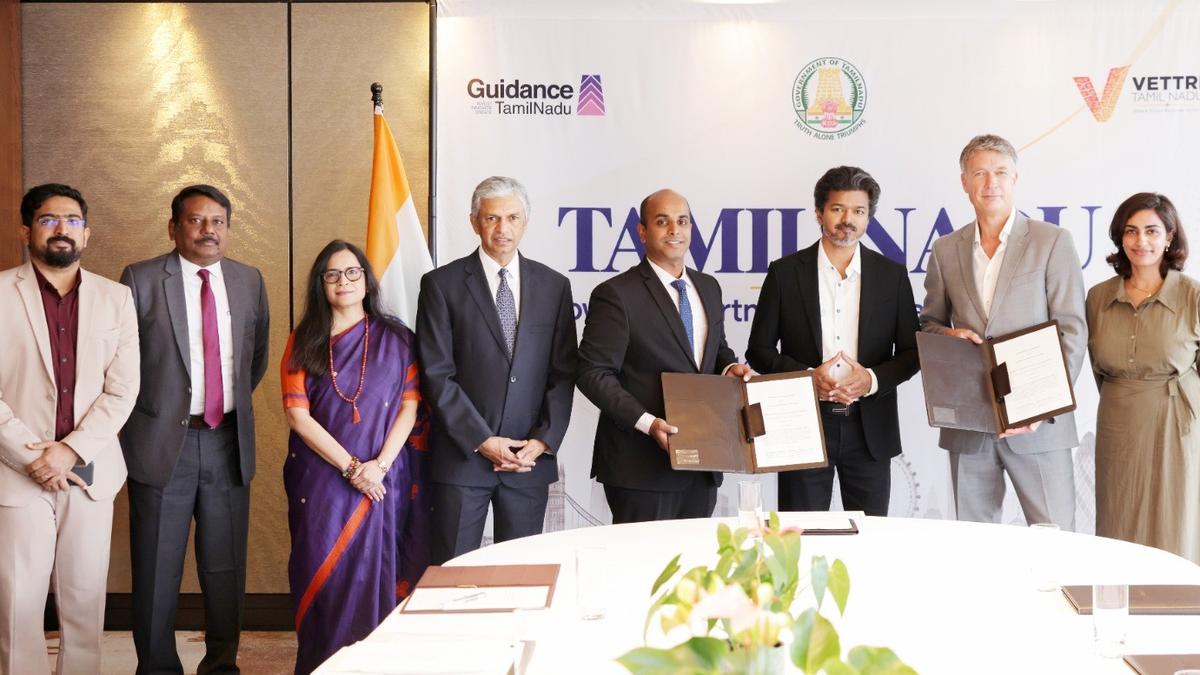
Tamil Nadu CM C. Joseph Vijay has secured a major ₹11,000 crore investment deal in London to boost state employment. The agreement has sparked political controversy, with the AIADMK questioning the involvement of a Noida-based firm in the international pact.
CM Vijay’s London Investment Mission: A Deep Dive
The Strategic Investment Push
Tamil Nadu Chief Minister C. Joseph Vijay’s inaugural official overseas visit to London marks a significant milestone in the state’s efforts to bolster its industrial footprint. The primary objective of this mission is to attract high-value global investments, and the government has already reported a substantial breakthrough. By signing a series of Memoranda of Understanding (MoUs) totaling approximately ₹11,000 crore, the administration aims to catalyze growth in critical sectors, including design, engineering, manufacturing, assembly, and logistics.
Impact on Employment and Infrastructure
According to the official government release, these investments are projected to generate employment opportunities for roughly 7,000 individuals. This influx of capital is expected to revitalize the regional economy by integrating Tamil Nadu further into the global supply chain. The focus on high-value roles suggests a strategic pivot toward more sophisticated industrial processes, which could serve as a model for future investment drives aimed at transforming the state into a premier manufacturing hub.
The Political Controversy: AIADMK’s Allegations
Despite the economic optimism, the visit has been marred by political friction. The AIADMK has launched a pointed critique against the Chief Minister, specifically focusing on the optics and details of the agreements. The opposition party has raised concerns regarding the involvement of Samvardhana Motherson International Limited, a firm headquartered in Noida. The core of their argument appears to challenge the rationale behind signing an MoU with a domestic entity during an international trip, questioning the transparency and necessity of such an arrangement in a foreign theater.
Analytical Context of the 'Noida Firm' Row
In the context of Indian state politics, attracting investment is often a double-edged sword. While the government views the ₹11,000 crore deal as a triumph of diplomacy and economic outreach, the opposition is leveraging the 'Noida-based' nature of the firm to suggest a lack of local industrial focus or to imply that the international trip did not yield the intended foreign-specific benefits. This friction highlights the intense scrutiny that state leaders face when conducting high-profile international business missions.
Future Implications and Trends
Moving forward, the success of this initiative will be measured by the actual implementation of these projects on the ground in Tamil Nadu. The government must now navigate the dual challenge of fulfilling the projected 7,000 job creation target while simultaneously addressing the political narrative surrounding the deal's structure. If successful, this mission could set a precedent for future international engagements, but failure to silence the critics regarding the nature of these partnerships could complicate future investment efforts.
Verification Required?