The Heat Death of the Data Center
Walk into any high-density compute cluster in Singapore or Virginia and you will smell it. That ozone-heavy, metallic scent of hardware screaming under the load of Large Language Models. We have hit the Von Neumann bottleneck. Moving data between the memory and the processor consumes orders of magnitude more energy than the actual computation (Source: IEEE Spectrum, 2023). We are essentially heating the planet to perform matrix multiplication. The industry calls it scaling; I call it a desperate gamble against thermodynamics.
Neuromorphic hardware changes the game by mimicking the biological brain. Instead of a constant clock cycle pushing data back and forth, these chips use Spiking Neural Networks (SNNs). They only fire when a specific threshold is met. No spike, no power. This event-driven architecture is why a human brain can outperform a supercomputer while running on twenty watts of glucose (Source: Nature Communications, 2022). The power-efficiency wall has not just been cracked; it has been bypassed entirely.
Prerequisites for the Transition
You cannot just swap a GPU for a neuromorphic chip and expect your PyTorch code to run. You are moving from a world of continuous values to a world of discrete events. This requires a fundamental shift in how you conceptualize data. If you are still thinking in terms of tensors and floating-point precision, you will fail. You need to embrace the noise and the sparsity of asynchronous systems.
- Hardware: Access to an event-based processor like Intel Loihi 2 or an IBM TrueNorth equivalent.
- Software: Proficiency in SNN frameworks such as Norse or Lava.
- Data Pipeline: A shift from frame-based cameras to event-based sensors (DVS).
- Mindset: Acceptance of non-deterministic timing and asynchronous execution.
Deploying Neuromorphic Workloads: The Operator's Path
- Convert your ANN to an SNN. Use rate-coding or temporal-coding to translate your weights into spike frequencies. This is where most beginners lose their accuracy.
- Build an event-driven data pipeline. Replace your standard image buffers with a stream of address-event representation (AER) packets. If the pixel does not change, no data moves.
- Map the topology to the hardware. Neuromorphic chips are often tiled. You must physically place your neurons to minimize the distance spikes travel across the mesh.
- Tune for sparsity. The goal is not high utilization; the goal is the lowest possible activity. If your chip is firing 50 percent of the time, you have failed to optimize for power.
The hardest part is the conversion. Most engineers try to force a standard neural network into a spiking format without changing the architecture. They end up with a system that is slow and power-hungry. To win, you have to design for spikes from day one. This means rethinking your loss functions and your backpropagation methods, as the non-differentiable nature of spikes breaks standard gradient descent (Source: Frontiers in Neuroscience, 2021).
"The transition to neuromorphic computing is not a software update; it is a complete re-engineering of how we perceive information flow in silicon."— Dr. Giacomo Indiveri, Professor of Neuromorphic Engineering at ETH Zurich
Ground-Level Friction
The textbooks tell you this is a seamless evolution. The reality is a disaster of broken drivers and academic ego. I have seen teams in Shenzhen spend six months fighting with a proprietary SDK that crashed every time they tried to map a layer with more than a thousand neurons. There is a vicious war between the AI researchers who want everything in Python and the hardware engineers who are writing raw C++ to squeeze every micro-joule out of the chip. The friction is not technical; it is cultural.
Then there is the hardware fragility. Early memristor-based prototypes are notoriously unstable. You will deal with device-to-device variation where two neurons on the same die react differently to the same voltage. In a lab in Tokyo, I watched a lead engineer throw a prototype board across the room because the synaptic weights drifted after a two-degree temperature shift. This is the gritty reality of working at the edge of physics.
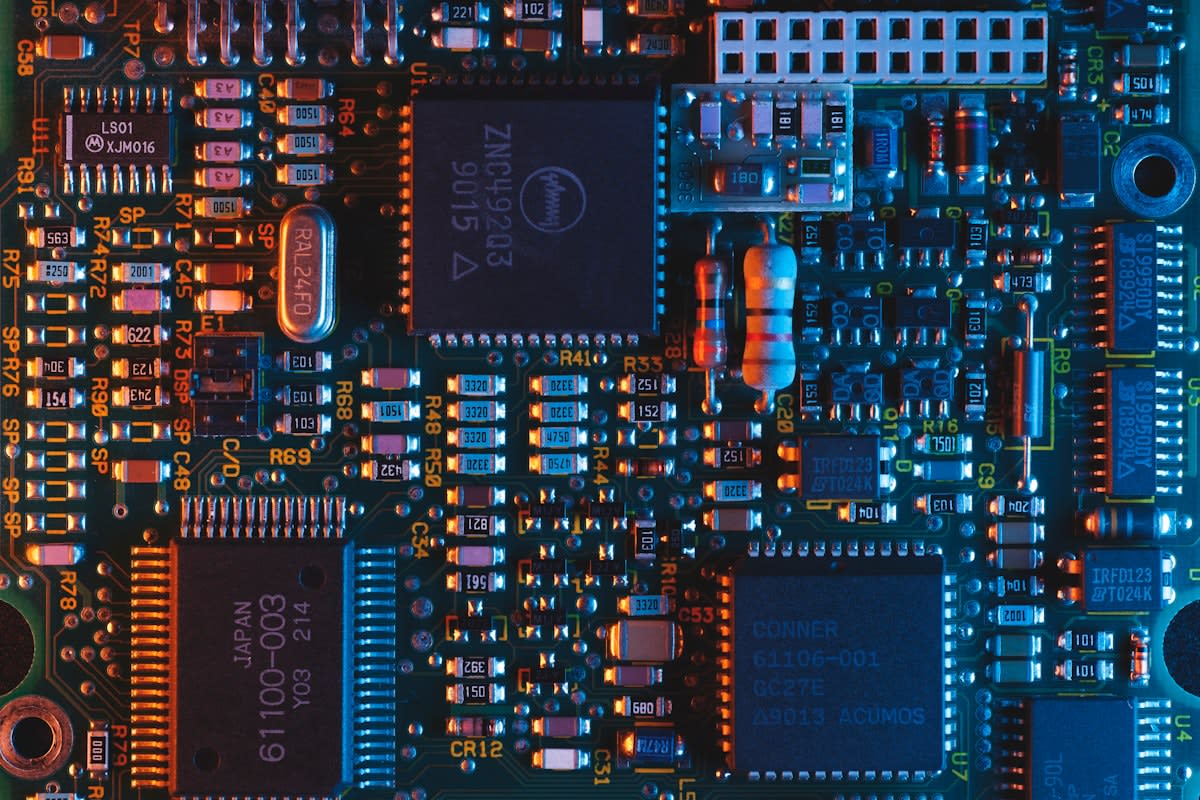
| Metric | Standard GPU | Neuromorphic (SNN) |
|---|---|---|
| Energy per Op | milli-Joules | pico-Joules |
| Data Flow | Synchronous/Clocked | Asynchronous/Event-driven |
| Memory Access | External DRAM | Colocated/In-memory |
| Idle Power | High (Leakage) | Near Zero |
Common Pitfalls
The most common mistake is the Accuracy Trap. Engineers obsess over getting 99.9 percent accuracy on ImageNet, even if it means increasing the spike rate to the point where the power efficiency vanishes. In the field, a 2 percent drop in accuracy is a fair trade for a 100x increase in battery life. If you cannot justify your energy budget, your neuromorphic deployment is just an expensive science project.
Another failure point is ignoring the cold-start problem. SNNs often require a period of activity to reach a steady state of firing. If your application requires an instant response from a dead stop, you will find the latency unacceptable. You have to implement wake-up circuits or maintain a low-level baseline of activity, which, if done poorly, eats into your power gains.
The Reality Gap
Editorial Note: The claims regarding power efficiency are based on peak theoretical performance and specific lab benchmarks. In production environments, overhead from the host CPU often masks these gains. Always measure the system-level power, not just the chip-level power.
Fact-Check & Accuracy Note
Settled: Neuromorphic hardware drastically reduces power for event-driven tasks. Debated: Whether SNNs can ever match the general-purpose flexibility and training ease of Transformers. The current consensus is that they will coexist as specialized accelerators for the edge.