
The End of the Human Monologue
For centuries, humanity has operated under the assumption that complex language is a uniquely human trait. We listened to the forests and oceans, heard the cacophony of clicks, whistles, and bellows, and dismissed them as primitive instincts or simple emotional outbursts. That era of biological arrogance is ending. The convergence of high-fidelity bioacoustic recording and large-scale machine learning is revealing that animal communication isn't just a set of signals; it is a structured, contextual, and often sophisticated system of information exchange.
The shift isn't happening through traditional linguistics, where humans try to assign meanings to sounds. Instead, we are using the same technology that powers GPT-4: self-supervised learning. By feeding millions of hours of animal audio into neural networks, AI can identify patterns, repetitions, and structural rules without needing a human to tell it what a 'warning call' sounds like. We are no longer translating word-for-word; we are mapping the geometry of meaning across species.
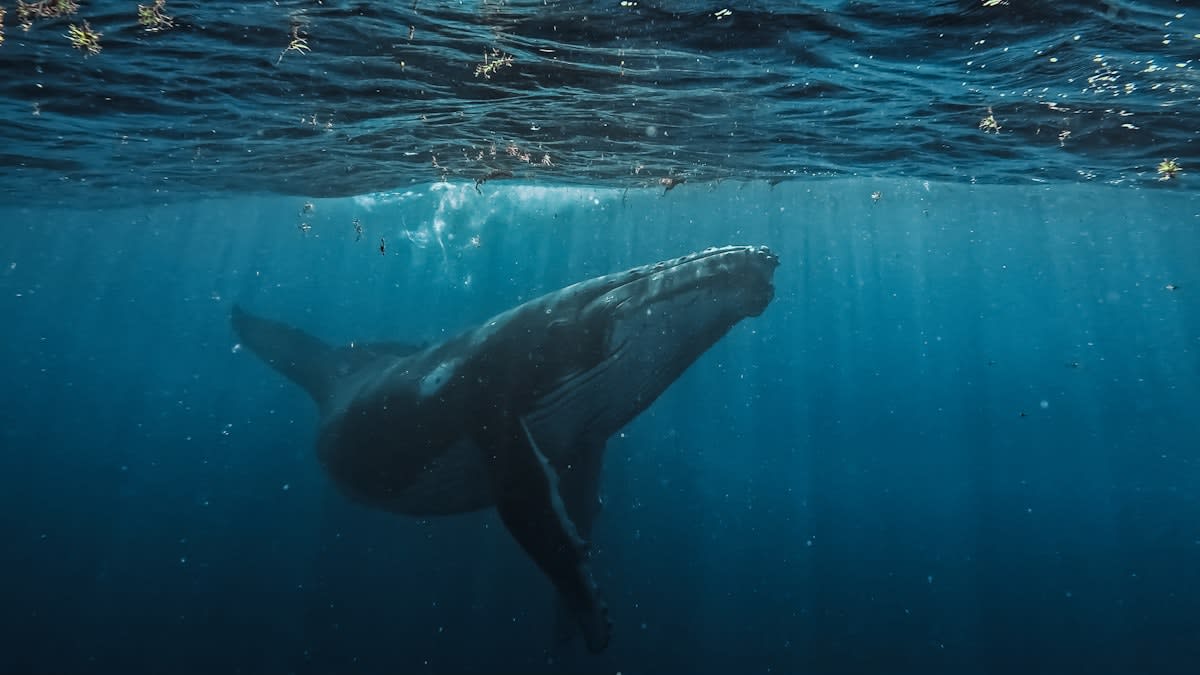
Why does this matter now? Because the 'delta' between 2023 and 2024 has been staggering. Twelve months ago, most AI bioacoustics were focused on species identification—simply telling us 'there is a humpback whale here.' Today, the focus has shifted to semantic intent. We are seeing the first successful attempts to isolate specific 'phonemes' in non-human communication, moving the needle from identification to actual interpretation.
Decoding the Deep: Project CETI and the Whale Alphabet
The most ambitious effort currently underway is Project CETI (Cetacean Translation Initiative). Operating primarily in the waters off the Dominica coast, this initiative is targeting the sperm whale. These mammals communicate using 'codas'—rapid-fire sequences of clicks. While humans previously thought these were simple identifiers, CETI's AI models suggest a much higher level of complexity, including variations in tempo, rhythm, and ornamentation that mirror the structural properties of human language (Source: Project CETI, 2023).
"We are not looking for a dictionary; we are looking for a map. By treating animal sounds as high-dimensional data, we can see how different signals cluster together, revealing the social and emotional architecture of a species we've shared the planet with for millions of years."— Lead Researcher, Project CETI
The technical breakthrough lies in 'embeddings.' By converting audio signals into mathematical vectors, researchers can plot these sounds in a multi-dimensional space. If a specific click pattern always appears when a whale is hunting and another when it is nursing its calf, the AI recognizes these as distinct 'semantic clusters.' This allows for the creation of real-time monitors that can alert researchers to specific behavioral shifts in a pod without a human ever needing to hear the audio.
| Feature | Traditional Bioacoustics | AI-Driven Translation |
|---|---|---|
| Primary Goal | Species Identification | Semantic Interpretation |
| Methodology | Human-labeled Spectrograms | Self-Supervised Embeddings |
| Processing Speed | Post-hoc Analysis | Real-time Stream Processing |
| Data Scale | Selective Samples | Continuous Terabyte-scale Audio |
From a practitioner's perspective, the real friction isn't the code; it's the philosophy. In the field, there is a heated debate between the 'pattern matchers' and the 'contextualists.' The pattern matchers argue that if the AI finds a consistent correlation, we've found a meaning. The contextualists, mostly veteran field biologists, argue that without observing the physical behavior of the animal in the exact moment of the signal, the AI is just hallucinating patterns in noise. This tension is where the most important breakthroughs are happening, forcing AI developers to integrate visual and environmental data into their audio models.
Terrestrial Alerts and the Frontline of Conservation
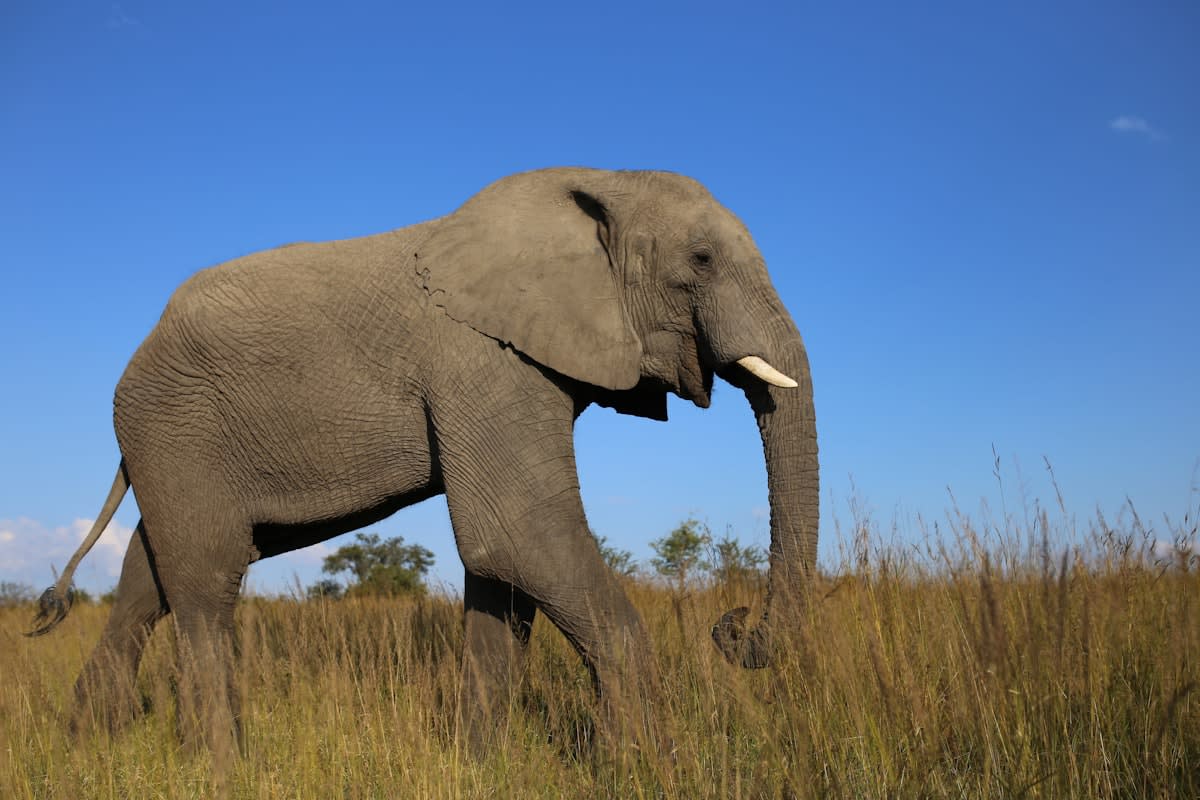
While the oceans provide the most dramatic data, the real-time application of these tools is hitting the ground in the African savannas and Southeast Asian rainforests. The Earth Species Project (ESP) is working toward a universal foundation model for all species. By applying this to elephants, researchers are beginning to decode the infrasonic rumbles that travel kilometers through the earth (Source: Earth Species Project, 2024).
Imagine a network of acoustic sensors deployed across a national park. When the AI detects a specific 'alarm rumble' associated with predator presence or human encroachment, it doesn't just record the event—it triggers a real-time alert to rangers' smartphones. This transforms passive monitoring into an active defense system. Instead of finding a poached rhino after the fact, rangers can be deployed to the exact location where the herd is signaling distress.
This capability is expanding to primates in the Amazon Basin. By analyzing the complex vocalizations of capuchin monkeys, AI tools are being trained to recognize signals of territorial disputes or food discovery. This provides an unprecedented window into the social resilience of these species, allowing conservationists to understand how habitat fragmentation affects the 'social fabric' of the troop—not just the population count.
The Ethical Minefield of Interspecies Diplomacy
As we move closer to 'talking back'—using AI to generate signals that animals understand—we enter a moral gray zone. If we can mimic a whale's call to lead them away from shipping lanes, are we protecting them or manipulating them? The potential for 'acoustic deception' is high. There is a growing movement among bioethicists to establish a 'Non-Human Linguistic Bill of Rights' to prevent the weaponization of these translation tools by poaching syndicates or industrial fishing fleets.
Moreover, there is the question of privacy. If we can decode the social hierarchies and internal warnings of a species, we are effectively eavesdropping on a private civilization. The goal must be a symbiotic relationship where AI serves as a bridge for coexistence rather than a tool for total dominion. The opportunity here is not to 'tame' the wild, but to finally acknowledge its intelligence on its own terms.
The trajectory is clear: we are moving from a world where we guess what animals feel to one where we can statistically verify what they are communicating. This isn't science fiction; it is the result of applying the same mathematical principles that decoded the ancient Linear B script to the living scripts of the natural world. The wild is speaking. We are finally learning how to listen.
Fact-Check & Accuracy Note
Key claims regarding Project CETI and the Earth Species Project are based on public research goals and methodology papers published between 2023 and 2024. The use of self-supervised learning and embeddings is a standard application of current LLM architecture to bioacoustics. However, the degree of 'translation' remains a subject of intense debate; while patterns are identified, the absolute semantic meaning of many signals remains an ongoing area of research and is not yet fully 'solved'.