
The End of the Software-Only Era
The last seven days have dismantled the notion that artificial intelligence is merely a digital layer. Between June 29 and June 30, 2026, we witnessed a synchronized surge in embodied AI and bio-integrated hardware that renders the chatbot era obsolete. We are no longer talking about algorithms that simulate thought; we are seeing hardware that mimics life and software that acts as an autonomous agent in physical laboratories.
Six months ago, the conversation centered on the January 2026 reports suggesting that the human brain processes spoken language in sequences mirroring the layered architecture of LLMs. That was a theoretical alignment. This week, that alignment has turned operational. The delta is clear: we have moved from observing similarities between brains and networks to building hardware that physically adapts like a biological organism.
Hardware That Breathes
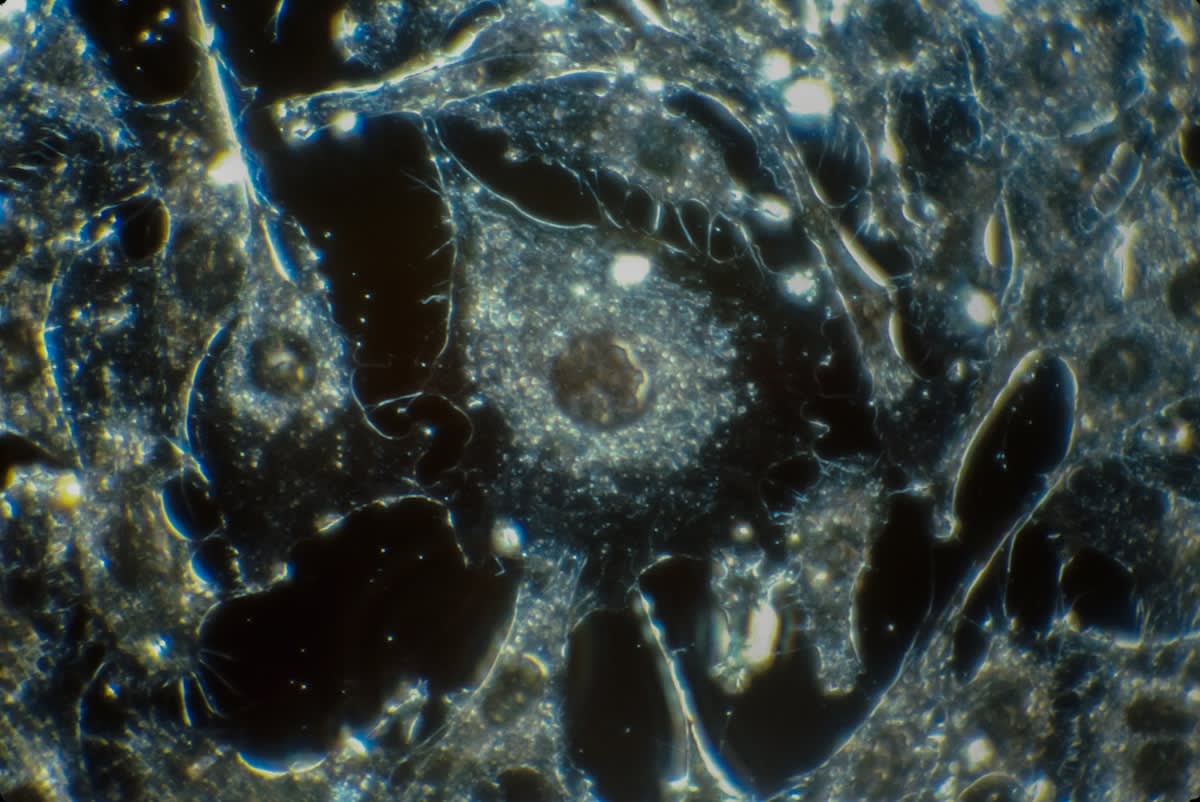
Robotics startup morph is challenging the software-first dogma. Instead of layering intelligence on top of rigid metal, they have developed soft robotic cells that embed physical AI directly into the hardware. These cells do not just execute commands; they morphologically change to provide motion, support, or protection based on real-time environmental data.
"Whatever it is, we have sensing cells that are soft and able to receive and understand information, and then fundamentally adjust to effect change in shape to benefit a product or a value."— Dr. Jean Nehme, Founder of morph
This is a stark departure from the rigid automation seen in industrial hubs from Detroit to Shenzhen. By treating AI as a hardware problem, morph is creating a system that senses and responds to the body in real time, moving us closer to a seamless integration of machine and organism.
The Sixth Sense in the Lab
Simultaneously, in Tokyo, an international collaboration involving the University of Tokyo has weaponized biological inspiration to solve a scaling crisis in cardiology. They have developed a sensor inspired by the lateral line of fish—a sixth sense organ—to monitor cardiac organoids.
| Metric | Traditional Monitoring | Fish-Inspired Device |
|---|---|---|
| Sample Size | Low/Individual | Hundreds of organoids |
| Organoid Scale | ~3 millimeters | ~3 millimeters |
| Capability | Manual/Slow | Scalable pulse & rhythm measurement |
Why does this matter? Because scaling the speed of testing on these 3-millimeter bundles of cells accelerates the discovery of heart disease treatments. The immediate ripple effect is a reduction in the time between lab discovery and clinical application.
While the hardware evolves to mimic biology, the software is evolving to mimic agency.
From Tools to Autonomous Agents
On June 29, 2026, Tecan announced the integration of agentic AI into its Introspect lab analytics platform. By utilizing the NVIDIA BioNeMo Agent Toolkit, Tecan is moving beyond passive analytics. These are AI agents capable of proactively supporting scientists, creating a data-driven laboratory environment where the AI doesn't just report data—it drives the operation.
The Agentic Shift
Agentic AI represents a paradigm shift from 'software as a tool' to 'software as a collaborator.' In the lab, this means the system can proactively suggest next steps rather than waiting for a human query.
The Consciousness Mirage
Amidst this physical progress, a necessary skepticism has emerged. A study published on June 28, 2026, used the Age of Empires scenario editor to illustrate the absurdity of treating AI as cognizant. The research argues that the personable facades of LLMs are merely masks for alienating code, warning that the public is being bilked by fantasies of The Matrix and Terminator.
This creates a paradoxical tension. We are building machines that can sense like fish and adapt like cells, yet we are being reminded that these systems possess no more consciousness than a toy bird. The utility is real; the sentience is a marketing ploy.
The real-world consequence of this tension is felt in the boardroom, where the rhetoric of displacement meets the reality of implementation.
The Cost of Doom Trolling
As AI leaders accelerate the deployment of these tools, they have engaged in what observers call doom trolling—predicting mass workforce displacement while simultaneously selling the tools that cause it. This has left CHROs in a precarious position, forced to plan for a future where the very companies providing the efficiency tools are predicting the obsolescence of the employees using them.
- Hardware Evolution: Shift from rigid robotics to morphologically adaptive soft cells.
- Biological Integration: Scalable monitoring of cardiac organoids via fish-inspired sensors.
- Operational Agency: Transition from lab analytics to agentic AI via NVIDIA BioNeMo.
- Cognitive Realism: Debunking AI consciousness while acknowledging structural similarities to the human brain.