
Prerequisites for Cultural Deconstruction
Eliminating silence in a high-stakes environment requires more than a memo from the Chief of Surgery. It demands a fundamental admission that the current power dynamic is a liability. Before implementing any of the following steps, the surgical lead must accept that their authority is the primary barrier to safety. This requires a baseline of emotional intelligence, as the Wyvern CEO notes that emotional intelligence is directly linked to safety culture. Without this psychological foundation, any attempt at 'open communication' will be viewed as a performative exercise rather than a clinical necessity.
The Compliance Trap
Compliance is a floor, not a ceiling. Following a checklist does not equal a safety culture; it equals adherence to a rule. True safety exists in the space between the rules, where a junior nurse feels empowered to stop a senior surgeon.
Teams must also ensure they have the capacity for this transition. Drawing from the model of the Merck Foundation Africa Asia Luminary, which focuses on building healthcare capacity across Asian and African nations, teams must recognize that capacity isn't just about equipment—it is about the human infrastructure. This means dedicating time to non-clinical behavioral training. If the team is too fatigued or under-resourced, the instinct to defer to authority becomes a survival mechanism, further cementing the silence.
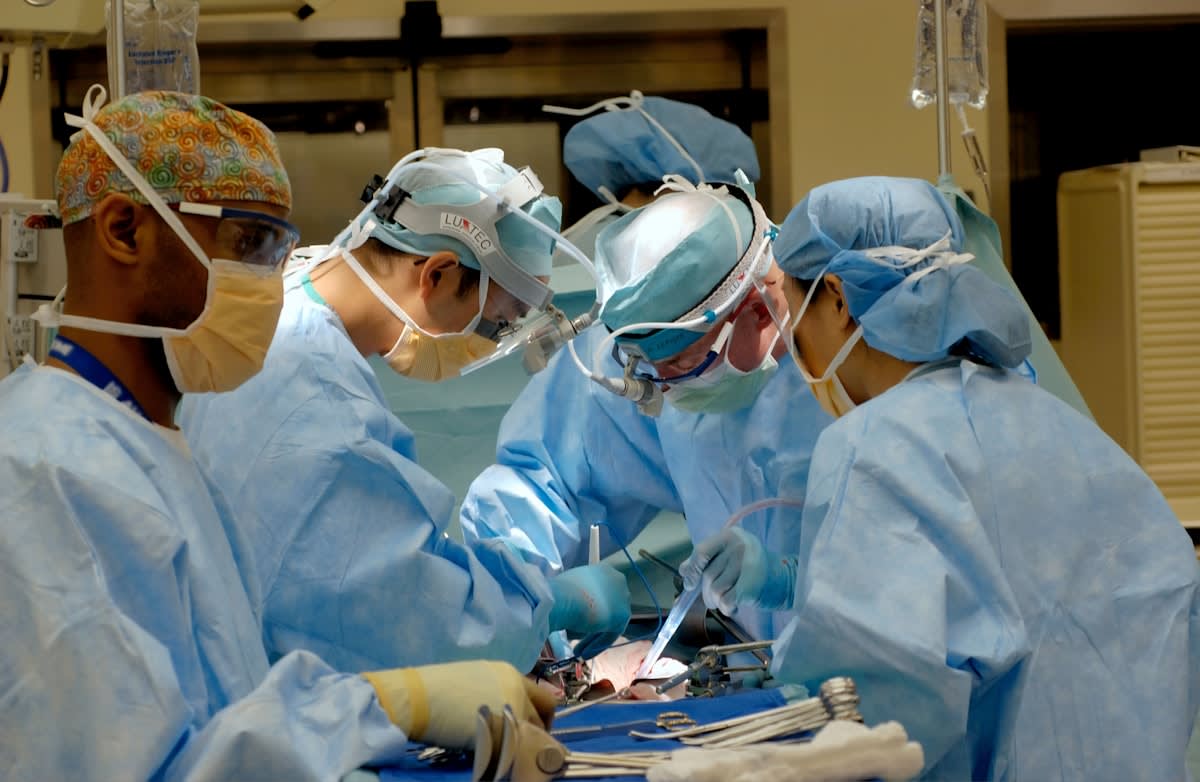
The Execution Protocol
- Decouple Compliance from Culture: Stop treating safety as a checkbox. As the Wyvern CEO contends, compliance is not enough for a true safety culture. In Southeast Asian theaters, this means moving past the 'completion' of a surgical safety checklist and instead fostering an environment where the checklist is a catalyst for dialogue. If the team marks 'Yes' to a safety check but the junior resident has a doubt they are too afraid to voice, the checklist has failed. The goal is to shift the metric from 'Did we do the check?' to 'Did everyone feel safe enough to challenge the check?'
- Neutralize Cultural Friction: Identify the specific points where hierarchy creates a 'psychologically unsafe' environment. Analysis from Kin&Co suggests that cultural friction often derails value because the human experience of change is overlooked. In a surgical context, this friction manifests as the fear of offending a superior. To neutralize this, surgeons must explicitly 'grant permission' to be corrected. This is not a one-time statement but a repeated, tactical invitation for dissent during the pre-operative brief. When culture protection is ignored, the environment becomes unsafe, and critical errors go unreported.
- Hard-Code Communication Redundancy: Implement a system where communication is treated as a critical safety tool, similar to how communication is deemed essential for a safe harvest in high-risk agricultural environments. This involves 'closed-loop communication' where every order is repeated back and confirmed. By making the communication process rigid and mandatory, you remove the social awkwardness of speaking up. It is no longer a junior staff member 'interrupting' a surgeon; it is a staff member fulfilling a mandatory procedural requirement.
- Target Procedural Errors via EQ: Use the data from Nimbl, which identifies procedural errors as a top cause of incidents in aviation, to analyze surgical failures. Most procedural errors are not caused by a lack of skill, but by a lack of communication during the procedure. By integrating emotional intelligence (EQ) into the team's operational rhythm, the lead surgeon can detect the 'silent signals' of a hesitant team member—a pause in movement, a look of uncertainty—and proactively solicit their input before the error occurs.
- Scale Capacity through Strategic Partnerships: Leverage external benchmarks to validate the shift. Following the approach of the Merck Foundation's partnership journeys, surgical teams should engage with cross-disciplinary safety experts—such as aviation safety officers—to audit their behavioral patterns. This removes the internal politics of the hospital and introduces an objective standard of what a 'flat' safety hierarchy looks like in practice.
The transition from a rigid hierarchy to a psychologically safe team is not linear. It is often met with resistance from those who believe that a strong hand is necessary for surgical precision. However, the evidence from other high-reliability organizations suggests the opposite: precision is a product of collective vigilance, not individual dominance. When a team is psychologically safe, the cognitive load on the lead surgeon is reduced because they know that the team is acting as a redundant safety net.
| Behavioral State | Compliance-Driven (Old) | Culture-Driven (New) |
|---|---|---|
| Junior Staff Response | Silent adherence to error | Immediate vocal intervention |
| Lead Surgeon Focus | Maintaining authority | Soliciting dissent |
| Error Detection | Post-incident review | Real-time prevention |
| Communication Style | One-way commands | Closed-loop confirmation |
This shift requires a redistribution of psychological power. In many Southeast Asian contexts, the cultural weight of seniority can be overwhelming. By framing the 'right to speak' as a professional obligation rather than a personal choice, the burden of dissent is shifted. It is no longer the junior nurse's 'bravery' that is being tested, but their 'professionalism.' If they see an error and stay silent, they are failing their professional duty to the patient, regardless of the surgeon's rank.

Common Pitfalls in Behavioral Implementation
The most frequent failure point is the 'False Openness' trap. This occurs when a lead surgeon claims to want feedback but reacts with irritation or condescension when a mistake is pointed out. This reaction creates an immediate and lasting 'psychologically unsafe' environment, as described by Kin&Co, which effectively shuts down all future communication. One negative reaction can erase months of culture-building effort. The reaction to a correction must be a standardized 'Thank you' to reinforce the behavior.
Another pitfall is the over-reliance on technical checklists. While checklists are necessary, they are not sufficient. As seen in the aviation data provided by Wyvern, compliance is a baseline. If the team treats the checklist as a bureaucratic hurdle to be cleared quickly, they miss the opportunity to actually discuss the risks. The checklist should be the start of the conversation, not the end of it. When the process becomes a tick-box exercise, the hierarchical silence simply moves from the conversation to the paperwork.
"Procedural errors top cause of incidents. This is a universal truth across aviation and surgery: the failure is rarely in the hand, but in the communication preceding the movement."— Derived from Nimbl Aviation Safety Data
Finally, teams often fail by ignoring the impact of fatigue. In high-pressure surgical environments, fatigue erodes emotional intelligence. When the lead surgeon is exhausted, their patience for dissent thins, and the team's willingness to speak up vanishes. Recognizing that fatigue is a hazard—much like it is in harvest seasons—is critical. Teams must implement 'fatigue checks' where the team acknowledges their mental state before beginning a complex procedure, ensuring that the psychological safety net is still intact.