
Why do we accept the 3 PM haze as an inevitable part of the professional grind? Most people chalk it up to a lack of sleep or the natural dip of the circadian rhythm, but the reality is far more chemical. That suffocating brain fog and the sudden, desperate craving for a sugary snack are the hallmarks of a glucose crash. When you consume refined carbohydrates or sugars on an empty stomach, your blood glucose spikes violently, triggering a massive insulin response that often overcorrects, plunging your levels below baseline. This metabolic rollercoaster doesn't just make you tired; it erodes your decision-making capacity and kills your creative momentum.
The goal isn't to eliminate carbohydrates entirely—that is a recipe for irritability and unsustainable dieting. Instead, the objective is flattening the curve. By altering the order in which food enters your system and leveraging simple physiological triggers, you can maintain a steady stream of fuel to the brain. Whether you are eating a traditional breakfast in Mexico City, a quick lunch in Tokyo, or a heavy dinner in Berlin, the biological laws of glucose absorption remain identical. This protocol is about working with your biology, not fighting it, to ensure your energy remains a constant line rather than a series of jagged peaks and valleys.
Prerequisites: Your Metabolic Toolkit
Before implementing the protocol, you need to assemble a few basic tools. You do not need expensive supplements or wearable continuous glucose monitors to see results, though they can provide interesting data. The real work happens in the kitchen and during the transition between your desk and the door. Focus on acquiring high-quality fats, diverse fiber sources, and a reliable way to incorporate acetic acid into your routine. The following items are the non-negotiables for anyone serious about ending the energy crash.
- Apple Cider Vinegar (ACV) or a similar vinegar with the mother
- High-fiber starters (leafy greens, cruciferous vegetables, or seeds)
- Clean protein sources (eggs, legumes, lean meats, or tofu)
- Healthy fats (avocado, olive oil, or raw nuts)
- A dedicated 10-minute window for post-meal movement
The Glucose Flattening Protocol: Step-by-Step
- Start your day with a savory, protein-rich breakfast to set the metabolic tone.
- Sequence your meals: Fiber first, then protein and fats, and carbohydrates last.
- Integrate a vinegar-based tonic before your largest carbohydrate load.
- Engage in low-intensity muscle activation within 30 minutes of eating.
- Pair any mid-day snacks with a protein or fat 'buffer' to prevent spikes.
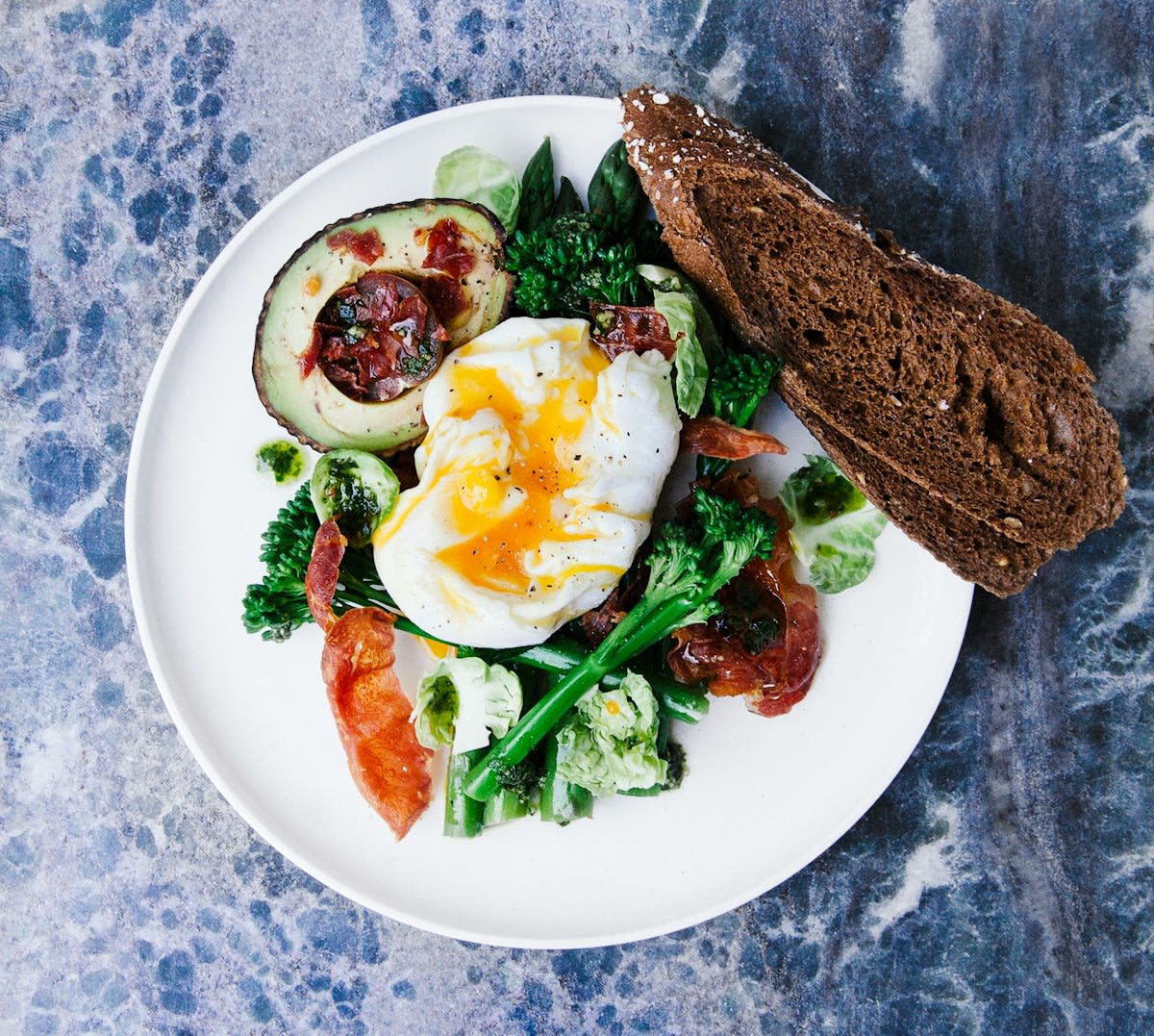
The first step—the savory start—is where most people fail. The modern breakfast is often a sugar bomb disguised as health food, from honey-drizzled granola to fruit-heavy smoothies. These choices trigger an immediate glucose spike that sets the stage for a crash by noon. By switching to a savory breakfast—think eggs with spinach or avocado on sourdough—you provide your body with a slow-release energy source. This prevents the early-morning insulin surge and keeps your appetite stable, reducing the likelihood of impulsive, sugar-driven choices later in the day.
Meal sequencing is the most powerful lever in this protocol. When you eat fiber first—such as a small salad or a handful of broccoli—you create a viscous, gel-like mesh in your small intestine. This mesh slows down the absorption of glucose from the carbohydrates that follow. If you eat the bread or rice first, the glucose hits your bloodstream almost instantly. By pushing the starches and sugars to the end of the meal, you effectively flatten the glucose curve, reducing the insulin spike and protecting your energy levels for the next four hours.
The vinegar hack is a simple but potent tool for those who cannot avoid high-carb meals. Acetic acid, the active component in vinegar, temporarily inhibits the enzyme alpha-amylase, which breaks down starch into glucose. It also encourages your muscles to take up glucose more efficiently. A single tablespoon of apple cider vinegar diluted in a glass of water 10 to 20 minutes before a meal can significantly reduce the resulting glucose spike. It is a biological shortcut that allows for more flexibility in your diet without the subsequent cognitive penalty.
Pro Tip: The Dilution Rule
Always dilute your vinegar. Drinking it straight can damage tooth enamel and the lining of your esophagus. A ratio of one part vinegar to ten parts water is the gold standard for safety and efficacy.
Once the meal is over, the window for action opens. Your muscles are the largest glucose sinks in your body. By engaging in light movement—a brisk 10-minute walk, some air squats, or even tidying up your workspace—you signal your muscles to soak up the excess glucose from your bloodstream. This process occurs even without a massive insulin surge, as muscle contraction stimulates glucose transporters (GLUT4) to move to the cell surface. This effectively 'mops up' the sugar before it can cause a spike and subsequent crash.

Finally, address the danger of the 'naked carb' snack. A piece of fruit or a granola bar eaten in isolation is a fast track to a 4 PM slump. To prevent this, always clothe your carbs in protein or fat. Pairing an apple with almond butter or berries with Greek yogurt slows the digestion process. This ensures that the glucose enters your system in a steady trickle rather than a flood, keeping your focus sharp and your mood stable until dinner.
| Eating Order | Glucose Response | Energy Outcome |
|---|---|---|
| Carbs First | Sharp Spike / Rapid Drop | Mid-day Crash / Brain Fog |
| Protein then Carbs | Moderate Spike | Mild Fatigue / Hunger |
| Fiber -> Protein -> Carbs | Flattened Curve | Sustained Focus / High Energy |
Transitioning from the mechanics of eating to the psychology of maintenance requires an understanding of the common traps. Many people believe they are following a healthy diet while unknowingly sabotage their glucose levels through specific habits. The most dangerous of these is the 'healthy' smoothie, which strips fiber from fruit and delivers a concentrated dose of fructose and glucose directly to the liver and bloodstream. This creates a massive spike that mimics the effect of a dessert, regardless of whether the ingredients are organic.
Common Pitfalls to Avoid
The Caffeine Cycle is another pervasive trap. Many professionals use coffee to mask the symptoms of a glucose crash. While caffeine provides a temporary boost in alertness, it can increase cortisol levels, which in turn signals the liver to release more glucose into the blood. If you are already in a state of glucose instability, this creates a volatile feedback loop. The result is a jittery, anxious energy followed by an even deeper crash once the caffeine wears off. The solution is to prioritize protein and hydration before your first cup of coffee.
Over-restriction is the final pitfall. Some attempt to flatten their glucose by cutting out all carbohydrates, leading to a state of metabolic rigidity. When the body loses its flexibility to handle glucose, even a small amount of sugar can cause an exaggerated response. The goal of the protocol is resilience, not avoidance. By strategically sequencing your nutrients and moving your body, you train your system to handle carbohydrates efficiently, allowing you to enjoy a diverse diet without sacrificing your cognitive performance.