Farooq Abdullah's comments on Pakistan and Kashmir draw flak
Source Entity
NASEER GANAI
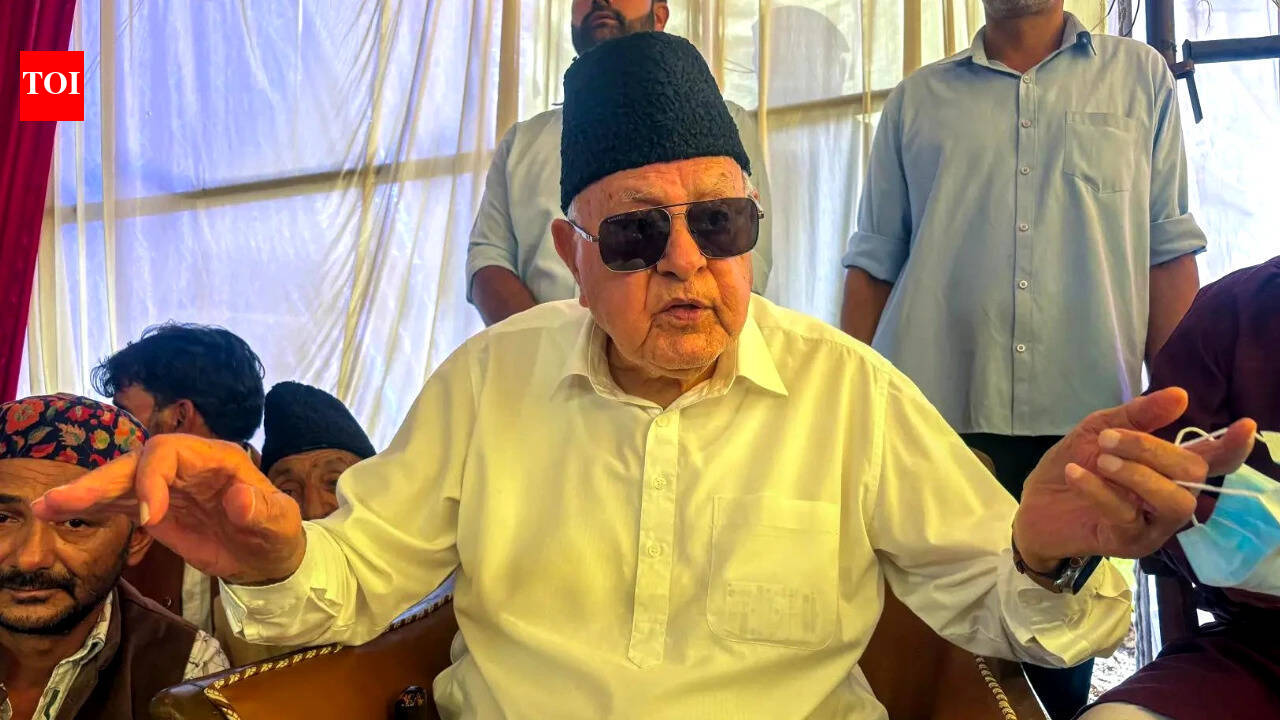
National Conference leader Farooq Abdullah has sparked a political firestorm by crediting Pakistan for keeping the Kashmir issue alive internationally. The BJP has condemned these remarks as seditious, accusing Abdullah of undermining India's national integrity.
The Kashmir Discourse: A Political Confrontation
The political landscape in Jammu and Kashmir has been ignited by recent comments from National Conference (NC) president Farooq Abdullah. Speaking at a workers' gathering in the Baramulla district, Abdullah expressed deep skepticism regarding the central government's intentions toward the region's populace. He explicitly suggested that Pakistan has played a pivotal role in ensuring that the voices of Kashmiris are heard on international platforms, a statement that has prompted an immediate and fierce backlash from the Bharatiya Janata Party (BJP).
The Charges of Sedition and Treason
Following these remarks, the BJP has launched a robust offensive, labeling Abdullah’s comments as "seditious" and an "act of treason." Party representatives argue that by praising Pakistan's diplomatic efforts, Abdullah is not only echoing Islamabad’s narrative but is also actively weakening India’s sovereign stance on the Kashmir issue. The demand for police action against the former Chief Minister highlights the deep-seated ideological divide regarding the status of the union territory and the role of regional political figures in national discourse.
Questioning the Centre's Intentions
At the heart of the controversy is Abdullah’s public questioning of the central government’s commitment to justice for the people of Jammu and Kashmir. During his address, he challenged the audience to consider whether they could reasonably expect fair treatment from Delhi. This rhetoric reflects a long-standing tension between regional Kashmiri leadership and the central government, particularly following the administrative shifts in the region's governance structure. Abdullah’s call for Kashmiris to remain determined in protecting their identity suggests a strategic pivot toward local mobilization amid these political frictions.
Implications for Regional Stability
This exchange underscores the volatile nature of the political environment in Jammu and Kashmir. By framing the internationalization of the Kashmir issue as a result of Pakistani diplomacy, Abdullah has touched upon a sensitive nerve in Indian national security policy, which has consistently maintained that the region is an internal matter. The BJP’s aggressive response serves as a warning against any rhetoric that might be perceived as aligning with foreign narratives, further polarizing the political spectrum ahead of future electoral cycles.
Historical Context and Future Trends
Historically, the relationship between regional parties like the National Conference and the central government has been characterized by cycles of cooperation and confrontation. However, the intensity of this current row suggests a hardening of positions. Moving forward, the political discourse in the valley is likely to remain focused on the contest between local identity politics and the central government's integrationist agenda. As the BJP continues to prioritize national security and territorial integrity, leaders like Abdullah will likely face continued scrutiny, setting the stage for a protracted struggle over the narrative of Kashmir's future.
Multiple Citing Sources