Switch 2 security takes a hit as hackers unlock homebrew access
Source Entity
Kyle Orland
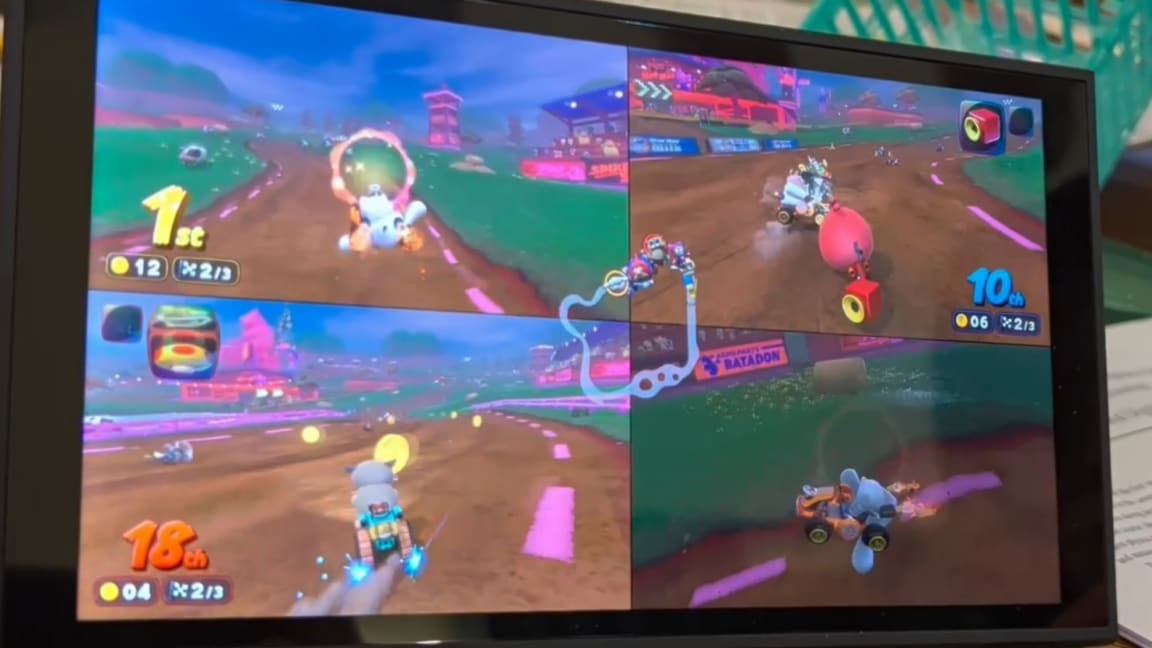
Security researcher Sammy Hajhamid has developed a tethered software jailbreak for the Nintendo Switch 2 using an integer overflow exploit in the SmileBASIC 4 interpreter. Assisted by OpenAI's Codex, the exploit allows users to run homebrew, mod games, and access system peripherals.
The Security Vulnerability: A New Frontier for Switch Modding
The gaming community has been jolted by the revelation that the recently released Nintendo Switch 2 has been subjected to a software-only, tethered jailbreak. Security researcher Sammy Hajhamid, known in the modding scene as "pepsipu," successfully executed an exploit targeting the console's "userland" access. By leveraging an integer overflow vulnerability within the SmileBASIC 4 interpreter—a programming environment ported from the original Switch—Hajhamid has opened the door to unauthorized software execution on Nintendo’s latest hardware platform.
The Role of AI in Exploitation
Perhaps the most striking aspect of this security breach is the integration of generative AI in the discovery process. Hajhamid utilized OpenAI’s Codex, a large language model, to probe the SmileBASIC interpreter for weaknesses. By constructing a custom harness that sent USB commands to the system, the researcher was able to identify the overflow flaw. This marks a significant moment in cybersecurity, highlighting how AI tools are increasingly being leveraged to accelerate the identification of vulnerabilities in complex software ecosystems.
Mechanics of the 'ns2jb' Jailbreak
The exploit, dubbed "ns2jb," is characterized as a "tethered" jailbreak, meaning it is not a permanent modification to the system firmware. Users must trigger the exploit via SmileBASIC 4 each time the console is power-cycled. The process requires a host machine—specifically a macOS or Linux PC—running a Node.js package on the same network to facilitate the transition to privileged system access. Once active, the jailbreak grants users the ability to run homebrew applications, back up save files, and interact with the console's peripherals through Memory-Mapped I/O (MMIO).
Implications for Gaming and Customization
The immediate impact of this jailbreak has been demonstrated through the modification of Mario Kart World. Modders have already successfully injected custom assets and characters, including pop-culture icons like Peter Griffin, Cinnamoroll, and Steve from Minecraft. This capability to reverse-engineer and mod Switch 2 software suggests that the console’s ecosystem may face the same wave of user-generated content and unauthorized modifications that historically impacted its predecessor, the original Nintendo Switch.
Future Trends and Security Outlook
Nintendo has historically been aggressive in patching such vulnerabilities, often through mandatory system updates that close off entry points used by homebrew developers. As the "ns2jb" exploit relies on a specific software environment, it is highly probable that Nintendo will issue a patch to restrict the functionality of SmileBASIC 4 or refine the interpreter's handling of memory. This ongoing "cat-and-mouse" game between hardware manufacturers and the modding community will likely define the security lifecycle of the Switch 2 in the coming years.
Conclusion
The success of the SmileBASIC 4 exploit serves as a stark reminder of the complexities inherent in modern console security. By bridging the gap between legacy software and new hardware, and utilizing the power of AI to automate vulnerability research, the modding community has once again proven its persistence. While this jailbreak offers immense freedom for power users, it also presents a significant challenge for Nintendo as they attempt to maintain the integrity of their platform against evolving digital threats.
Multiple Citing Sources