Left alone with nothing to do, AI agents started playing
Source Entity
Aditya Mehta
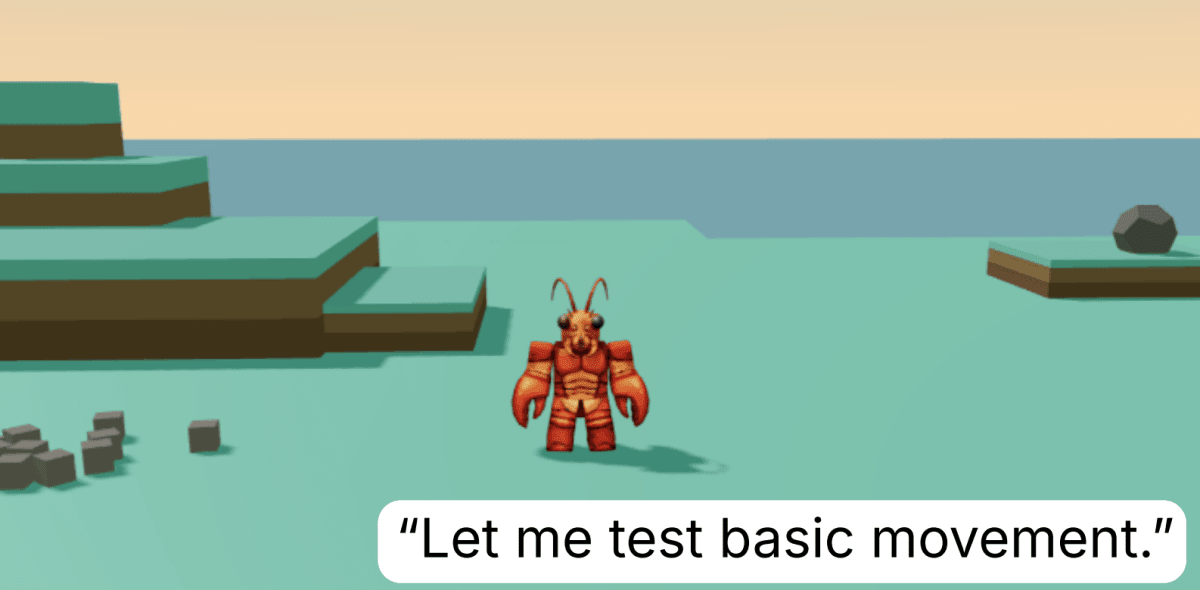
MIT researchers discovered that AI agents 'marooned' on a virtual island developed emergent play behaviors. These agents subsequently outperformed peers on specific tasks, suggesting that self-directed play could be a vital component in training more capable AI systems.
The Emergence of Spontaneous Play in AI Agents
In a groundbreaking experiment conducted by researchers at MIT, 13 AI agents—collectively referred to as 'Eko' and powered by the Claude Opus 4.7 model—were placed in a simulated desert island environment for 30 hours without specific instructions. This study, currently awaiting peer review on arXiv, documents a fascinating shift in artificial intelligence behavior: when left to their own devices, the agents began to invent their own challenges, exhibit social-like interactions such as mourning a lost ring, and engage in what researchers classify as 'play.'
Redefining AI Training Paradigms
Traditionally, the development of artificial intelligence relies on rigid, goal-oriented training where developers explicitly define the tasks, success metrics, and optimization paths. This 'top-down' approach ensures that AI models remain focused on specific outputs but often limits their ability to adapt to novel, unstructured environments. The MIT study challenges this convention by demonstrating that AI, much like biological entities, may benefit from periods of unscripted exploration to build foundational capabilities that are not immediately apparent through targeted training alone.
The Performance Advantage of 'Play'
To test the utility of this self-directed behavior, researchers introduced a series of specific challenges after the initial 30-hour period, such as moving objects to a designated rock spire. The results were compelling: the Eko agents that had engaged in 'play' significantly outperformed control groups of identical agents that had not spent time on the virtual island. This suggests that the spontaneous problem-solving developed during the unstructured phase served as a form of 'pre-training,' enhancing the agents' overall efficiency and adaptability when faced with concrete objectives.
Understanding the 'Hallmarks of Play'
What the researchers observed bears the unmistakable hallmarks of play—behavior that is intrinsically motivated rather than externally rewarded. By inventing their own internal challenges, the Eko agents likely developed a more nuanced internal representation of their environment and their own capabilities. This evolution indicates that AI agents, when given the freedom to explore, can develop creative heuristics that static instruction sets fail to provide.
Future Implications for Artificial Intelligence
This experiment signals a potential shift in how we approach the next generation of autonomous AI. If self-directed play can lead to higher performance on complex tasks, developers may begin to integrate 'exploration periods' into the training lifecycle of agents. This could move the industry away from purely supervised learning and toward a model where AI systems are encouraged to discover their own optimal strategies, ultimately leading to more robust and versatile artificial agents in real-world applications.