
For years, the promise of liquid biopsies was always just around the corner. We talked about it in the future tense—a world where a simple blood draw could replace invasive tissue biopsies and catch cancer before a patient ever felt a symptom. But in September 2026, that future arrived with a vengeance. We are no longer debating whether these tests work; we are now arguing over how quickly we can integrate them into routine care without breaking the healthcare system. The delta between where we were twelve months ago and today is staggering, marked by a shift from general feasibility to high-precision detection of the earliest, most treatable stages of malignancy.
The most jarring piece of evidence comes from the latest reports surrounding Multi-Cancer Early Detection (MCED) tools. VolitionRx recently presented data at ESMO showing a 95% detection rate for Stage I and II cancers within a blinded validation cohort of 81 subjects, specifically focusing on lung and colorectal cancers (Source: StockTitan, 2026). Think about that number. We are talking about the 'silent' stages of cancer, where tumors are often too small for traditional imaging to catch reliably. By utilizing CTCF Capture-Seq, the industry is moving toward a one-stop early-warning system that could fundamentally alter the survival curves for millions of people globally.
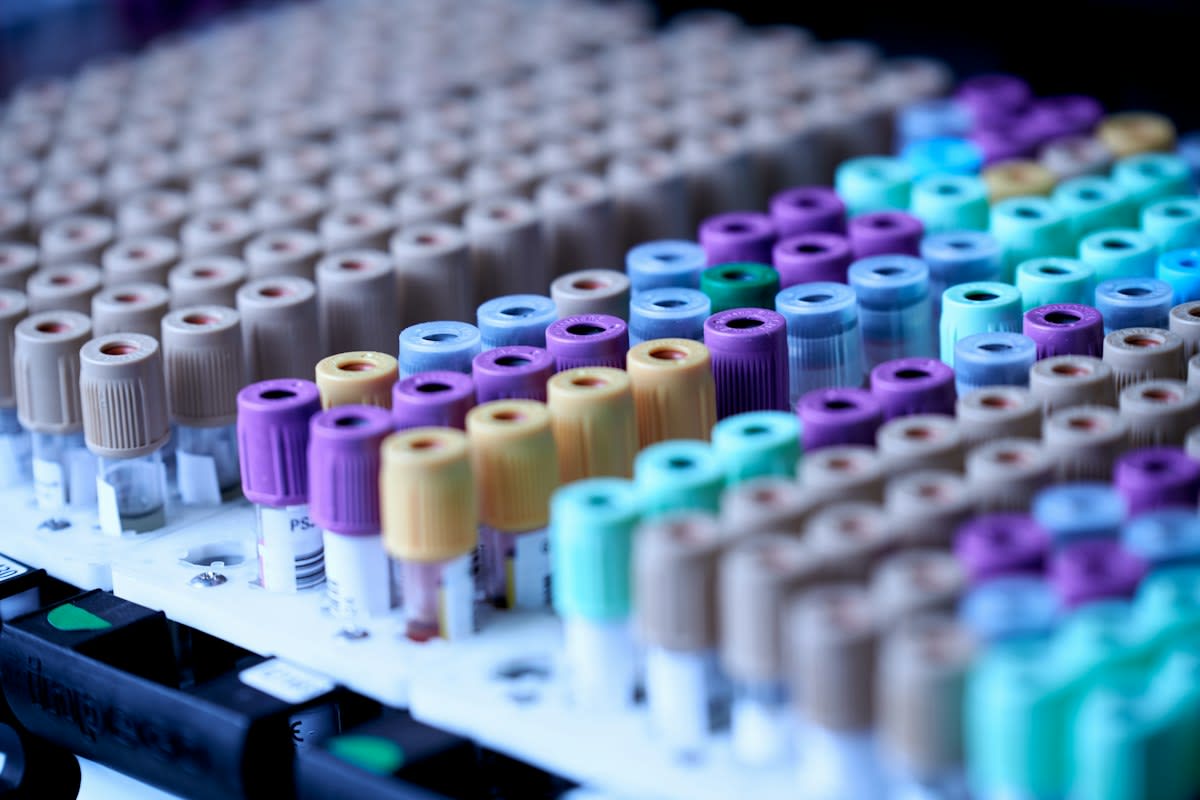
The Exosome Engine: Precision in Gastric Cancer
While MCEDs grab the headlines, the real technical heavy lifting is happening in the realm of exosomal miRNA biomarkers. A 2025 meta-analysis has provided a clear benchmark for gastric cancer detection, highlighting a critical distinction between serum and plasma-derived samples. Plasma-derived exosome biomarkers achieved a sensitivity of 74% and a specificity of 80%, with an Area Under the Curve (AUC) of 0.84 (Source: Market.us, 2026). Serum-derived exosomes were slightly behind, with a pooled sensitivity of 72% and specificity of 80% (Source: Market.us, 2026). This distinction isn't just academic; it tells us exactly how to refine the collection process to maximize detection accuracy.
| Biomarker Source | Sensitivity | Specificity | AUC |
|---|---|---|---|
| Plasma-derived Exosomes | 74% | 80% | 0.84 |
| Serum-derived Exosomes | 72% | 80% | Not Specified |
Why does the AUC of 0.83 to 0.84 matter so much? Because it represents a threshold of reliability that clinicians can actually trust. In the past, liquid biopsies were plagued by false positives that led to unnecessary, invasive follow-up procedures. The current data suggests we are closing that gap. When you combine these exosomal insights with broader MCED approaches, you get a diagnostic net that is increasingly difficult for early-stage tumors to slip through.
"These methodological and technological breakthroughs represent a novel liquid biopsy method for a novel class of potentially thousands of liquid biopsy sequence biomarkers."— VolitionRx, Statement on CTCF Capture-Seq™
But let's be honest about the ground-level reality. If you step into a pathology lab or a clinical oncology ward today, you'll find a fierce debate. The 'tech-optimists' are pushing for immediate adoption, while the 'clinical skeptics' are pointing to the sample sizes. For instance, while a 95% detection rate is incredible, critics argue that a blinded cohort of 81 subjects is a starting point, not a finish line (Source: StockTitan, 2026). There is a messy, friction-filled struggle over how to validate these results in populations of tens of thousands before they become the standard of care. The argument isn't about whether the tech works, but whether it's robust enough to handle the biological noise of a diverse, global population.
The Commercial Blitz and Global Adoption
The transition from lab to market is happening with startling speed. Caris Life Sciences has shifted its strategy from quiet clinical validation to loud, national awareness. Their 'Math' campaign, featuring Kevin Costner, is a calculated move to prime the public for the Caris Detect MCED blood test (Source: StockTitan, 2026). This isn't just marketing; it's an attempt to create a cultural shift where patients demand early screening as a right, rather than waiting for a doctor's recommendation based on symptoms.
This isn't just a North American phenomenon. Japan has aggressively moved to integrate these technologies into its national healthcare framework. As of February 2026, Japanese institutions expanded research collaborations focused on genomic medicine and liquid biopsy (Source: OpenPR, 2026). By April 2026, there was a documented increase in the clinical evaluation of blood-based molecular diagnostics as part of a national push for precision oncology (Source: OpenPR, 2026). The global race is on, with the US remaining the largest contributor in North America, but Japan providing a blueprint for systemic, state-led integration.
Follow the money, and you'll see where the industry is betting. Oncology currently holds a dominant 52.4% market share of the diagnostic exosome biomarkers market (Source: Market.us, 2026). Even more telling is the reagent sector, which accounts for 44.8% of the market (Source: Market.us, 2026). The massive demand for isolation, purification, and multiplex assays shows that the industry is building the plumbing for a world where liquid biopsies are as common as cholesterol checks.
The Road Ahead: Risks and Resilience
Despite the momentum, the path isn't without potholes. The industry is currently grappling with regulatory and reimbursement risks. How do you price a test that catches cancer in a person who feels perfectly healthy? Insurance providers are hesitant to cover widespread screening without massive, longitudinal data proving that early detection leads to better long-term outcomes and lower overall costs (Source: StockTitan, 2026). There is also the psychological weight of 'over-diagnosis'—finding a slow-growing tumor that might never have caused harm, yet leads to aggressive treatment.
- Transition from disease-by-disease screening to one-stop early-warning tests.
- Shift in market demand toward high-precision reagents (44.8% market share).
- Expansion of clinical evaluation in Japan as of early 2026.
- Achievement of 95% detection for Stage I/II cancers in specific validation cohorts.
We are witnessing a fundamental reorganization of oncology. The goal is no longer just to treat cancer better, but to make the concept of 'late-stage diagnosis' an anomaly. By combining the high sensitivity of exosomal biomarkers with the broad reach of MCEDs, the medical community is building a defensive perimeter around human health. The friction of the next few years will be about scaling this technology so it doesn't just benefit the wealthy in tech-hubs, but becomes a global standard of care.
Fact-Check & Accuracy Note
Key claims regarding the 95% Stage I/II detection rate are sourced from VolitionRx's ESMO presentation (Source: StockTitan, 2026). Gastric cancer AUC and sensitivity data are derived from a 2025 meta-analysis (Source: Market.us, 2026). Japan's institutional expansion dates are sourced from OpenPR (2026). Ongoing debates center on the size of validation cohorts and the economic viability of reimbursement for asymptomatic screening.