Paul Adams: British-Israeli relations at lowest ebb in decades
Source Entity
BBC News
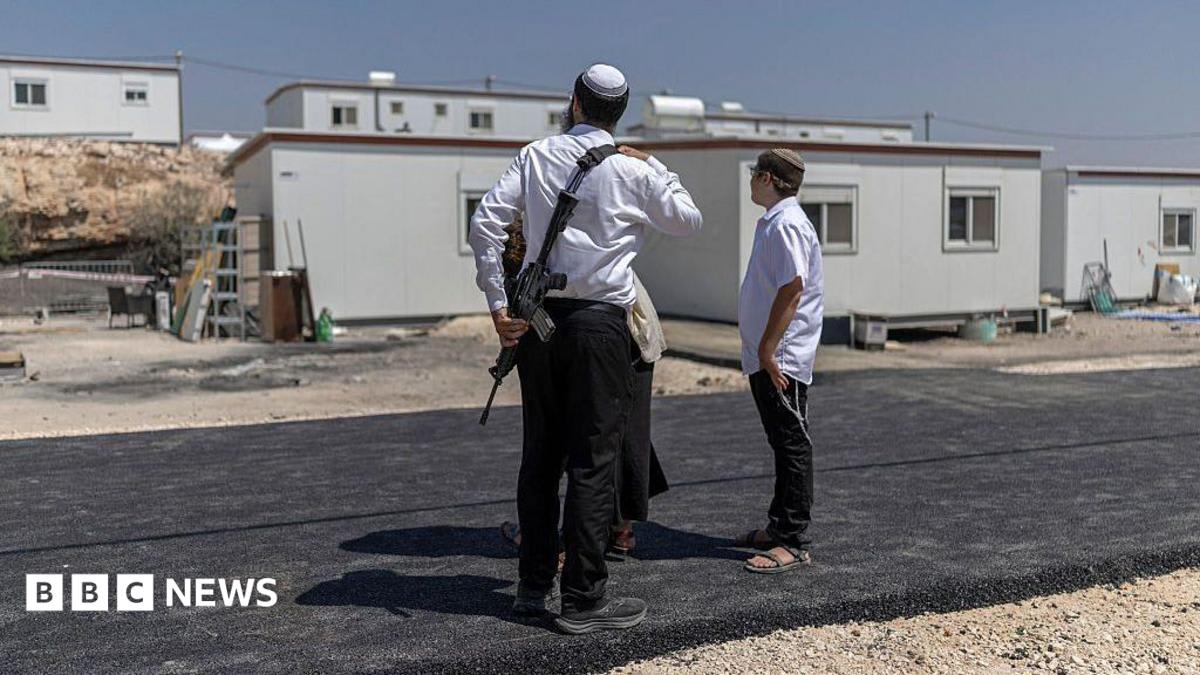
The UK, alongside 11 other nations, has imposed trade sanctions on West Bank settlements, citing concerns over ethnic cleansing and violence. Israel responded by closing the UK consulate in East Jerusalem, marking a significant decline in diplomatic relations.
A Diplomatic Watershed: The Multilateral Sanctions on West Bank Settlements
In a historic shift in international policy, the United Kingdom, in coordination with France, Canada, and nine other nations, has implemented trade sanctions against Israeli settlements in the West Bank. This move represents a decisive effort to protect the viability of the two-state solution, which many international observers believe is being systematically undermined by the expansion of these settlements. By acting in concert, these twelve nations have signaled that the status quo regarding the occupied territories is no longer tenable.
The Accusation of Ethnic Cleansing
At the heart of the British government’s justification is the grave charge of "ethnic cleansing." Foreign Secretary David Miliband explicitly stated that the UK recognizes the actions of settler extremists as a purposeful policy design aimed at the forced displacement of Palestinians. Miliband further criticized the Israeli government for allegedly turning a blind eye to this violence, and in some instances, actively supporting the displacement through official rhetoric and policy decisions. This language marks a sharp departure from traditional diplomatic caution, framing the issue as a fundamental violation of human rights and international law.
Israel’s Retaliatory Measures
Israel’s response to these sanctions has been immediate and severe, underscoring the deep strain this policy shift has placed on bilateral ties. By ordering the closure of the UK consulate in East Jerusalem—a critical diplomatic node that serves as the liaison to the Palestinian Authority in Ramallah—Israel has effectively severed a key channel of communication. Furthermore, the removal of British representatives from the International Gaza Support Centre indicates a broader breakdown in cooperation. These retaliatory steps suggest that Israel views the sanctions not merely as a trade dispute, but as an existential challenge to its administrative control over the territories.
Historical Context and Legal Framework
Under international law, the settlements are widely considered illegal, a stance maintained by the UN and the majority of the global community. For decades, the international consensus has been that the expansion of these settlements creates "facts on the ground" that render a future Palestinian state geographically impossible. The current wave of violence in the West Bank, perpetrated by settlers, has accelerated the sense of urgency among Western powers. The involvement of Ireland and Spain, who had previously initiated independent measures, highlights that this is not an isolated British initiative, but a growing trend within European foreign policy.
Geopolitical Implications and Future Trends
This escalation signals that the relationship between Israel and several of its traditional Western partners is at its lowest ebb in decades. The speed and ferocity of the Israeli reaction appear to have taken officials in London by surprise, suggesting that the diplomatic fallout will be significant and long-lasting. As these twelve nations solidify their stance, the international community faces a complex dilemma: how to pressure Israel into compliance without completely severing diplomatic ties or destabilizing the region further. Moving forward, the effectiveness of these sanctions will depend on whether this coalition can maintain a unified front in the face of continued diplomatic pressure from Tel Aviv.
Multiple Citing Sources