Philippines Leader Gets China's 'Bullying' Note On Stage. What He Did Next
Source Entity
NDTV News Search Records Found 1000
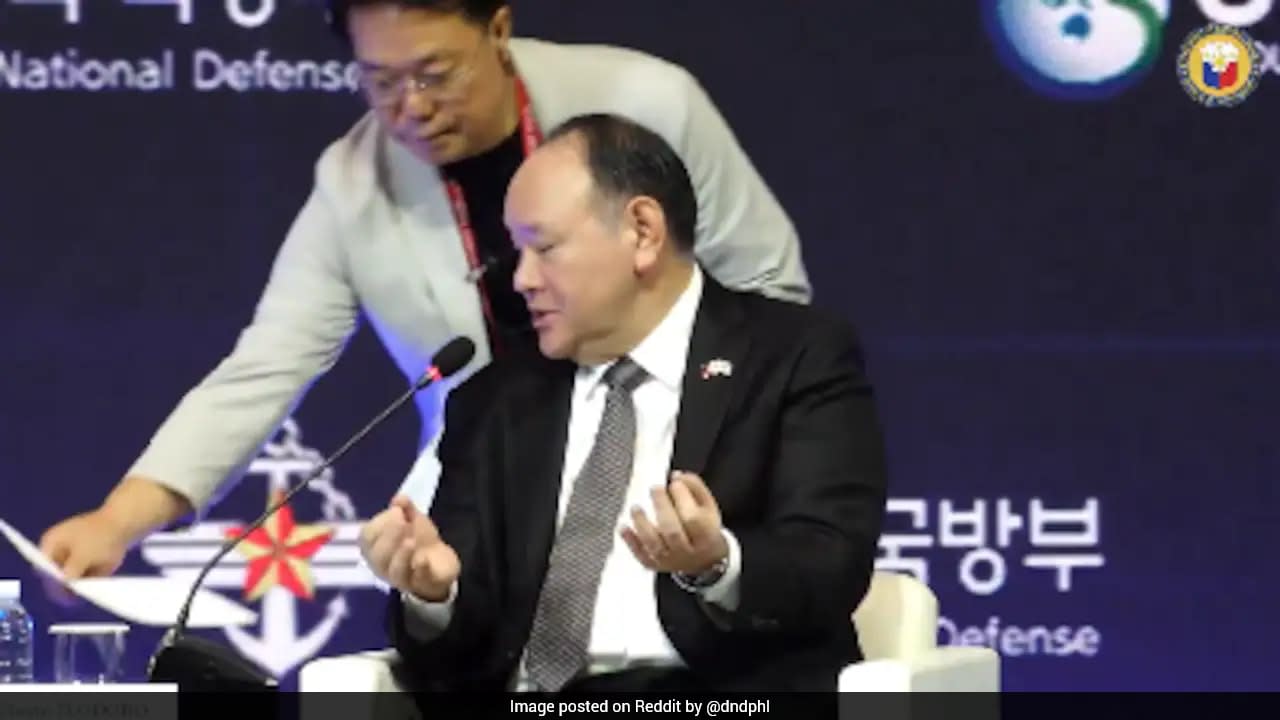
Philippine Defense Secretary Gilberto Teodoro publicly challenged a note from a Chinese official during a security forum in Seoul. His assertive response underscores the growing tensions in the South China Sea and the Philippines' firm stance against Beijing's maritime claims.
A Diplomatic Confrontation in Seoul
During the recent Seoul Defence Dialogue, a significant geopolitical incident occurred when Philippine Defense Secretary Gilberto C. Teodoro was interrupted mid-speech. As he addressed the complex maritime challenges in the South China Sea, a man—later identified as being associated with a Chinese military attaché—approached the stage to hand him a note. This unexpected intervention served as a catalyst for a public display of diplomatic friction that highlights the deteriorating relationship between Manila and Beijing.
The Anatomy of the Rebuke
Teodoro’s response was immediate and calculated. Upon receiving the paper, he paused his address, verified the source of the communication, and proceeded to read the contents aloud to the assembled delegates. By doing so, he stripped away the veil of behind-the-scenes diplomacy, choosing instead to confront the argument in an open forum. His retort, "They have no position," served as a direct rejection of the claims Beijing has long asserted regarding the South China Sea arbitration.
Contextualizing 'Wolf Warrior' Diplomacy
This incident is a quintessential example of what international observers categorize as China’s "wolf warrior" diplomacy—a style of engagement characterized by confrontational rhetoric and aggressive posturing. By attempting to insert their narrative into the middle of a senior official’s keynote address, the Chinese delegation sought to disrupt the Philippines' messaging. However, Teodoro’s decision to air the note publicly turned the act of interference into a platform for Philippine resistance.
The South China Sea Flashpoint
The South China Sea remains one of the world's most volatile maritime regions, serving as a primary flashpoint for regional stability. The Philippines has been increasingly vocal in challenging China's expansive territorial claims, which have been largely invalidated by international arbitration. This event in Seoul underscores how these maritime disputes are no longer confined to the waters of the West Philippine Sea but have become central themes in multilateral security dialogues across the Indo-Pacific.
Broader Strategic Implications
The incident illustrates a shift in how Southeast Asian nations are engaging with Beijing. Manila’s willingness to publicly challenge Chinese narratives signifies a departure from more cautious diplomatic approaches. By refusing to be intimidated by the unsolicited delivery of a note during a high-profile forum, Secretary Teodoro signaled that the Philippines is committed to asserting its sovereignty on the international stage, regardless of the pressure applied by external powers.
Future Trends in Regional Security
Looking ahead, such public confrontations are likely to become more frequent as regional powers struggle to maintain the status quo in the face of China's assertive maritime policies. The Seoul Defence Dialogue incident serves as a bellwether for future security forums, where the battle for narrative control will likely be as intense as the physical maneuvering in contested waters. The Philippines' firm stance suggests a hardening of regional alliances and a potential increase in diplomatic volatility in the coming months.
Multiple Citing Sources
Verification Required?