New satellite images show major construction surge at Iran’s Pickaxe nuke site
Source Entity
YASHASVI VASISTHA
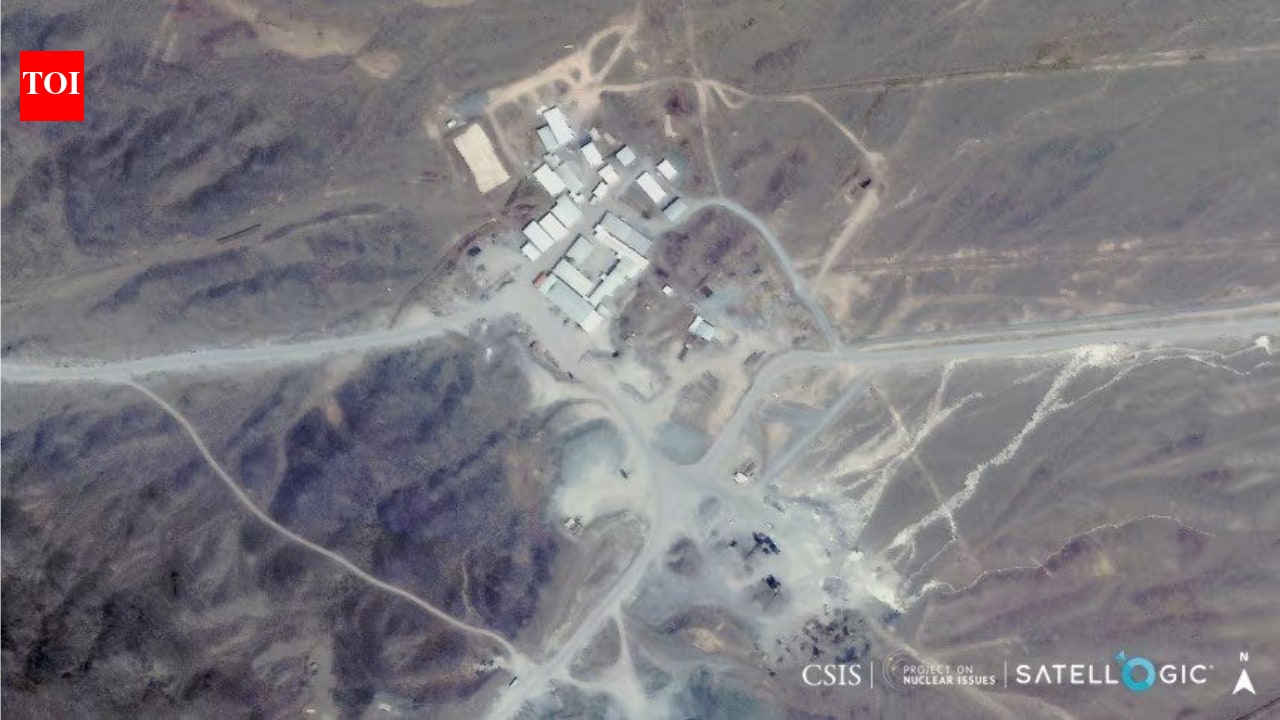
Satellite imagery reveals a significant construction surge at Iran's underground Pickaxe Mountain nuclear facility. This development has prompted the U.S. to accelerate the creation of advanced bunker-busting weapons amidst escalating regional tensions.
The Escalating Strategic Standoff at Pickaxe Mountain
Recent satellite imagery analysis, widely corroborated by defense analysts and intelligence reports, indicates a sharp increase in construction activity at Iran's underground nuclear facility, known as Pickaxe Mountain. Located approximately 140 miles south of Tehran, near the established Natanz complex, this site has long been a focal point for international intelligence agencies. The recent surge in activity suggests that Iran is either expanding its subterranean infrastructure or fortifying existing capabilities, further complicating an already volatile geopolitical landscape.
The Strategic Significance of Deep Underground Facilities
Pickaxe Mountain represents a specific type of military challenge: the deeply buried, hardened facility. By tunneling into granite mountains, Iran creates a defensive perimeter that traditional air-delivered munitions struggle to penetrate. Historically, such sites are designed to protect critical assets—in this case, suspected nuclear enrichment infrastructure—from conventional airstrikes. This architectural choice forces adversaries to rethink their strike capabilities, shifting the burden of proof to the development of specialized weaponry.
U.S. Military Response and Technological Development
In direct response to these fortifications, the United States is actively developing and refining new classes of 'penetrator' weapons. These munitions are engineered specifically to breach hardened, subterranean targets that were previously considered beyond the reach of standard tactical assets. The ongoing development of these weapons highlights a dangerous 'escalation ladder,' where Iranian defensive construction is met with American technological advancement, ultimately increasing the risk of miscalculation or direct kinetic engagement.
Rhetoric and the Prospect of Conflict
President Trump’s public threats regarding the Pickaxe Mountain site have added a layer of political urgency to the military reality. These statements, framed within the context of the broader, intensifying US-Iran conflict, move the facility from a matter of quiet intelligence monitoring to a central issue of public national security policy. When a head of state explicitly threatens a specific site, it signals that the facility has transitioned into a 'red line' for potential military action.
Broader Geopolitical Implications
The tension surrounding Pickaxe Mountain cannot be viewed in a vacuum. It is a microcosm of the wider systemic friction between Tehran and Washington. As the US military maintains operational plans for potential strikes, the international community faces the challenge of managing a crisis where diplomatic channels are strained. The intersection of nuclear non-proliferation concerns and hardened military infrastructure creates a precarious environment where any unexpected activity at the site could trigger a rapid, high-stakes military response.
Future Trends and Outlook
Looking ahead, the situation at Pickaxe Mountain will likely remain a critical barometer for US-Iran relations. If construction continues, we can expect increased surveillance and a corresponding rise in the U.S. rhetoric regarding the necessity of 'bunker-buster' deployment. The future of this site will depend on whether back-channel diplomacy can alleviate the security dilemma or if the momentum of technological and military posturing leads to a definitive confrontation.