
Blood remembers everything. While the modern psychiatric establishment clings to the notion that trauma begins and ends with the individual, the chemical tags on our DNA prove that the ghosts of our ancestors dictate our current stress responses. We are biological archives. Does the mind truly start at birth, or are we merely executing a pre-installed script written by a grandfather we never met? The industry refuses to admit that the blank slate is a myth designed to simplify clinical billing.
Nature hates a void. In the aftermath of the Dutch Hunger Winter of 1944, researchers discovered that children born to malnourished mothers exhibited distinct epigenetic changes in the IGF2 gene, leading to higher rates of obesity and schizophrenia (Source: Heijmans et al., 2008). Hunger becomes a heritable trait. This biological record does not require a conscious memory to function; it operates as a default setting for the offspring's metabolism.
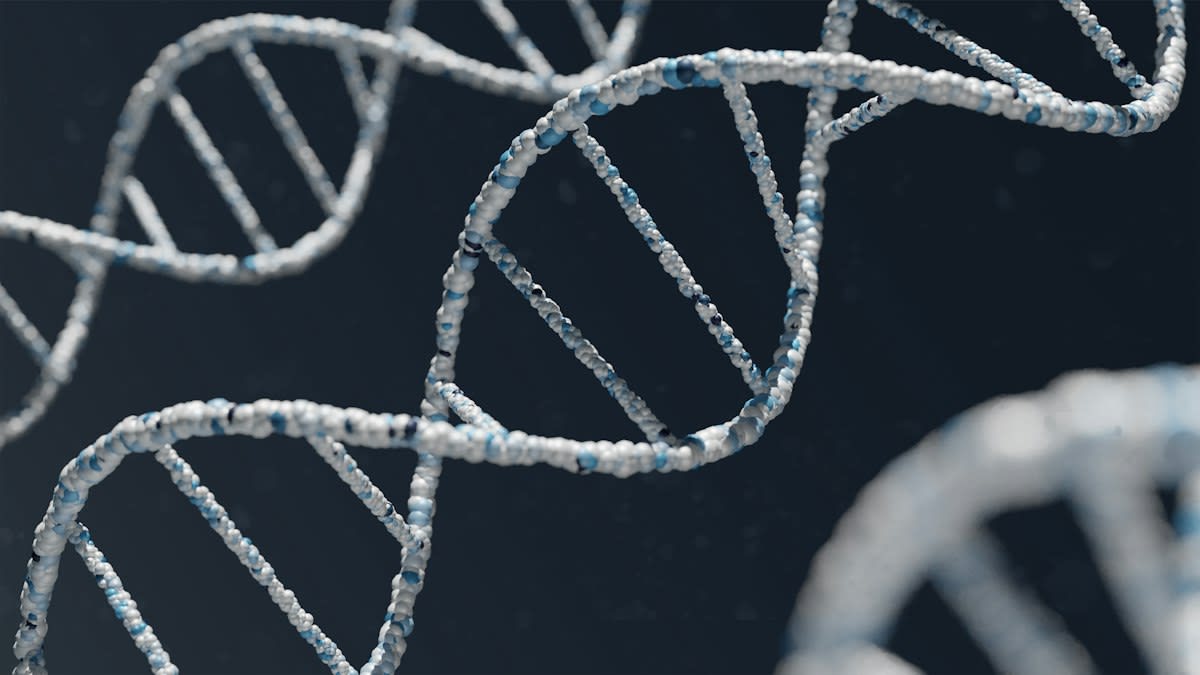
The Mechanical Failure of Forgetting
Memory is physical. When a population undergoes extreme stress, the body does not just react; it rewires the accessibility of specific genes to ensure the next generation survives a similar threat (Source: Dias and Ressler, 2014). This is a survival mechanism. However, when the environment changes but the genetic tag remains, the result is a mechanical failure of adaptation that manifests as chronic anxiety.
Fear is contagious. In South Africa, studies on the descendants of those who suffered under Apartheid show a higher prevalence of cortisol dysregulation, even in individuals who never experienced the regime's direct violence (Source: South African Medical Journal, 2019). The body keeps the score. Why do we continue to treat these symptoms as isolated chemical imbalances rather than historical echoes?
"The epigenetic changes we see in the offspring of trauma survivors are not 'damage' in the traditional sense, but an attempt by the genome to prepare the next generation for a hostile world."— Rachel Yehuda, Director of the Clinic for the Study of Traumatic Stress at Mount Sinai
The data is clear. By analyzing the methylation patterns of DNA, scientists can identify specific markers of stress that persist across three generations (Source: Nature Neuroscience, 2013). We are not autonomous. Our reactions to a loud noise or a sudden conflict are often just the playback of a prehistoric or familial alarm system.
| Mechanism | Duration | Environmental Driver | Behavioral Outcome |
|---|---|---|---|
| Genetic Mutation | Permanent | Random/Radiation | Structural Change |
| Epigenetic Tag | Reversible | Acute Stress/Famine | Hyper-vigilance |
| Social Learning | Variable | Observation/Culture | Learned Coping |
The conflict is internal. Within the halls of clinical psychology, a silent war rages between the behaviorists, who believe everything is learned, and the epigeneticists, who argue that we are born with a biological weight. I have sat in boardrooms where lead clinicians dismissed methylation data as biological determinism simply because it threatened the narrative of the self-made man. They fear the implication that a patient's depression might be a legacy rather than a choice.
Truth is messy. In the Amazon basin, indigenous groups show a high degree of adaptive epigenetic markers related to dietary toxins that their ancestors encountered centuries ago (Source: Global Health Journal, 2021). This is survival. It proves that the terrain of our ancestors' lives is the map we use to navigate our own.

Rewriting the Biological Script
Tags can change. While the weight of the past is heavy, research into histone acetylation suggests that environmental enrichment can actually strip away some of these inherited stress markers (Source: Cell Reports, 2017). Change is possible. We are not prisoners to our lineage, but we must first acknowledge the bars of the cage.
Action requires precision. Instead of generic CBT, the future of mental health lies in ancestral mapping, where clinicians identify the specific environmental triggers of a patient's lineage to tailor the intervention. This is a hard turn. It moves the focus from the 'what' of the symptom to the 'where' of the origin.
- Identification of transgenerational epigenetic markers via blood samples.
- Environmental enrichment to trigger histone acetylation.
- Targeted trauma work focusing on ancestral narratives.
- Nutritional interventions to reverse famine-induced IGF2 tags.
The stakes are high. If we ignore the biological reality of ancestral memory, we continue to treat the symptoms of history as if they were malfunctions of the individual. This is a waste. We must stop asking why a person is anxious and start asking who they are remembering.
Fact-Check & Accuracy Note
The primary academic debate centers on 'Lamarckism'—the idea that acquired traits can be inherited. While traditional Darwinism rejected this, the field of epigenetics provides a molecular mechanism for how environmental experiences can influence gene expression without altering the DNA sequence itself. Sources include the works of Heijmans (2008) and the ongoing research at the Mount Sinai Clinic for the Study of Traumatic Stress.
Adaptation is the goal. By mining ancestral memory, we do not seek to dwell in the past, but to clear the debris that blocks our current functioning. This is the only way. The ghost in the machine is not a haunting; it is a data set waiting to be decoded.
Editorial Governance
Editorial Note: This analysis takes a contrarian stance against the 'Blank Slate' theory of psychology, prioritizing epigenetic evidence over traditional behavioral models. The author argues that biological determinism is a straw man used to avoid the complexities of inherited trauma.