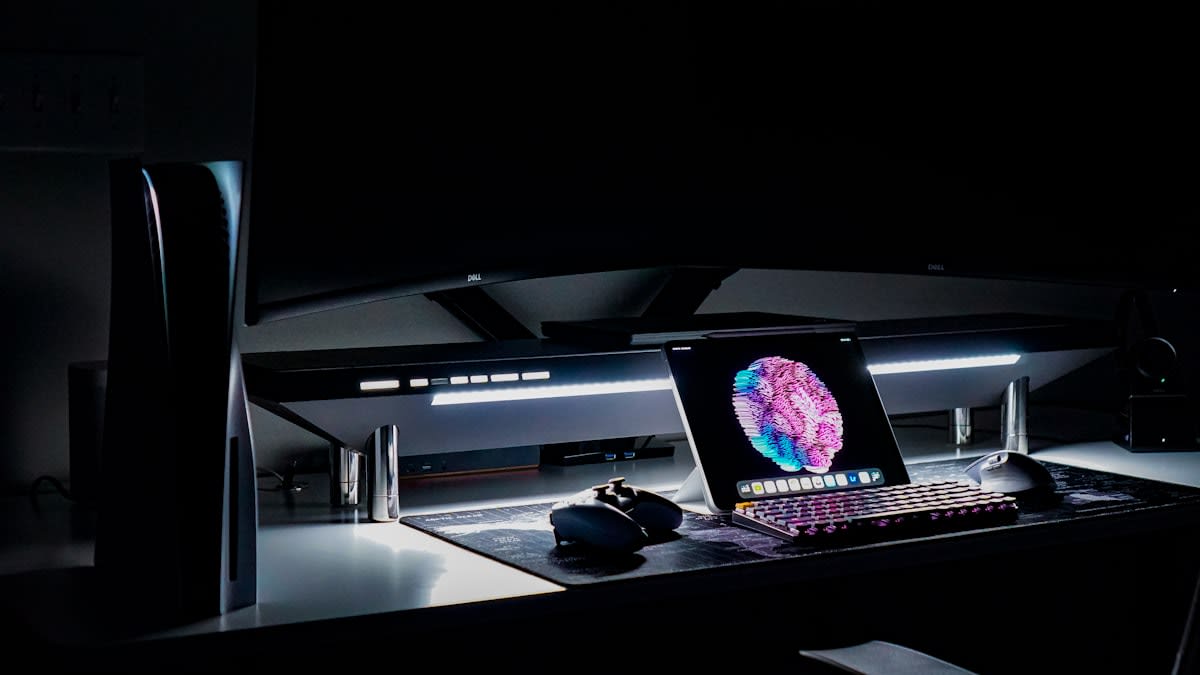
The modern professional is facing a silent erosion of mental capacity. In July 2026, OpenAI CEO Sam Altman highlighted a critical, often overlooked risk of the AI era: cognitive atrophy. The danger isn't just that machines can outthink us, but that we might stop trying. Theoretical neuroscientist Vivienne Ming describes this as chronic substitution, where the repeated act of letting AI handle the heavy lifting of thought weakens our cognitive reserve. Why should we care? Because this reserve is our primary defense against dementia and the foundation of deep work. If you feel your ability to concentrate slipping, you aren't imagining it; you are likely experiencing the first stages of mental muscle loss.
Reclaiming this capacity requires more than just willpower or a digital detox. It demands a systematic approach to neural recovery that leverages the way our brains actually process attention and reaction. We must move from a state of passive consumption to active restoration. This blueprint provides the exact mechanisms to reverse atrophy and sharpen the nervous system's decision loop. Whether you are operating from a high-density urban center in Tokyo or a remote hub in Nairobi, these biological imperatives remain the same. The goal is simple: build a brain that stays sharper longer.
Prerequisites for Neural Recovery
Gear & Mindset
Before starting this protocol, ensure you have access to a small-scale green space (even a window box or a local park) and a standard tennis ball. You will also need a conscious commitment to identify where you have substituted thinking with automation in your daily workflow.
The first step in recovery is recognizing the delta between augmented productivity and cognitive decline. Many mistake the speed of AI-generated output for their own intellectual growth. In reality, when we outsource the synthesis of information, we bypass the very neural pathways that create expertise. To succeed with this guide, you must accept that cognitive recovery is an active process. It is not about resting your brain, but about engaging it in the specific ways it was evolved to function.
Step 1: Audit and Eliminate Chronic Substitution
You cannot fix what you cannot measure. Start by auditing your daily cognitive tasks to find where chronic substitution has taken hold. Do you use AI to draft every email? Do you let algorithms decide your research paths without questioning the source? This reliance creates a feedback loop of atrophy. When the mental muscles of synthesis and critical analysis are not used, they weaken. The objective here is to reintroduce friction into your workflow. Friction is where the growth happens.
- Identify three tasks you currently automate that require synthesis.
- Commit to performing one of these tasks manually for one week.
- Track the mental effort required; if it feels difficult, you are rebuilding the muscle.
By intentionally reclaiming these tasks, you begin to rebuild the cognitive reserve that Vivienne Ming warns is being depleted. This isn't about rejecting technology, but about using it as a tool rather than a replacement. The difference is the location of the effort. If the effort remains in the machine, the atrophy continues. If the effort returns to the human mind, the recovery begins.

Step 2: Deploy Attention Restoration Theory (ART)
Directed attention—the kind you use for spreadsheets and coding—is a finite resource. When it's depleted, you experience brain fog and irritability. Attention Restoration Theory (ART) suggests that nature restores this capacity through soft fascination. Unlike the hard fascination of a smartphone screen, which demands your focus, nature allows your attention to wander effortlessly. This involuntary attention allows the prefrontal cortex to recover, restoring your ability to perform cognitive tasks like memory recall and attention control.
Research indicates that this recovery happens most effectively in environments imbued with local meaning. Whether it is a historical site in Rome or a religious garden in Kyoto, these spaces foster deeper psychological engagement and social cohesion. The key is to move away from urban stressors and into green refuges. This shift doesn't just feel good; it is a biological necessity for anyone attempting to maintain deep work capacity in a hyper-connected world.
| Attention Type | Trigger | Cognitive Effect |
|---|---|---|
| Directed Attention | Work, Screens, Logic | Depletion and Fatigue |
| Soft Fascination | Nature, Art, Clouds | Resource Recovery |
To implement this, you must schedule nature exposures as non-negotiable appointments. Don't just walk through a park while checking your phone; that is merely moving your directed attention to a different location. You must engage in soft fascination. Observe the fractal patterns of leaves or the movement of water. This specific type of engagement is what triggers the neural reset required for high-level cognitive flexibility.
Step 3: Integrate Interactive and Immersive Technologies (IITs)
While nature is the gold standard, the modern world often limits our access to it. This is where Interactive and Immersive Technologies (IITs) come into play. A 2026 scoping review of 11 peer-reviewed articles and 13 experimental trials suggests that digital nature exposures and immersive meditative practices can provide short-term improvements in attentional performance. When you cannot get to a forest, a high-fidelity immersive environment can act as a bridge.
The goal of using IITs is to achieve a restorative state of mind quickly. This is particularly useful for the mid-day slump when a full nature walk is impossible. By using immersive tools to simulate restorative environments, you can trigger a brief but effective reset of your attention state. However, remember that these are supplements, not replacements. The evidence for these technologies is still growing, with much of it based on perceived restoration, meaning your subjective experience of feeling refreshed is a key indicator of success.
"Evidence for attention restoration from these technologies is restricted to ratings of perceived attention restoration and awaits further validation using behavioral performance measures."— Frontiers in Psychology (2026)
To maximize the effect of IITs, pair them with brief bouts of exercise or guided meditation. This multi-modal approach attacks cognitive fatigue from several angles simultaneously. By combining a digital nature exposure with a five-minute breathing exercise, you signal to your nervous system that it is safe to shift from a state of high-alert stress to a state of recovery.
Step 4: Execute Reaction-Time Priming
Cognitive recovery is not just about the mind; it is about the speed of the nervous system's decision loop. As we age, or as we become overly reliant on slow, automated processes, our reaction time declines. This decline affects everything from physical balance to how sharply the brain processes new information. To combat this, you must integrate physical reaction-time training into your daily routine.
- Stand facing a solid wall with a tennis ball.
- Throw the ball against the wall with varying force and angles.
- Catch the ball on the rebound, focusing on the fastest possible response.
- Increase difficulty by adding a cognitive task, such as counting backward by threes while catching.
This simple exercise, endorsed by experts like Dana Santas, forces the brain to synchronize visual input with motor output. It sharpens the decision loop, ensuring that your brain stays agile. When you train your reflexes, you aren't just preventing falls; you are training your brain to process the world around you with greater precision. This physical agility mirrors the cognitive agility needed for deep work.

Common Pitfalls in Neural Recovery
The most common mistake is treating nature as a passive backdrop. Walking through a park while listening to a business podcast is not restoration; it is simply multitasking in a prettier setting. To trigger soft fascination, you must disconnect from the directed attention of your devices. If your mind is still processing a work problem, you are not recovering; you are just working in the grass.
Another pitfall is the over-reliance on immersive technology. While IITs are a valuable tool for short-term boosts, they cannot replace the complex, multi-sensory experience of a real-world restorative environment. Do not let the digital simulation become another form of substitution. The goal is to use the technology to get back to the real world, not to create a digital sanctuary that replaces it.
Finally, avoid the trap of thinking that cognitive reserve is a static asset. It is more like a muscle than a savings account. If you spend a month rebuilding your focus and then return to a state of chronic substitution, the atrophy will return. Consistency in reaction training and nature exposure is the only way to maintain the gains you make. The blueprint is not a one-time fix; it is a lifestyle of neural maintenance.