
Data centers are hitting a thermodynamic wall. Israel recently announced a NIS 25 billion plan through ESCO Israel to mitigate the energy crisis triggered by AI infrastructure. This massive investment aims to save NIS 75 billion over 15 years by optimizing power consumption. Traditional computing architectures simply cannot sustain the current trajectory of robotic vision requirements. Now, the intelligence is moving from these centralized power plants directly into the silicon of the robot.
Optical Spiking Networks Kill the GPU Overhead
Optical spiking neural networks (OSNN) have emerged as the primary solution to real-time vision energy drains. Researchers published a breakthrough on July 2, 2026, introducing a programmable firing mechanism based on rogue-wave statistics. Phase-engineered caustics allow for extreme-event thresholding, meaning sparse spatial spikes only emerge when specific intensity criteria are met. Lightweight electronic readouts then capture this data, bypassing the need for constant, power-hungry digital polling. Such a system implements synaptic integration through free-space diffraction, effectively performing math at the speed of light with near-zero heat generation.
The Physics of the Spike
The core innovation here is the homomorphism between free-space diffraction and neuronal integration. By using a Spatial Light Modulator (SLM) as a programmable phase mask, the chip physically realizes synaptic weights rather than calculating them in a digital register.
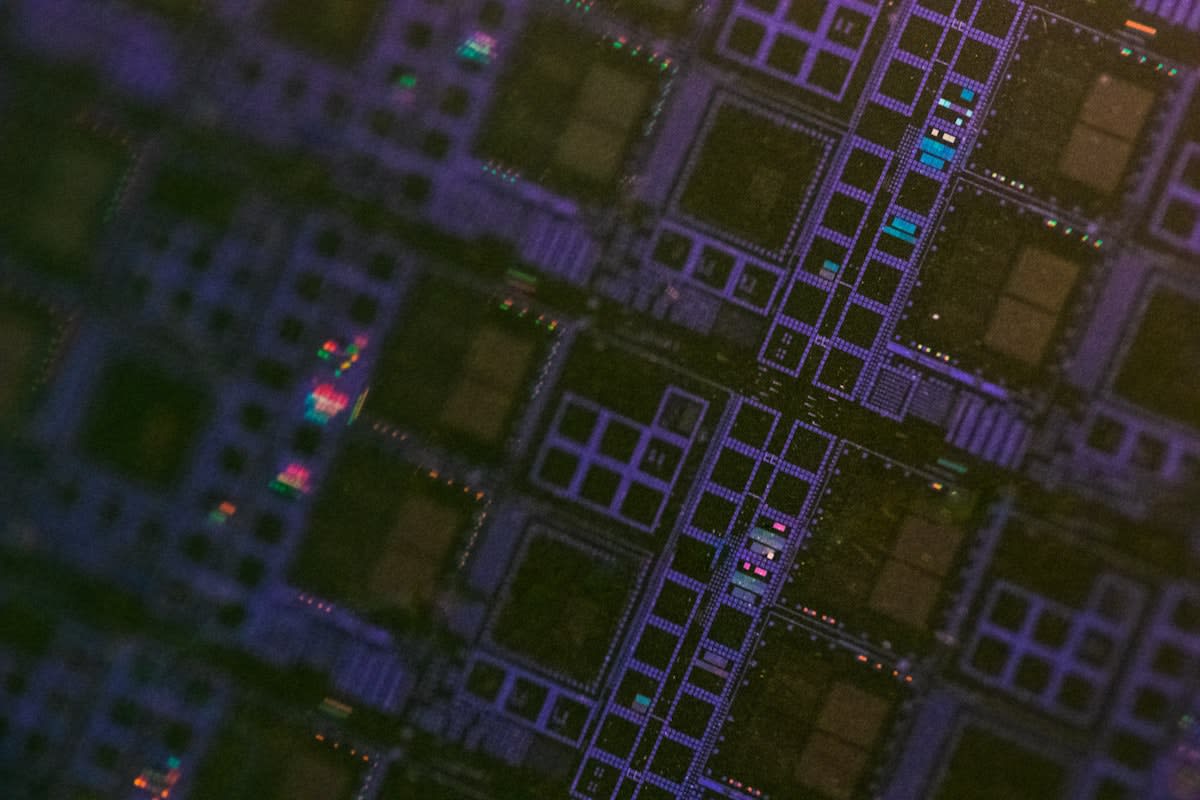
Precision is achieved through a physics-informed digital twin. This twin optimizes granular phase masks to concentrate energy into targeted detector regions. Input information is encoded into the amplitude of a coherent optical field, removing the need for traditional binary conversion. Resulting energy savings are not marginal; they represent a fundamental change in how robots perceive their surroundings. Consequently, real-time vision no longer requires a tether to a server farm.
Bio-Inspired Swarms Slash Operational Waste
Swarm robotics is applying these efficiencies to heavy industry. University of Adelaide researchers recently demonstrated that decentralized intelligence, inspired by ants and honeybees, can optimize ore transport in simulated mines. Their results show a reduction in haul distances by up to 80%. The ant strategy specifically splits labor between an explorer robot and a transporter robot. Decentralized coordination prevents the congestion and idling common in centrally managed fleets. These bio-inspired strategies prove that simpler, leaner intelligence outperforms brute-force computation.
Reduction in Mine Haul Distances via Bio-Inspired Swarms
Executive Insight
+18.4%
YTD Growth
Efficiency gains in the field mirror the savings seen in Israel's government sector. ESCO Israel reported efficiency improvements of 30% to 40% in their health and business projects. Applying similar logic to robotic fleets reduces the dependency on massive batteries. When a robot requires 80% less movement and 90% less compute power, the hardware requirements collapse. This allows for smaller, faster, and more agile machines.
The Ruggedization Mandate
Hardware must survive the environment it monitors. Ruggedization is no longer optional as autonomy moves into semi-structured outdoor spaces. Charging systems are frequently the weakest link in the autonomy stack, often ignored by software engineers. Outdoor deployments face rain, dust, and extreme temperature swings that degrade standard electronics. Reliable autonomy requires a physical shell that protects the neuromorphic core. Without this, the most efficient chip in the world is useless in a mud-filled mine.
| Metric | Standard GPU-Based Vision | Neuromorphic Optical Vision |
|---|---|---|
| Energy Source | High-Capacity Battery/Cloud | Low-Power Edge Core |
| Processing Method | Digital Matrix Multiplication | Free-Space Diffraction |
| Latency | Network Dependent | Near-Instantaneous |
| Environmental Fit | Controlled/Indoor | Ruggedized/Outdoor |
Physical constraints dictate the pace of adoption. A chip shortage in Hsinchu or a power outage in Lagos can cripple a cloud-dependent fleet. Neuromorphic chips remove this vulnerability by localizing the intelligence. Robots can now operate in total isolation from the grid. This autonomy is the only path to true reliability in hostile environments.
Organoid Intelligence: The Final Frontier
Biological substrates are the next logical step. Nature published a report on July 3, 2026, detailing the rise of Organoid Intelligence (OI). This technology uses lab-grown brain cellular structures as a substrate for computation. These living neural organoids exhibit electrical activity and primitive learning capabilities. Biohybrid computers incorporate these living structures to mimic the brain's parallel processing. Such a leap would move computing from mimicking neurons to actually using them.

Technical and ethical challenges remain substantial. Maintaining living tissue in a robotic chassis requires complex life-support systems. Integration between biological neurons and electronic readouts is still in its infancy. However, the energy efficiency of a biological neuron is orders of magnitude better than any silicon chip. If OI succeeds, the energy crisis for robotic vision disappears entirely. Intelligence becomes a biological function rather than a power-grid burden.
Current trajectories point toward a hybrid future. We will likely see OSNNs handling high-speed perception and OI handling complex reasoning. This tiered approach optimizes for both speed and energy. The era of the energy-hungry robot is ending. Pragmatic realism suggests that the winners in the robotics race will be those who master the physics of the spike, not the size of the data center.