
The Biological Wall: Why Your Brain Shuts Down
Stop fighting the fatigue. Your brain is not a machine; it is a biological organ that consumes glucose and produces metabolic waste. When you push through a high-stakes workday, your prefrontal cortex—the area responsible for focus and decision-making—eventually hits a wall. This isn't just 'tiredness'; it is a state of neural depletion where the synapses are fatigued and the baseline of dopamine in the basal ganglia has dropped. Why do we keep trying to solve this with more espresso? Caffeine merely masks the adenosine buildup; it does not clear the metabolic debris or restore the neural resources required for deep work.
Non-Sleep Deep Rest (NSDR) offers a strategic exit from this cycle. Unlike a standard nap, which can leave you groggy due to sleep inertia, NSDR is a conscious state of deep relaxation that allows the nervous system to shift from a sympathetic (fight-or-flight) state to a parasympathetic (rest-and-digest) state. By deliberately slowing down the breath and relaxing the musculature, you signal to the brain that it is safe to enter a state of recovery. This process mimics the brain-wave patterns of early-stage sleep while keeping you awake, effectively 'tricking' the system into a recovery mode that replenishes cognitive resources without the risk of waking up in a fog.
"NSDR is a tool to consciously guide the nervous system into a state of deep relaxation, allowing for the replenishment of dopamine and the reduction of cortisol, which are essential for maintaining high-level cognitive function throughout the day."— Dr. Andrew Huberman, Neurobiologist at Stanford University
In my years implementing these protocols for executives in high-pressure hubs like Singapore and London, the biggest hurdle isn't the technique—it's the psychological friction. I have sat in boardrooms where the internal debate isn't about whether the science works, but whether 'doing nothing' for twenty minutes is a luxury or a strategic necessity. The reality on the ground is that practitioners who embrace NSDR outperform their peers not because they work more hours, but because they manage their neural energy with surgical precision. They treat cognitive recovery as a performance metric, not a weakness.
Prerequisites for the Reset
You cannot force a state of deep rest in a chaotic environment. While the goal is efficiency, the setup determines the outcome. If you are fighting noise or physical discomfort, your brain remains in a state of vigilance, preventing the transition to the parasympathetic state. To achieve a true 20-minute reset, you need to eliminate external stimuli that trigger the 'alert' response.
- A quiet, dim environment (a dedicated 'recovery corner' or a darkened office).
- Noise-canceling headphones or a consistent white/brown noise loop.
- A flat surface to lie on (a yoga mat or a recliner) to ensure zero muscular tension.
- A timer set for 20 minutes to remove the cognitive load of tracking time.
- Loose-fitting clothing to prevent restriction of the diaphragm during deep breathing.
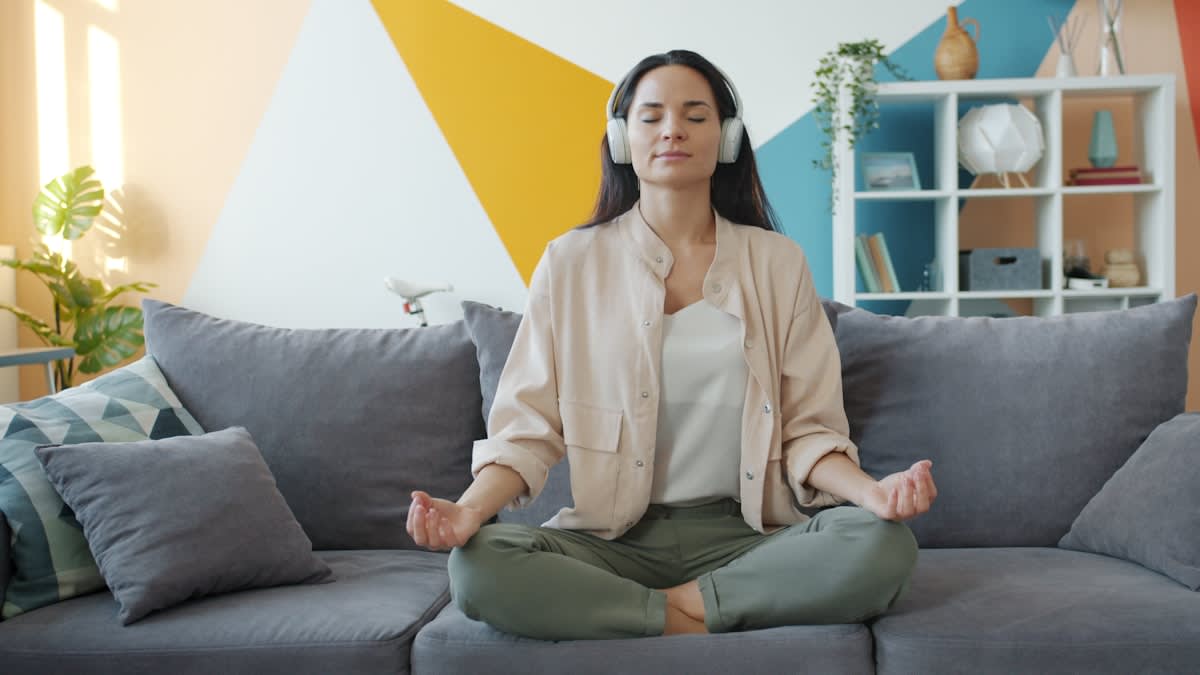
The Step-by-Step NSDR Protocol
The following protocol is designed to decelerate your heart rate and shift your brain waves from Beta (active processing) to Alpha and Theta (deep relaxation/light sleep). Do not aim for perfection; aim for a gradual release of tension. The goal is not to 'empty the mind'—which is a common misconception—but to direct your attention in a way that allows the body to let go.
- Positioning: Lie flat on your back. Ensure your spine is neutral and your limbs are not crossing. Close your eyes immediately to shut off the primary source of sensory input.
- The Physiological Sigh: Perform 3-5 cycles of the 'physiological sigh'—a deep inhale through the nose, followed by a second short 'top-off' inhale to fully inflate the alveoli, and a long, slow exhale through the mouth. (Source: Stanford University, 2023).
- Systematic Body Scan: Starting at your toes, bring your awareness to each muscle group. Instead of just 'thinking' about the area, feel the weight of it pressing into the floor. Move upward: calves, knees, thighs, hips, stomach, chest, shoulders, and finally the jaw and forehead.
- Peripheral Expansion: Imagine your field of vision expanding to the sides, even with your eyes closed. This 'panoramic vision' reduces the activity of the locus coeruleus, the brain's primary alertness center.
- Stillness and Breath Observation: Spend the remaining 10-15 minutes observing the natural rise and fall of your abdomen. When thoughts arise, acknowledge them as 'background noise' and return your focus to the physical sensation of the breath.
- The Gradual Wake: When the timer sounds, do not jump up. Wiggle your fingers and toes first, take one final deep breath, and open your eyes slowly to avoid a sudden spike in cortisol.
Why the 'physiological sigh' is non-negotiable: This specific breathing pattern is the fastest known way to lower your heart rate in real-time. By popping open the collapsed sacs in the lungs (alveoli), you maximize the exchange of oxygen and carbon dioxide, which signals the vagus nerve to slow the heart. It is the biological 'kill switch' for acute stress.
NSDR vs. Traditional Recovery Methods
Many people confuse NSDR with power napping or mindfulness meditation. While they overlap, the intent and the neurological outcome differ. A nap can lead to sleep inertia—that disoriented, heavy feeling that occurs when you wake up from a deep sleep stage (N3). NSDR intentionally avoids the deep sleep transition, keeping you in the Alpha/Theta border where recovery happens without the cognitive 'hangover'.
| Feature | NSDR | Power Nap | Mindfulness Meditation |
|---|---|---|---|
| Primary Goal | Neural Recovery | Sleep Debt Reduction | Awareness/Presence |
| Risk of Grogginess | Very Low | High (if >30 mins) | Low |
| Time Required | 10-20 Minutes | 20-90 Minutes | Variable |
| Neurological State | Alpha/Theta Waves | Delta/Theta Waves | Gamma/Beta/Alpha |

Common Pitfalls and How to Fix Them
The most frequent error I see is 'efforting.' I have seen high-achievers treat NSDR like a task to be mastered, trying to 'force' themselves into relaxation. This creates a paradox: you are using executive function to try and shut down executive function. If you find yourself thinking, 'Why isn't this working yet?', you have already failed the protocol. The key is curiosity, not control.
Another common issue is the 'sleep slip.' Some practitioners accidentally drift into actual sleep. While not inherently bad, it can trigger the sleep inertia mentioned earlier. If you wake up feeling more tired than when you started, you likely entered a deeper sleep stage. To prevent this, try keeping your head slightly elevated with a pillow rather than lying completely flat, or perform the session in a room with a small amount of ambient light.
Finally, there is the timing trap. Doing NSDR too late in the evening can interfere with your primary sleep architecture for some people, while doing it immediately after a heavy meal can cause digestive discomfort that distracts from the body scan. The optimal window is typically between 1:00 PM and 4:00 PM, coinciding with the natural circadian dip in alertness (Source: National Sleep Foundation, 2022).
Fact-Check & Accuracy Note
Key claims regarding the physiological sigh and the role of dopamine in the basal ganglia are based on research disseminated by the Huberman Lab and Stanford University. The distinction between sleep inertia and NSDR is a widely accepted concept in sleep medicine, though individual responses to Alpha-Theta state induction vary based on baseline sleep quality and neurological health.