
The New Orbital Order
The sky is getting crowded. Fast. On July 18, 2026, the global space race shifted gears when India's Skyroot Aerospace successfully launched the Vikram-1, the country's first privately developed orbital rocket. Blasting off from the Satish Dhawan Space Centre in Sriharikota, the mission, dubbed Aagaman, didn't just carry customer payloads and experiments into low-Earth orbit; it signaled a fundamental change in who controls the gateway to the stars. We are no longer in an era defined solely by superpower prestige. We are in the era of the commercial orbital corridor.
Why does this matter for the cleanup industry? Volume. The Vikram-1 is designed to carry payloads up to 350 kg, and it represents a broader push by India to explode its share of the global space economy from roughly $8 billion today to a staggering $44 billion by 2033. When you multiply this level of ambition across the United States, Europe, and China, the result is a mathematical certainty: more hardware in orbit leads to more debris. The race to launch is now creating an urgent, secondary race to maintain.

Compare this to the landscape of just a year ago. We have moved from a phase of experimental private launches to a phase of industrialization. The delta is clear: the focus has shifted from the 'how' of launching to the 'where' of placing assets. As thousands of satellites are deployed, the risk of collisions increases, turning every defunct piece of hardware into a kinetic missile. This is where the gold rush begins. The companies that can successfully clear the lanes will hold the keys to the most valuable real estate in the solar system.
The Liability Loophole and the Legal Gold Mine
Money follows risk, and in space, the risk is legally codified. The foundation of all orbital activity is the 1967 Outer Space Treaty, often referred to as the Constitution of Space. This treaty establishes a critical, high-stakes principle: states are liable for damage caused by their space objects, whether those objects are launched by a government agency or a private corporation. In a world where a single piece of debris can wipe out a billion-dollar communications network, liability is not just a legal detail—it is a massive financial vulnerability.
"The law is once again racing to catch up with space exploration. For today's law students, space law is an opportunity to apply traditional legal skills to one of the fastest-growing industries in the world."— National Jurist
This legal framework is creating a surge in demand for space law expertise, blending international law, insurance, and environmental regulation. If a state is liable for the wreckage of a private satellite, the state has every incentive to fund or subsidize the removal of that wreckage. We are seeing the birth of a 'cleanup economy' where the service of removing debris is the only way for nations to hedge their bets against catastrophic liability. Who will the governments hire to mitigate this risk? The orbital janitors.
The Legal Anchor
The 1967 Outer Space Treaty prohibits any nation from claiming sovereignty over space, but it mandates that nations remain responsible for their private actors. This makes the state the ultimate guarantor of orbital cleanliness.
From Launchers to Landlords: The Infrastructure Pivot
The shift in business models is already visible in the financial data of industry leaders. Rocket Lab (RKLB) provides a perfect case study in this evolution. While they began by providing small satellites a ride to orbit, they are now pivoting toward 'Vertical Space Infrastructure.' This means they aren't just the taxi driver; they want to own the roads, the signals, and the maintenance crews. By controlling spacecraft components, communications networks, and data services, they are moving toward a model of total orbital management.
| Metric | Value (Q1 2026) |
|---|---|
| Quarterly Revenue | $200.3 Million |
| Order Backlog | ~$2.2 Billion |
| Primary Growth Driver | Space Systems (Exceeding Launch) |
The fact that Rocket Lab's Space Systems division is now larger than its Launch division by revenue is a revelation. It tells us that the market is valuing the 'stuff' in space and the 'management' of that space more than the act of getting there. When a company builds a $2.2 billion backlog, it isn't just selling rockets; it is selling the infrastructure of a new economy. This includes resilient positioning technology and aircraft surveillance platforms like Aireon, which rely on a clean, functioning orbital environment to operate.
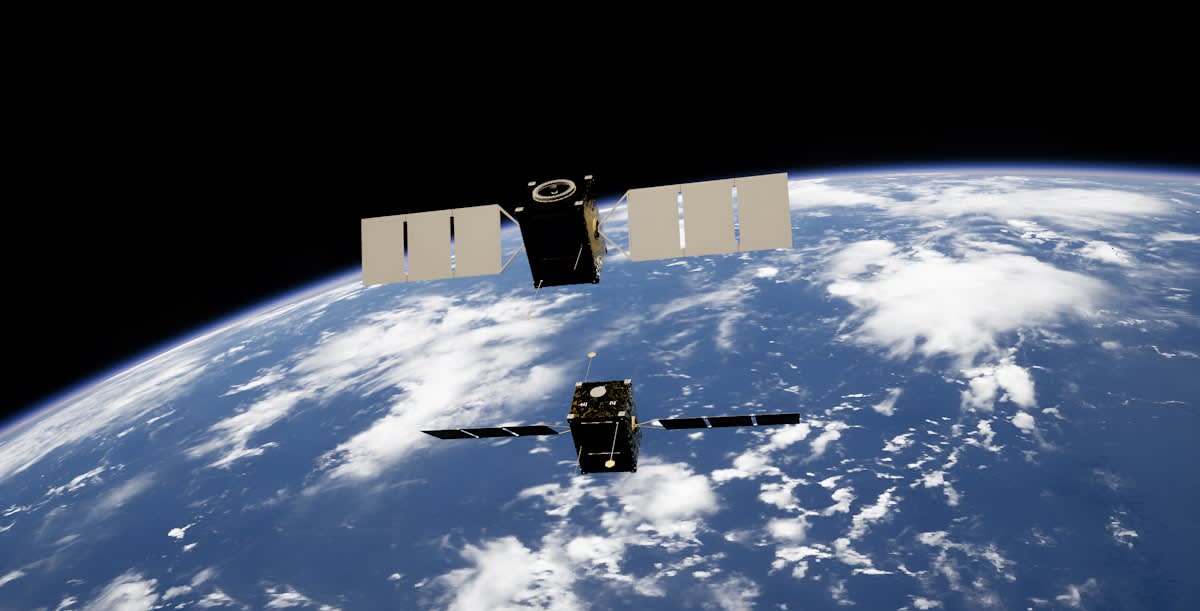
Does this mean the 'janitor' role is just a side hustle for launch companies? Hardly. As the density of LEO increases, debris removal becomes a prerequisite for any other space activity. You cannot build a global satellite network if you are constantly dodging shrapnel. The infrastructure gold rush is not about the rocket; it is about the sustainability of the orbit. The companies that master the capture and removal of debris will essentially be the landlords of the low-Earth orbit, deciding which lanes are safe for commerce.
Global Ambitions and the $44 Billion Target
The scale of this opportunity is best viewed through the lens of emerging space powers. India's goal to reach a $44 billion space economy by 2033 is not just a national target; it is a signal to the global market. To achieve this growth, India must compete in a market already dominated by the US, Europe, and China. This competition accelerates the deployment of hardware, which in turn accelerates the accumulation of debris. The cycle is self-reinforcing.
Projected Growth of India's Space Economy
Executive Insight
+18.4%
YTD Growth
This trajectory suggests that the next decade will be defined by 'orbital resilience.' We are moving away from the era of 'launch and forget' toward a circular space economy. In this new model, the end-of-life plan for a satellite is as important as its launch parameters. The companies capable of providing this end-of-life service—the orbital janitors—will find themselves at the center of a massive procurement wave from governments desperate to protect their investments and avoid treaty-mandated liabilities.
Ultimately, the race to clean space is not a charitable environmental effort. It is a cold, hard infrastructure play. By treating the orbital environment as a resource that requires maintenance, the industry is mirroring the development of early terrestrial railways and shipping lanes. The gold rush isn't in the gold itself—it's in the tools used to keep the path clear. For the strategic investor and the global policymaker, the message is clear: the most valuable asset in space is no longer the satellite, but the empty, safe space around it.