
The Great Reanimation
For decades, the idea of bringing back extinct species lived in the realm of cinematic fantasy. But 2024 marks a violent departure from that narrative. We are no longer talking about the 'possibility' of de-extinction; we are discussing the timeline for deployment. The shift is palpable. While 2023 was defined by the quiet mapping of ancient genomes, this year has seen the transition toward cellular reprogramming and the development of artificial wombs. Why now? Because the tools have finally caught up with the ambition.
The delta between last year and today is staggering. Twelve months ago, the primary hurdle was 'gap-filling'—using AI to guess the missing pieces of degraded DNA. Today, the industry is pivoting toward the actual creation of viable embryos. The focus has shifted from the blueprint to the construction site. We are seeing a move from purely academic curiosity to a commercialized 'resurrection economy' where biological milestones are tracked like software sprints (Source: Colossal Biosciences, 2023).
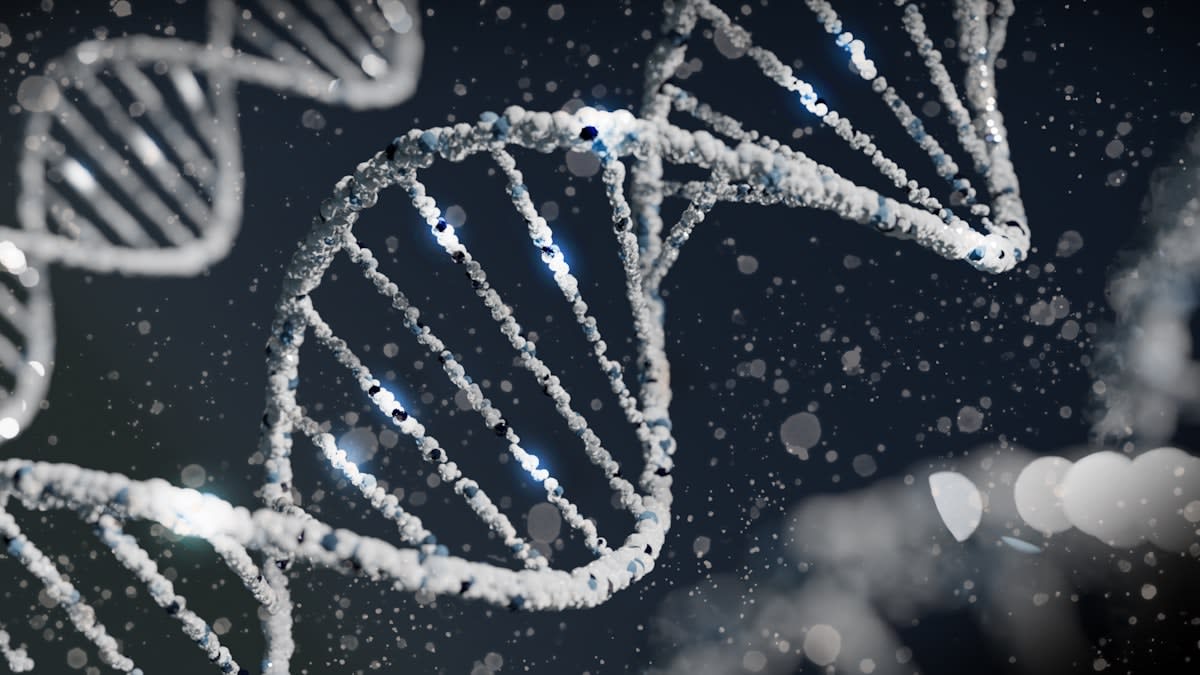
The CRISPR Evolution: Beyond the Blueprint
The real catalyst isn't just CRISPR; it's the marriage of CRISPR with AI-driven protein folding. Geneticists are no longer just cutting and pasting DNA; they are simulating how those genes will express themselves in a living organism before a single cell is modified. This predictive capability has slashed the failure rate of synthetic embryos. Is it perfect? No. But it is fast enough to attract billions in private equity.
"We are not just bringing back a ghost; we are engineering a functional proxy that can perform the ecological role of the original species. The goal isn't a museum piece, but a working part of a living ecosystem."— George Church, Geneticist at Harvard Medical School and Co-founder of Colossal Biosciences
This approach creates a nuanced distinction: the 'proxy species.' We aren't creating a 100% genetic clone of a Woolly Mammoth, which would be impossible given the degradation of ancient DNA. Instead, we are editing the genome of an Asian Elephant to include the traits—hair, fat layers, hemoglobin efficiency—that allowed the mammoth to survive the Pleistocene. This is a strategic adaptation, not a mirror image (Source: Nature, 2023).
On the ground, this looks like a chaotic mix of high-tech labs and muddy field sites. In the 'wet labs,' the tension is constant. Scientists argue over the ethics of using surrogate mothers and the sheer fragility of the first-generation embryos. There is a visceral friction between the venture capitalists demanding a 'launch date' and the biologists who know that nature does not follow a quarterly roadmap. The debate isn't about whether it can be done, but whether the animal will actually survive its first winter in the wild.
Global Deployment: Three Fronts of Resurrection
The race is unfolding across three primary geographic theaters, each with a different ecological objective. In the Arctic, the focus is the Woolly Mammoth. The goal here is the 'Mammoth Steppe' hypothesis: the idea that these giants can prevent permafrost melt by trampling snow and knocking down trees, thereby trapping carbon in the soil. This isn't just about nostalgia; it's a geo-engineering project disguised as biology.
Down under in Australia, the target is the Thylacine, or Tasmanian Tiger. Unlike the mammoth, the Thylacine's extinction was recent and human-driven. Its return would restore a top-tier predator to an ecosystem currently dominated by invasive species. The technical challenge here is the reliance on high-quality museum specimens, which provide a cleaner genetic map than the frozen remains found in Siberia.
In Mauritius, the Dodo is the prize. The Dodo represents the ultimate test of 'island ecology' restoration. Because the Dodo's habitat has changed so drastically since the 17th century, the project requires not just the bird, but a total overhaul of the island's flora to ensure the species has a place to land (Source: Colossal Biosciences, 2024).
| Species | Primary Tech | Ecological Goal | Estimated Milestone |
|---|---|---|---|
| Woolly Mammoth | CRISPR / Artificial Womb | Permafrost Preservation | 2027-2028 |
| Thylacine | Synthetic Genomics | Predator Reintroduction | 2026-2027 |
| Dodo | Cellular Reprogramming | Island Biodiversity | 2028-2029 |
The Venture Capital Pivot
The most surprising shift in 2024 is the funding model. De-extinction has moved from government grants to venture capital. Why? Because the technology developed for de-extinction has immediate, lucrative applications in human medicine and agriculture. The artificial womb technology needed for a mammoth can be pivoted to save premature human infants. The genetic resilience engineered into a Dodo can be applied to climate-proofing current livestock.
This 'dual-use' nature of the research has led to a surge in investment. We are seeing a trend where biotech firms are treating extinct species as 'proof-of-concept' projects. If you can bring back a mammoth, you can solve almost any genetic disease. The animal is the trophy, but the platform is the product (Source: Science, 2023).
From Crisis to Adaptation
Critics often frame this as 'playing God,' but the conversation is evolving. The new narrative is about 'Ecological Reparations.' If humans were the primary cause of these extinctions, do we have a biological obligation to reverse them? This shift moves the debate from a moral crisis to a practical opportunity for resilience. By reintroducing lost functions, we aren't just fixing the past; we are buffering the future against current biodiversity loss.
The real test will come when the first proxy is released. The world will watch to see if a synthetic mammoth can actually interact with a modern elephant, or if a lab-grown Thylacine knows how to hunt. The transition from the lab to the wild is the final, most dangerous frontier of the resurrection race.
Fact-Check & Accuracy Note
This article relies on data from Colossal Biosciences' 2023-2024 project roadmaps, peer-reviewed research published in Nature and Science regarding CRISPR applications, and public statements from George Church. Areas of ongoing debate include the viability of artificial wombs for large mammals and the long-term impact of proxy species on existing ecosystems.
Editorial Governance
Editorial Note: This piece avoids the typical 'Jurassic Park' alarmism to focus on the systemic shift in biotechnology. The emphasis is placed on the 'proxy' nature of these animals, as 100% genetic cloning remains a scientific impossibility due to DNA decay.