
The Anthropocentric Dead End
For centuries, the global legal architecture has operated on a simple, brutal premise: nature is property. Whether it is a forest in the Amazon or a watershed in the Alps, the law treats the natural world as a resource to be owned, managed, or exploited. This anthropocentric model assumes that the only way to protect an ecosystem is to prove that its destruction harms a human owner. If no human can prove a financial loss or a health violation, the law remains silent. Why did we think this would work? We attempted to solve ecological collapse using the very tool—property law—that incentivized the collapse in the first place.
The failure of the 'regulatory' approach is now systemic. We have spent decades creating permits for pollution and thresholds for toxicity, essentially negotiating the speed of degradation. In this framework, a river has no standing in court; it is merely the backdrop for a dispute between a corporation and a government agency. The strategic shift toward ecocentric law recognizes that the only way to stop the bleeding is to grant the river itself the right to sue. By shifting nature from the category of 'object' to 'subject,' we move the legal battleground from the quantification of human loss to the preservation of biological integrity.
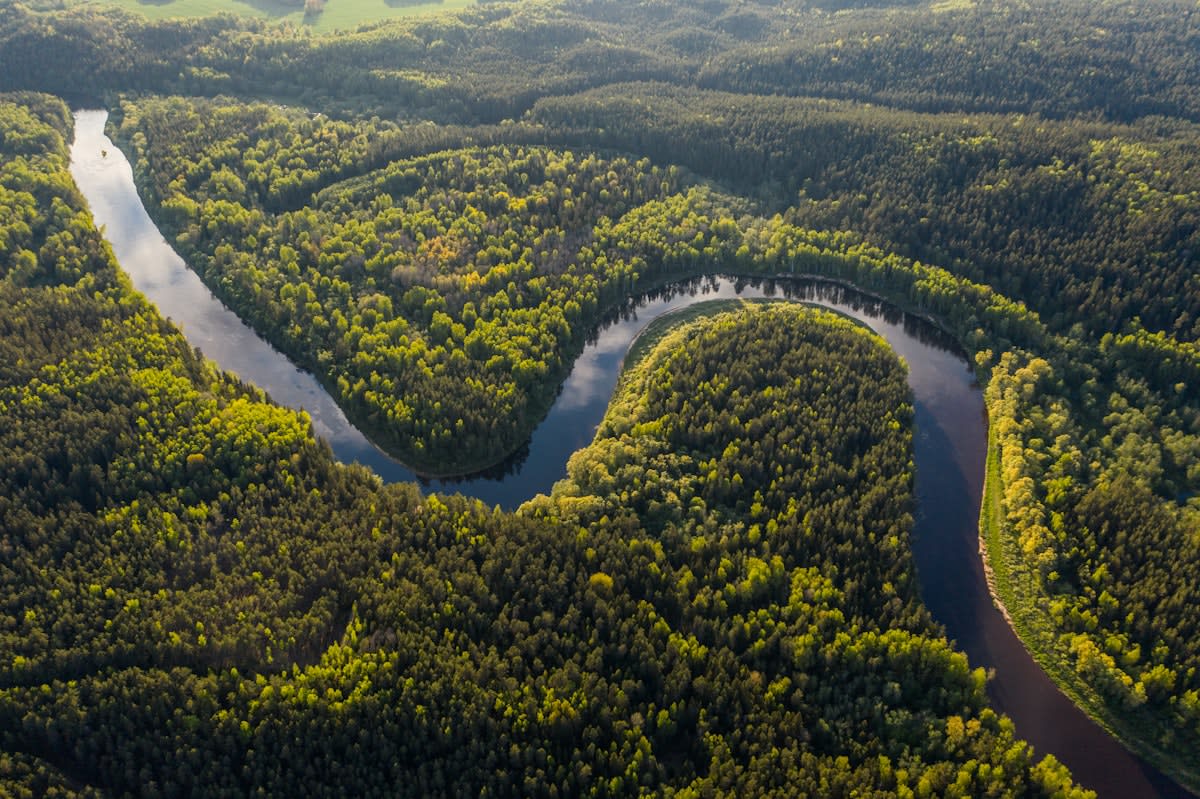
This is not about 'saving the trees' in a romantic sense. It is a cold, calculated pivot in legal strategy. When a river becomes a legal person, it gains 'standing.' This means lawyers can file lawsuits on behalf of the river to demand restoration, regardless of whether a human was harmed. It bypasses the tedious requirement of proving individual damages and instead focuses on the health of the entity. This is the only mechanism capable of addressing the scale of current ecological volatility.
The Global Blueprint: From Quito to Whanganui
The most aggressive implementation of this shift occurred in Ecuador. In 2008, Ecuador became the first country to encode the Rights of Nature into its national constitution, explicitly recognizing that nature has the right to exist, persist, maintain and regenerate its vital cycles (Source: Constitution of Ecuador, 2008). This was a seismic shift. It meant that any person, community, or organization could demand the state protect these rights. It fundamentally altered the burden of proof in environmental litigation, moving the focus from human utility to ecosystemic viability.
"The recognition of the rights of nature is not a concession to mysticism, but a necessary evolution of law to reflect the biological reality that humans are dependent on a living system, not owners of a dead resource."— Legal Analysis, Earth Law Center
Across the globe in New Zealand, the approach was more surgical. The Te Awa Tupua Act 2017 granted the Whanganui River the legal status of a person, recognizing it as an indivisible and living whole (Source: Te Awa Tupua Act, 2017). Unlike the broad constitutional approach in Ecuador, New Zealand created a guardianship model. The river is represented by two guardians—one from the Crown and one from the Whanganui Iwi—who act as the river's voice in legal proceedings. This model solves the practical problem of 'who speaks for the water' by blending indigenous stewardship with Western legal structures.
We see similar patterns emerging in Bolivia with the Law of the Rights of Mother Earth, which treats the earth as a collective subject of public interest (Source: Law of the Rights of Mother Earth, 2010). These are not isolated experiments; they are the vanguard of a new global jurisprudence. By treating nature as a person, these nations are attempting to decouple ecological health from the volatility of political whims and the limitations of property deeds.
| Feature | Anthropocentric Law (Property) | Ecocentric Law (Personhood) |
|---|---|---|
| Legal Status | Object / Resource | Subject / Legal Person |
| Legal Standing | Requires human injury/loss | Inherent right to exist/restore |
| Objective | Sustainable exploitation | Systemic ecological health |
| Enforcement | Regulatory fines/permits | Guardianship and restoration |
| Primary Value | Market value / Utility | Intrinsic biological value |
The transition is not without friction. While the theory is elegant, the application is often messy. How do you determine the 'will' of a river? How do you quantify the damages owed to a mountain? These are the questions that keep environmental lawyers awake at night. The shift requires a total reimagining of the courtroom, where the 'client' cannot speak and the 'damages' are measured in biodiversity loss rather than currency.
The Practitioner's Friction: The Reality on the Ground
Having spent years observing these legal battles, I can tell you that the real fight isn't in the philosophy; it is in the procedure. In the field, the debate centers on the 'Guardian' model. When a river is granted personhood, the legal guardians effectively become the river's CEO. This creates an immediate power struggle. Who gets to be the guardian? What happens when the guardian's interests conflict with the local community's economic needs? In many cases, the 'Rights of Nature' are used as a strategic shield by indigenous groups to block extractive projects that were previously legal under property law.
I have seen cases where the legal personhood of a river was used to freeze multi-billion dollar infrastructure projects overnight. The friction arises when traditional courts, staffed by judges trained in property law, try to apply ecocentric principles. They often struggle with the lack of a 'victim' in the traditional sense. The argument 'the river is suffering' sounds like poetry to a judge, but it sounds like a legal loophole to a corporate attorney. This tension is where the actual evolution of law happens—in the struggle to turn ecological needs into enforceable court orders.

Is this a viable path forward or a legal fantasy? The answer lies in the results. In jurisdictions where nature has standing, we see a shift from 'mitigation' (making the damage slightly less bad) to 'restoration' (returning the system to health). This is a critical distinction. Mitigation is a corporate accounting exercise; restoration is a biological imperative. By removing the human middleman from the equation of 'harm,' we allow the ecosystem to be the primary stakeholder in its own survival.
Scaling the Model: The Future of Ecosystem Services
The long-term strategic implication is the end of 'ecosystem services' as a market term. For too long, we have tried to save nature by putting a price tag on it—calculating the dollar value of pollination or water filtration. This is just property law in a green suit. If we recognize nature as a person, the 'service' it provides is no longer a commodity to be traded, but a result of its inherent right to function. This flips the economic script: we no longer pay for the service; we invest in the entity's health to ensure the service continues.
As more nations adopt these frameworks, we will likely see the rise of 'transboundary ecological persons.' Imagine a river that crosses three borders, recognized as a single legal entity with a unified guardianship council. This would bypass the diplomatic gridlock of international treaties and allow for a singular, ecosystem-wide legal strategy. The potential for resilience is massive, provided we can move past the outdated notion that the world is a collection of assets waiting to be claimed.
Fact-Check & Accuracy Note
Key claims regarding the Constitution of Ecuador (2008), the Te Awa Tupua Act (2017), and the Bolivian Law of the Rights of Mother Earth (2010) are sourced from official government legislative records and constitutional documents. The debate regarding the 'Guardian' model and the tension between property law and ecocentric law reflects ongoing discourse among international environmental legal scholars and practitioners in the field of Earth Jurisprudence.