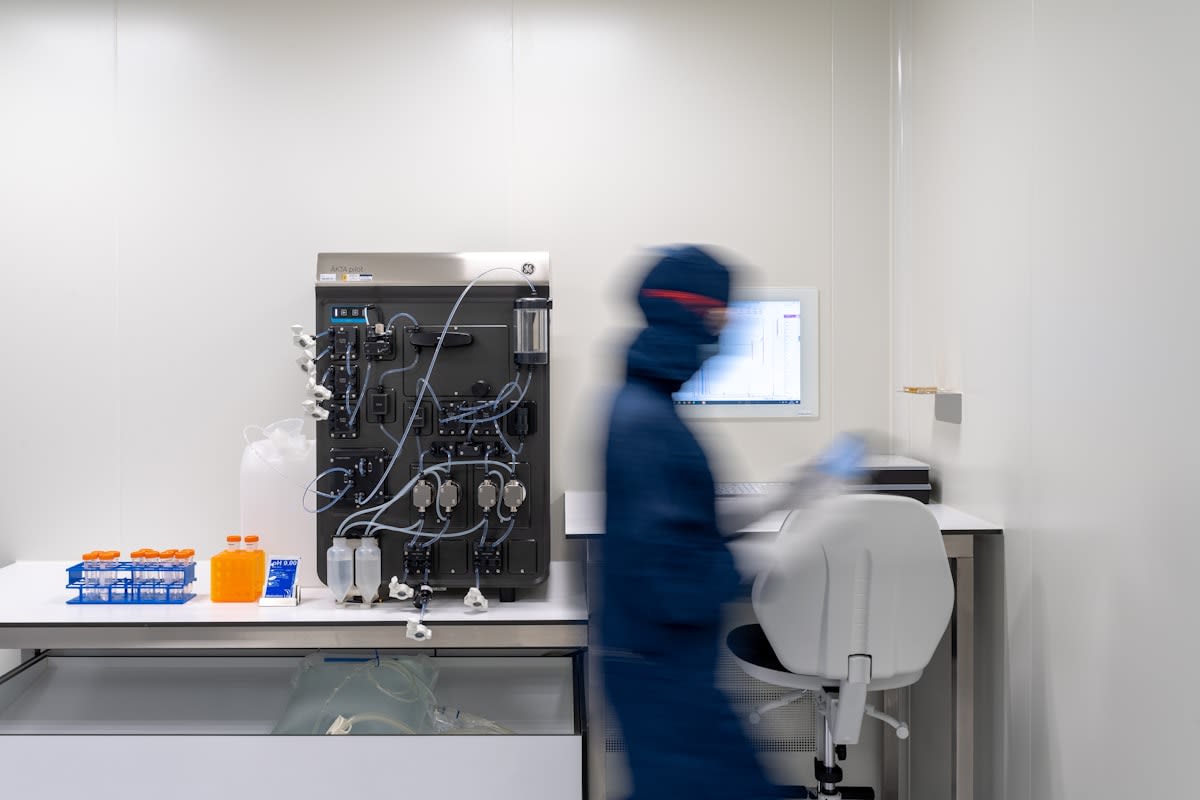
Prerequisites for Clinical-Grade Purification
Transitioning from a bench-top proof-of-concept to a clinical-grade production line requires a fundamental shift in how we view the CRISPR-Cas9 ribonucleoprotein (RNP) complex. In the lab, a simple spin-down or a small-scale dialysis membrane suffices, but these methods fail when volumes exceed two liters. Clinical purity demands the removal of host cell proteins (HCPs), residual DNA, and endotoxins to levels that satisfy stringent regulatory bodies in regions like the European Union and Singapore. The objective is not merely cleanliness, but the preservation of the RNP's conformational integrity. If the purification process is too harsh, the Cas9 protein may denature or the guide RNA (gRNA) may dissociate, rendering the therapy useless before it even reaches the patient.
- Automated Tangential Flow Filtration (TFF) systems with low-shear pumps
- High-performance liquid chromatography (HPLC) for real-time purity analytics
- Clinical-grade Ion Exchange (IEX) and Size Exclusion (SEC) resins
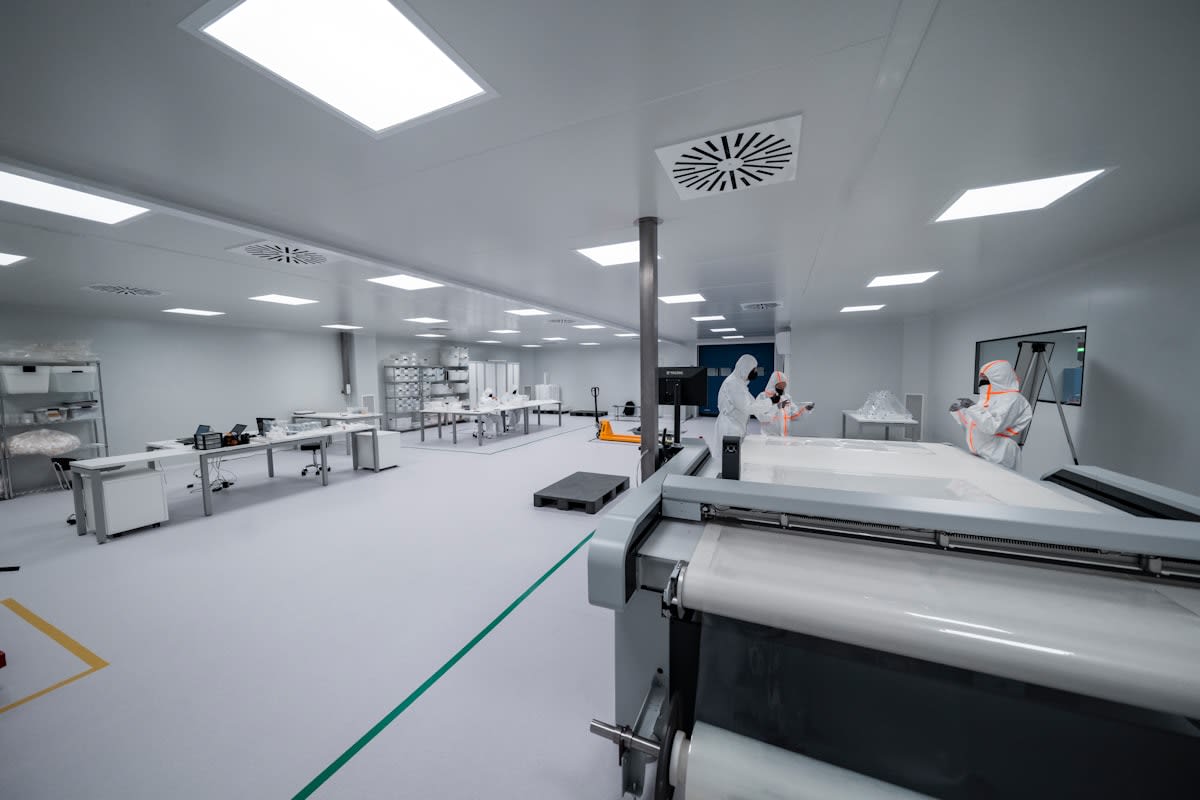
- ISO 5 or ISO 7 cleanroom environments for final formulation
- Endotoxin-free buffers and pharmaceutical-grade salts
- Validated sterile filtration units (0.22 micron)
Executing the Purification Sequence
Clarification is the first point of failure in most scale-up attempts. Many teams rely on high-speed centrifugation, but at clinical scales, this induces massive shear stress and creates heat gradients that degrade the RNP complex. Depth filtration is the professional alternative, utilizing a graded pore structure to trap cellular debris and large aggregates. The key is to select a membrane with a charge profile that does not bind the Cas9 protein. Why do so many developers see a 30% drop in yield at this stage? They fail to account for non-specific adsorption to the filter matrix. By optimizing the buffer conductivity and pH, you can minimize these losses and ensure a clear feed stream for the subsequent chromatography steps.
- Clarification: Replace centrifugation with depth filtration to remove cell debris while maintaining RNP stability.
- Capture: Utilize Ion Exchange Chromatography (IEX) to rapidly concentrate the RNP and remove the bulk of HCPs.
- Polishing: Employ Size Exclusion Chromatography (SEC) or Hydrophobic Interaction Chromatography (HIC) to isolate the active RNP from degraded fragments.
- Formulation: Use Tangential Flow Filtration (TFF) for buffer exchange and final concentration to the target therapeutic dose.
- Sterile Filtration: Pass the final product through a 0.22 micron filter into sterile vials for clinical administration.
The capture step usually centers on Ion Exchange Chromatography, leveraging the strong negative charge of the gRNA. However, the Cas9 protein itself has a complex surface charge that can lead to unpredictable binding if the pH is not precisely controlled. To achieve a purity level of >95%, the gradient elution must be meticulously tuned. A sharp salt gradient often causes the RNP to elute in a tight peak, which is ideal for concentration but can sometimes lead to local protein aggregation. By implementing a linear gradient, you can better separate the functional RNP from truncated RNA species and free protein, ensuring that only the active complex moves forward in the pipeline.
Polishing is where the difference between a research-grade and a clinical-grade product is decided. Size Exclusion Chromatography (SEC) is the gold standard here, as it separates the RNP complex from small-molecule impurities and protein dimers based on hydrodynamic radius. While SEC is notoriously slow and difficult to scale, the use of monolithic columns can increase flow rates without sacrificing resolution. In high-output facilities in Denmark and Germany, these monolithic structures allow for faster processing times, reducing the window for microbial contamination and enzymatic degradation. The goal is to reach a final purity of >98% to minimize the risk of immunogenic responses in the patient.
| Resin Type | Primary Purpose | Typical Recovery | Purity Gain |
|---|---|---|---|
| Anion Exchange | Capture / Concentration | 85-90% | High |
| Size Exclusion | Polishing / Aggregate Removal | 60-75% | Very High |
| Hydrophobic Interaction | Removal of Misfolded Protein | 70-80% | Moderate |
Once the RNP is purified, it must be transitioned into a formulation buffer that ensures long-term stability and biocompatibility. Tangential Flow Filtration (TFF) is far superior to dialysis for this purpose because it allows for simultaneous concentration and diafiltration. The shear rate at the membrane wall must be kept low to prevent the RNP from unfolding. Using a hollow-fiber module instead of a flat-sheet cassette often reduces this stress, preserving the biological activity of the CRISPR complex. We typically target a concentration of 10-50 micromolar, depending on the delivery vehicle and the target tissue, while ensuring that the final osmotic pressure matches the physiological environment of the patient.
The final stage is sterile filtration, a non-negotiable requirement for any injectable therapy. A 0.22 micron polyethersulfone (PES) filter is standard, but the RNP complex can sometimes clog these filters if aggregation has occurred during TFF. This is why pre-filtration through a 0.45 micron membrane is often necessary. It is a common mistake to overlook the adsorption of the RNP to the filter membrane itself, which can lead to a significant loss of the final dose. Testing the filter's compatibility with the formulation buffer is a critical step that must be documented in the Chemistry, Manufacturing, and Controls (CMC) filing for regulatory approval.
Pro Tip: Shear Management
Beware of the Pump: Peristaltic pumps can introduce pulsatile flow that creates localized shear stress. For clinical RNP production, consider using low-shear diaphragm pumps or levitating centrifugal pumps to maintain complex stability.
Common Pitfalls in Scale-Up
Aggregation is the silent killer of CRISPR therapies. As the concentration of the RNP increases during TFF, the likelihood of protein-protein interactions increases exponentially. These aggregates are not only inactive but can trigger severe immune responses in patients. To prevent this, the addition of stabilizing agents like sucrose or specific non-ionic surfactants is often necessary. However, these additives must be carefully screened to ensure they do not interfere with the Cas9 enzyme's ability to bind to the target DNA sequence. Monitoring the polydispersity index via Dynamic Light Scattering (DLS) throughout the process is the only way to detect these aggregates before they ruin a batch.
Another frequent error is the assumption that scaling is linear. Doubling the column volume does not always double the yield; in fact, it often introduces new mass-transfer limitations. Pressure drops across larger beds can lead to uneven flow distribution, creating 'channeling' where the product bypasses the resin entirely. This results in premature breakthrough and a drastic drop in recovery rates, sometimes falling below 50%. The solution lies in using a constant residence time strategy rather than a constant flow rate, ensuring that the RNP has sufficient time to interact with the resin regardless of the scale.
Finally, many teams neglect the analytical gap between the lab and the plant. A method that works on a 100-microliter sample in an HPLC may not be feasible for a 10-liter batch. Implementing at-line analytics—where samples are tested in real-time during the purification run—is essential for making go/no-go decisions. If the endotoxin levels exceed 0.5 EU/mg at the capture stage, it is often more cost-effective to scrap the batch than to attempt an expensive rescue. Clinical success is built on the courage to discard imperfect material in favor of absolute consistency.