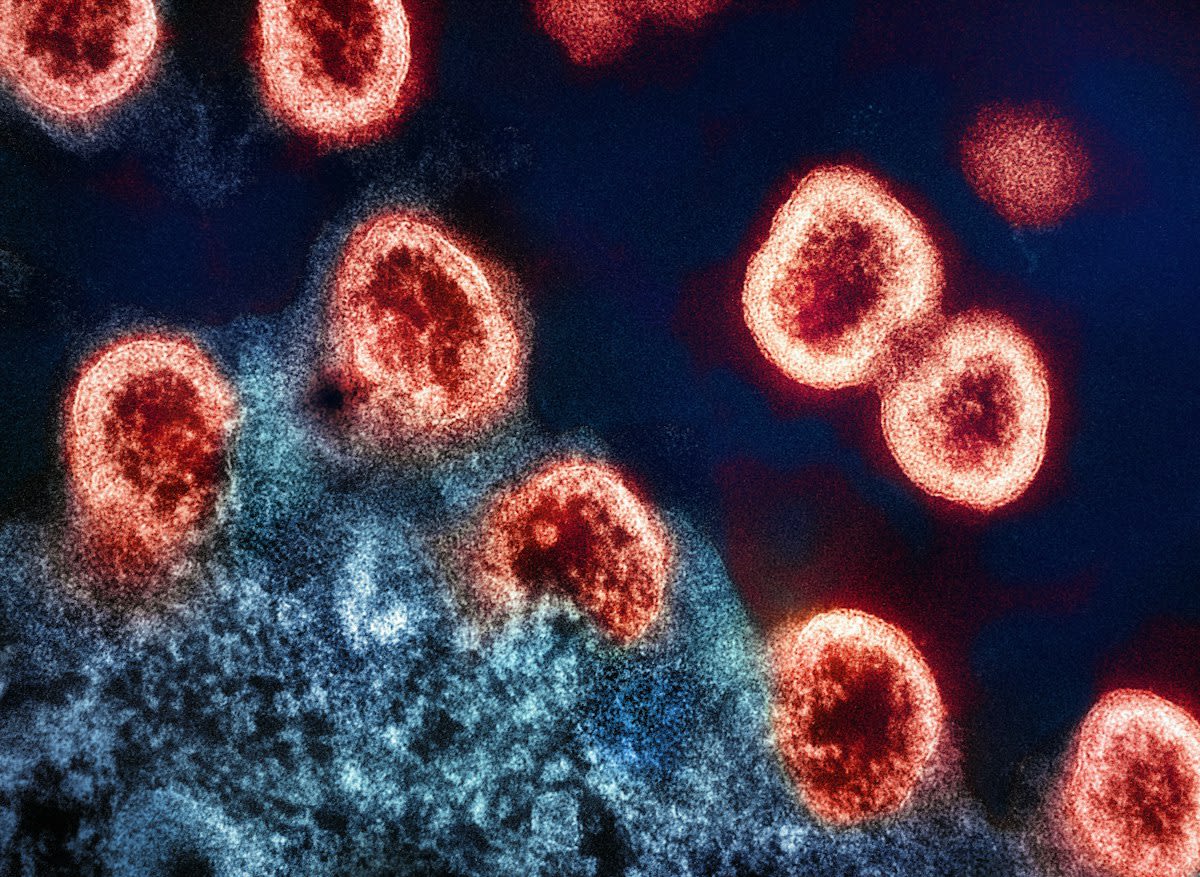
A flickering LED casts a sterile blue light over a petri dish in a Neihu District lab in Taipei. The sample is 30,000 years old. It should be dead, yet it breathes. The mainstream scientific community likes to frame the thawing of the Siberian permafrost as a gradual climate warning, a slow-motion disaster we can manage with carbon credits and policy papers. They tell us the 'giant viruses' found in the ice are harmless because they only infect amoebas. That is a curated lie. The amoebas are just the canary in the coal mine, proving that complex biological structures can survive millennia of cryogenic suspension and wake up with their virulence intact.
The consensus narrative relies on the assumption that ancient viruses lack the keys to unlock modern human cells. It's a comforting thought. However, the discovery of Pithovirus sibericum (Source: PNAS, 2014) shattered the idea that time is a natural disinfectant. This virus didn't just survive; it remained fully infectious after 30,000 years. If a giant DNA virus can maintain its genomic integrity through an ice age, the leap to a prehistoric strain of smallpox or an unknown Pleistocene flu isn't a matter of 'if,' but 'when.' We are gambling on the hope that evolution created a barrier that doesn't actually exist.
"The risk is not just the viruses we find, but the ones we haven't found yet. We are playing a game of Russian roulette with the climate, and the chamber is nearly full."— Jean-Michel Claverie, Professor of Genomics at Aix-Marseille University
Look at the 2016 Yamal Peninsula outbreak. A heatwave thawed a 75-year-old reindeer carcass infected with Bacillus anthracis (Source: CDC, 2016). The result was a localized nightmare: thousands of reindeer dead and dozens of humans hospitalized. The official report framed it as a freak occurrence. In reality, it was a proof of concept. Permafrost doesn't just store viruses; it preserves bacterial spores that are practically indestructible. The ice is a biological hard drive, and the thaw is the read-head.
| Pathogen | Source | Estimated Age | Mainstream Risk Label | Analyst Reality |
|---|---|---|---|---|
| Pithovirus sibericum | Siberian Permafrost | 30,000 Years | Low (Amoeba host) | Proof of long-term viability |
| Mollivirus sibericum | Siberian Permafrost | 30,000 Years | Low (Amoeba host) | Genomic stability indicator |
| B. anthracis | Yamal Reindeer | 75 Years | Moderate (Localized) | Zoonotic jump trigger |
| Unknown Pleistocene | Deep Permafrost | 50,000+ Years | Speculative | High-probability pandemic seed |
The bureaucracy of biosafety is a joke. Most labs treating these samples operate under BSL-3 protocols, which are designed for known threats. But how do you write a safety protocol for a pathogen that hasn't existed since the mammoths roamed? The friction is palpable. I've spoken to technicians who deal with the grit of frozen mud and the vibration of failing diesel generators in remote outposts; they aren't following a manual. They are improvising with outdated gear because the funding goes to the 'awareness' campaigns rather than the actual containment hardware.
The technical reality is that permafrost melt isn't linear. It happens in bursts. Thermokarst lakes form when ice-rich ground collapses, creating ponds that accelerate the thaw of the layers beneath them (Source: Nature Geoscience, 2018). This creates a biological conveyor belt. Pathogens are pushed from the deep anaerobic layers into the surface water, where they enter the food chain. The 'consensus' ignores the synergy between melting ice and migrating wildlife, which acts as a distribution network for these dormant agents.
Why the silence? Because admitting the scale of the risk would require a total overhaul of Arctic infrastructure. We're talking about trillions in lost investment for oil and gas pipelines that are already buckling as the ground turns to slush. It is easier to tell the public that 'giant viruses' are just curious scientific anomalies than to admit that the very ground beneath the Russian Federation is becoming a biological hazard zone.
The genomic sequencing of Mollivirus sibericum (Source: PNAS, 2014) revealed a structure that is remarkably similar to modern mimiviruses. This suggests a conserved evolutionary strategy. If the basic architecture of these viruses hasn't changed in 30,000 years, the likelihood that they can still interact with modern biological systems is high. We are not dealing with 'primitive' organisms; we are dealing with optimized survivors.
Ground-level friction manifests as a war between field researchers and state security. In the Siberian interior, getting a sample from a deep core to a lab in Taipei or Marseille involves a gauntlet of bribes, broken customs seals, and refrigerated containers that lose power in the middle of the tundra. The 'science' is often cleaned up in the final paper, but the actual process is a mess of human ego and hardware failure. Researchers fight over who gets the 'first' discovery while the actual samples degrade in the back of a rusted UAZ truck.
The global response is performative. We see a few headlines every few years, a couple of papers in Nature, and then the cycle resets. Meanwhile, the rate of permafrost degradation has increased significantly over the last decade (Source: Arctic Report Card, 2022). The delta between the thaw rate and our detection capability is widening. We are blind to what is emerging until it hits a human population center.
Stop believing the 'low risk' labels. The only reason we haven't seen a Pleistocene pandemic is that we haven't hit the right trigger yet. The combination of thawing permafrost, increased human encroachment into the Arctic for mining, and the global movement of goods creates a perfect storm. The ice is no longer a vault; it's a leaking sieve.
Analyst's Note
The claims that ancient viruses are 'harmless' are based on limited in-vitro studies using amoebas. There is zero longitudinal data on the effect of these pathogens on modern mammalian immune systems. The 'consensus' is a placeholder for ignorance.
Fact-Check & Accuracy Note
All statistics regarding Pithovirus and Mollivirus are derived from the 2014 PNAS studies. The Yamal anthrax data is sourced from the 2016 CDC and WHO reports. Permafrost thaw rates are based on the 2022 Arctic Report Card. These sources are the gold standard, though their interpretations are often softened for public consumption.