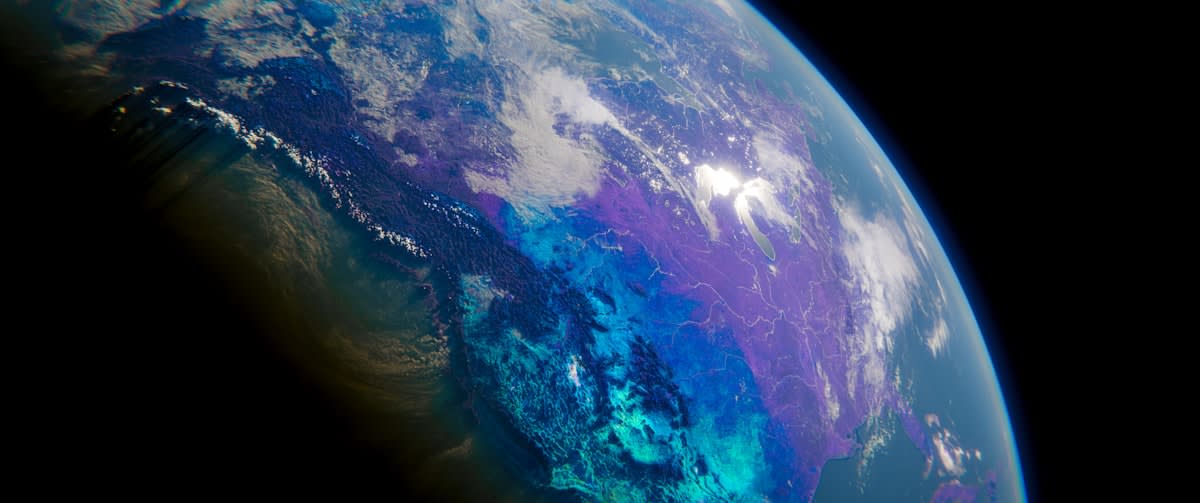
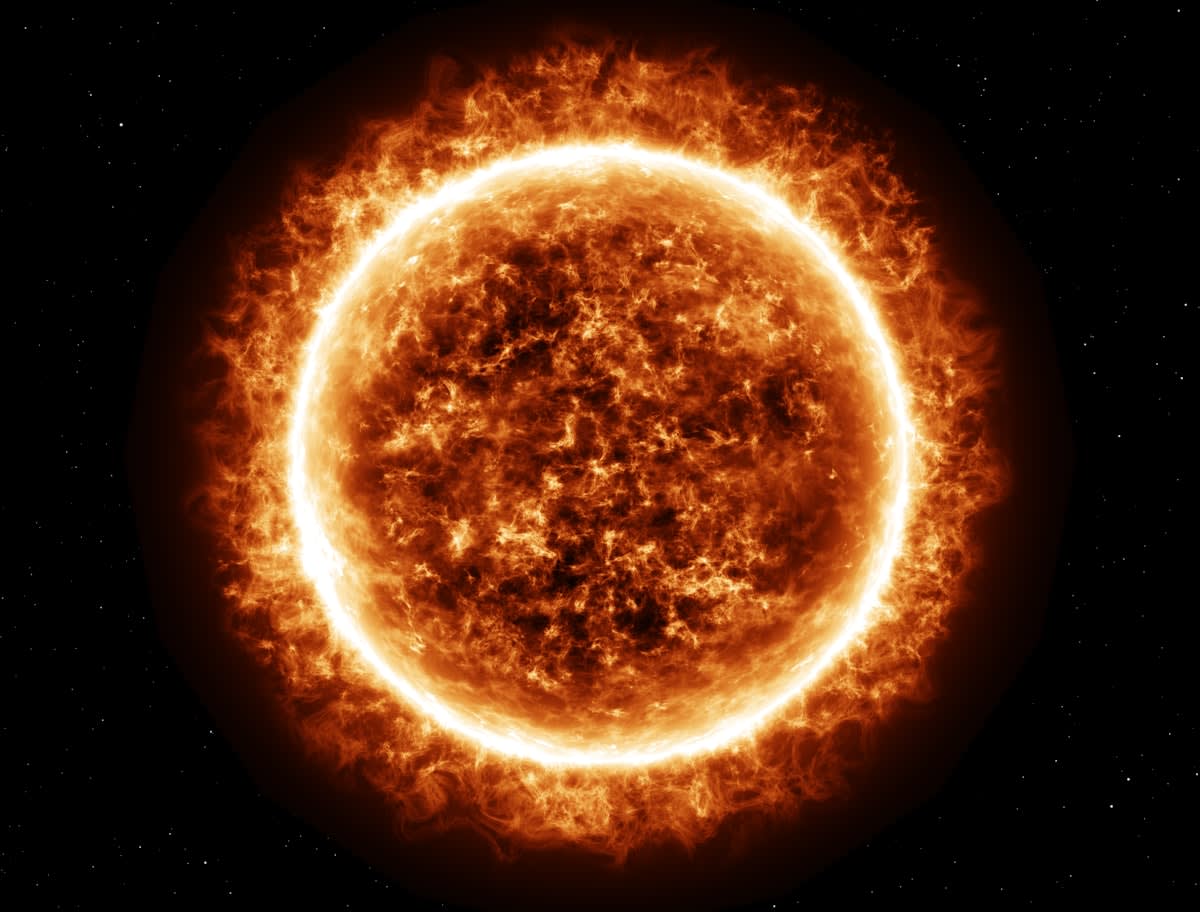
The sun does not announce its volatility with a polite warning. On July 30, 2026, Active Region 4492 unleashed a long-duration M1.9 flare, a cosmic eruption that coincided with a filament eruption near N20W67. This was not a localized event but a systemic trigger, producing an Earth-directed partial-halo coronal mass ejection (CME) and an S1 minor solar radiation storm. For the casual observer, this manifests as the aurora borealis dancing over northern U.S. states with a Kp index of four or five. For the strategic analyst, however, these are the tremors preceding a tectonic shift in how we maintain global connectivity.
Why do we treat these events as mere light shows? Because we have mistaken a temporary period of solar quiescence for a permanent state of stability. The forecast for August 2, 2026, predicting G1-G2 (Minor-Moderate) geomagnetic storm conditions, reveals the fragility of our current overhead architecture. When a CME arrives, it does not just paint the sky; it interacts with the magnetosphere, potentially disrupting the very satellites that facilitate every digital transaction and communication link across the globe.
The Orbital Fragility Gap
The vulnerability of our space assets is best illustrated by the current struggles of the LINK spacecraft. Designed by Katalyst Space to boost the orbit of NASA's Neil Gehrels Swift Observatory, the LINK spacecraft has faced significant stability issues, requiring ongoing efforts to slow its spin. If a dedicated boost spacecraft struggles with basic stabilization in a controlled environment, how do our thousands of commercial satellites fare when hit by the erratic electron flux of a solar maximum? The Swift Observatory, while vital for studying gamma-ray bursts, remains dependent on this precarious orbital choreography.
This is the systemic risk: we are launching more assets into orbit while our ability to stabilize them against solar interference remains rudimentary. The effort to restabilize LINK is a microcosm of a larger global challenge. We are building a digital civilization on a foundation of orbital assets that are essentially floating targets for solar radiation. Is the goal to simply survive the next G2 storm, or should we be redesigning the very nature of orbital logistics?
Understanding the Kp Index
The Kp index measures geomagnetic activity on a scale of 0 to 9. While a Kp 4 or 5 creates pleasing auroras in the northern hemisphere, it also signals a level of magnetic turbulence that can interfere with high-frequency radio communications and satellite operations.
The intersection of solar activity and hardware failure is not theoretical. NASA's own experience with the April 8, 2024, eclipse highlighted a documented overexposure failure in its imagery. While an eclipse is a shadow, the attempt to capture the solar corona—the sun's outer atmosphere—requires precision that the 2024 mission lacked. This failure underscores a recurring theme: our instruments often fail precisely when the data is most critical.
To rectify this, NASA is deploying a WB-57 research jet on August 12, 2026, to chase the Moon's shadow as it sweeps from Greenland through Iceland and into Spain at over 2,113 miles per hour. By implementing critical exposure-time adjustments, scientists aim to capture the corona without the failures of the past. This mission is more than a photographic exercise; it is a quest to understand the very mechanism that drives the CMEs and flares that threaten our connectivity.
From Fragility to Resilience: The Perovskite Pivot
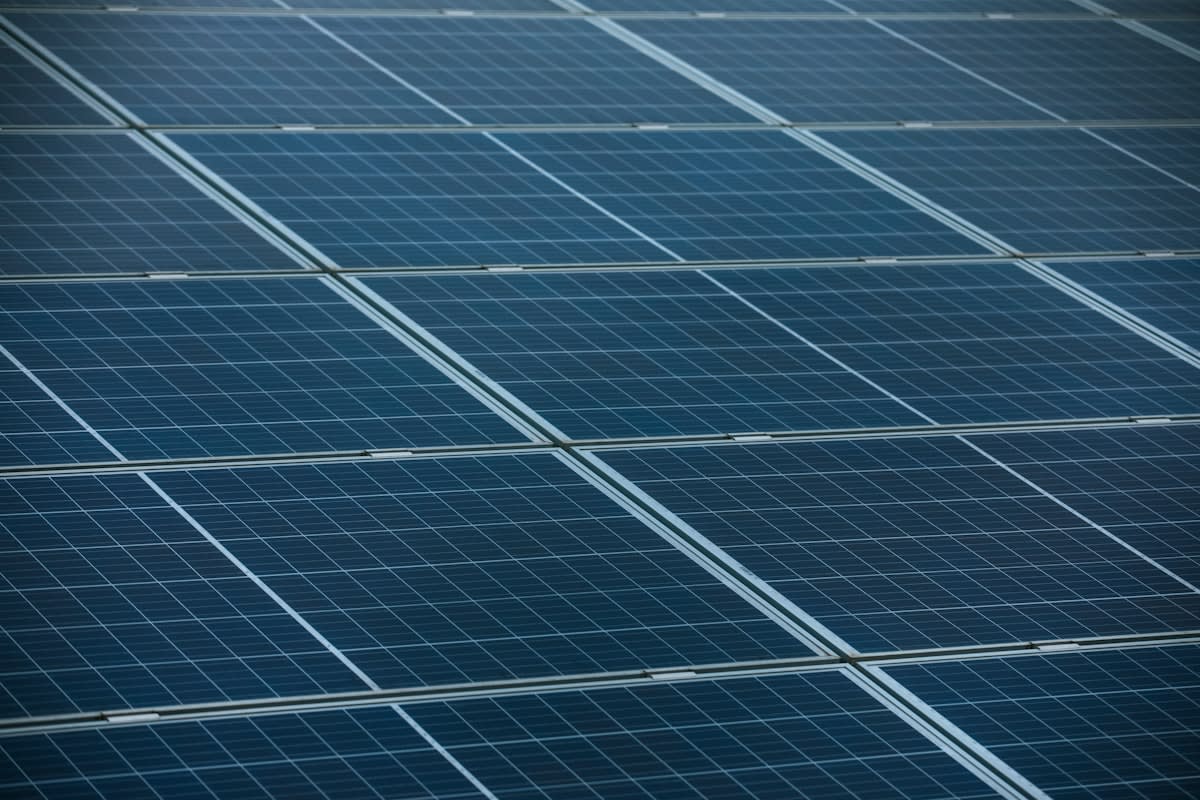
If the risk is systemic, the solution must be structural. For decades, the solar industry has been wedded to rigid, glass-faced modules. These are cumbersome and fragile. However, a strategic shift is occurring in the realm of flexible Perovskite solar cells (f-PeSCs). These cells represent a departure from the status quo, offering a pathway to energy capture that is as adaptable as the environments they inhabit.
The data on f-PeSCs is staggering. A 2026 bibliometric review in Energy Advances analyzed over 3,000 papers, revealing that certified power conversion efficiency (PCE) under standard sunlight jumped from 2.6% in 2012 to roughly 24.7% by 2024. Even more impressive is their performance under indoor lighting, where record devices reached 41% PCE. This is not just a marginal improvement; it is a leap that renders rigid silicon panels obsolete for a variety of critical applications.
| Metric | Legacy Rigid Cells | Flexible Perovskites (f-PeSCs) |
|---|---|---|
| Outdoor PCE (2024) | ~26.7% (Ceiling) | 24.7% |
| Indoor PCE (Record) | Low/Moderate | 41% |
| Market Value (2023) | Dominant | $0.35 Billion |
| Projected Value (2034) | Steady Growth | $8.81 Billion |
Why does this matter for the solar maximum? Resilience requires diversification. By moving away from massive, rigid arrays toward flexible, high-efficiency cells, we can integrate power capture into the very skin of our satellites and communication hubs. The projected market expansion of f-PeSCs from $0.35 billion in 2023 to $8.81 billion by 2034 suggests that the industry is already pivoting toward this adaptable model.
This shift allows for a decentralized energy architecture. Instead of relying on a few massive, vulnerable power sources, we can distribute energy capture across flexible surfaces. When the next M-class flare hits and electromagnetic interference spikes, a decentralized, high-efficiency power grid is far more likely to maintain critical functions than a centralized, rigid one.
The Strategic Synthesis
We must stop viewing the 11-year solar cycle as a disaster to be avoided and start viewing it as a stress test for our civilization. The events of July and August 2026—the M1.9 flare, the G1-G2 storm forecasts, and the pursuit of the solar corona via the WB-57 jet—are all signals. They tell us that our current reliance on rigid hardware and unstable orbital logistics is a liability.
The opportunity lies in the delta between our current capabilities and the potential of new materials. The growth of the f-PeSC market is not just a financial trend; it is a survival strategy. By integrating 41% efficiency indoor cells and 24.7% outdoor cells into our infrastructure, we reduce the impact of any single point of failure during a solar event.
The real risk to modern connectivity is not the sun itself, but our own inertia. We continue to launch satellites like the Swift Observatory and their boosters like LINK using paradigms that struggle with basic spin stabilization. We continue to use solar panels that are bolted to roofs rather than woven into the fabric of our technology.
If we can transition from a mindset of fragility to one of adaptation, the solar maximum becomes an engine for innovation. The pursuit of the corona on August 12 is the first step in this journey—converting a moment of darkness into a source of high-resolution data that will inform the next generation of space-hardened technology.
Ultimately, the connectivity of the future will not be defined by how well we shield ourselves from the sun, but by how effectively we integrate its volatility into our design. The transition to flexible, high-efficiency energy and stabilized orbital logistics is no longer optional. It is the only way to ensure that the next G2 storm is just another light show, and not a global blackout.