The Myth of the Solar Apocalypse
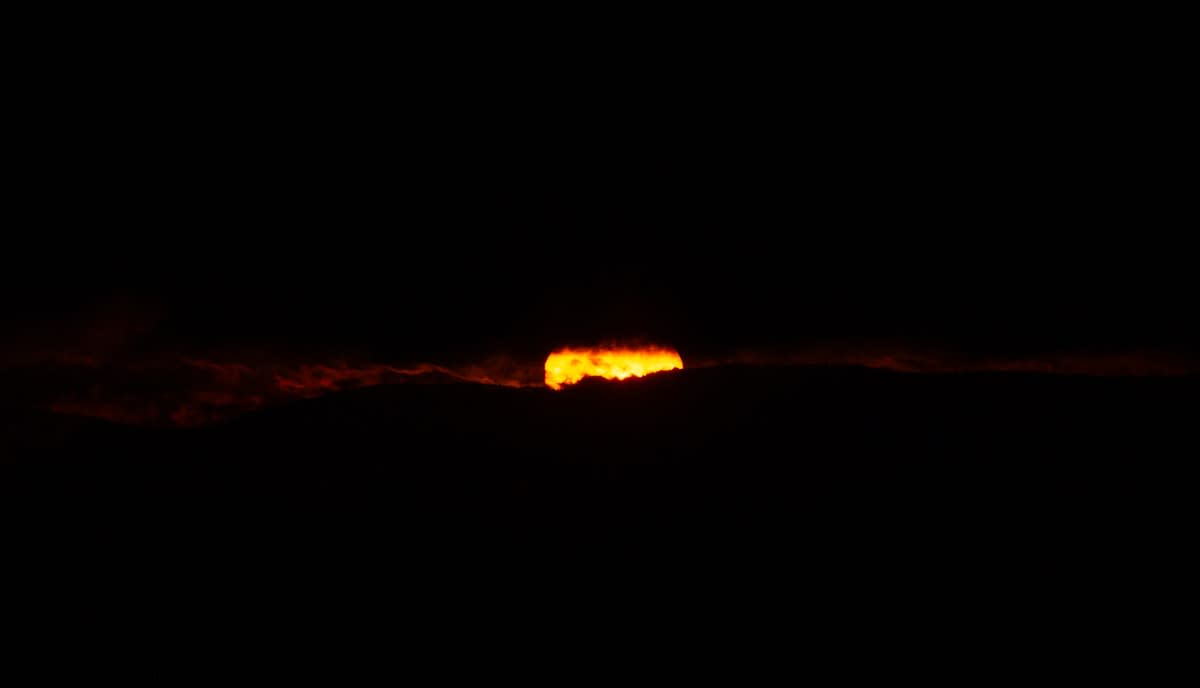
Most narratives regarding the solar maximum lean toward the cinematic. They conjure images of a global blackout, a sudden return to the 19th century, and the collapse of modern civilization in a single afternoon. This alarmism misses the strategic point. The reality of Solar Cycle 25 is not a sudden cliff, but a series of incremental tremors. These tremors are diagnostic. They reveal exactly where our global infrastructure is brittle and where our dependencies have become dangerously centralized.
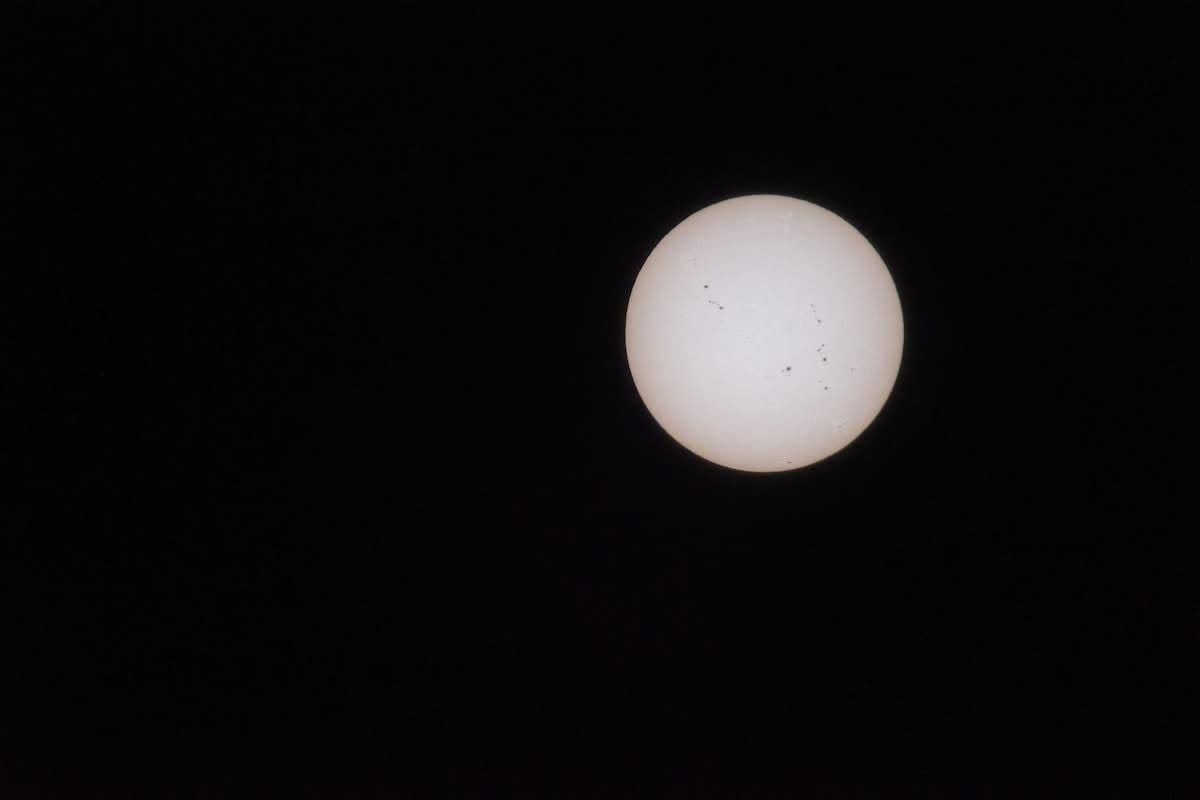
The sun operates on a roughly 11-year cycle of magnetic activity, oscillating between a minimum and a maximum. We are currently climbing toward the peak of this cycle, a period characterized by increased sunspot activity and more frequent coronal mass ejections (CMEs). While the media focuses on the beauty of aurora borealis appearing in lower latitudes, the strategic analyst sees a systemic audit. The next 18 months represent a window where the environment will actively test the limits of our electrical grids, satellite constellations, and precision timing systems.
Why should we view this as a reset rather than a risk? Because the cost of a controlled, incremental failure is orders of magnitude lower than the cost of a systemic collapse. When a transformer in a high-latitude region like Quebec or Northern Norway fails due to a geomagnetically induced current, it forces a conversation about hardware hardening. It exposes the lack of redundancy in the local grid. These small, localized disruptions are the catalysts that drive the transition toward more resilient, decentralized energy architectures.
The Architecture of Vulnerability
Our vulnerability is not a result of the sun's power, but of our own design choices. We have built a global economy on a foundation of extreme precision and high-voltage efficiency. Geomagnetically Induced Currents (GICs) occur when solar storms warp the Earth's magnetic field, inducing electricity in long-distance conductors. This is particularly dangerous for high-voltage power lines in the Nordic regions and Canada, where the geology and latitude amplify the effect. A surge of a few hundred amperes can saturate a transformer's core, leading to overheating and permanent failure.
Beyond the ground, the orbital environment is becoming increasingly crowded and fragile. Low Earth Orbit (LEO) is now home to thousands of satellites providing everything from global internet to precision agriculture data. During a solar maximum, the Earth's upper atmosphere heats up and expands. This increases the drag on satellites, effectively pulling them toward Earth. We saw this play out in early 2022 when a minor storm wiped out dozens of Starlink satellites. It was a wake-up call: our orbital infrastructure is subject to the whims of solar weather.
Then there is the invisible glue of the modern world: GNSS (Global Navigation Satellite Systems). From the timing of high-frequency trading in London and New York to the navigation of cargo ships in the Strait of Malacca, we rely on nanosecond precision. Solar flares can ionize the ionosphere, causing signal scintillation and GPS errors. While a 10-meter error might not matter for a hiker, it is catastrophic for an autonomous drone or a precision-guided landing system at a major international airport.
| Infrastructure Sector | Primary Trigger | Systemic Risk | Strategic Opportunity |
|---|---|---|---|
| Power Grids | GIC (Geomagnetically Induced Currents) | Transformer saturation and cascading blackouts | Transition to decentralized microgrids |
| Satellite Networks | Atmospheric Expansion/Drag | Orbital decay and premature decommissioning | Development of agile orbital maneuvering |
| Aviation/Maritime | Ionospheric Scintillation | Loss of HF radio and GNSS precision | Modernization of non-satellite navigation |
| Finance/Telecom | Timing Signal Drift | Synchronization failure in HFT and 5G | Implementation of local atomic clock redundancy |
The intersection of these vulnerabilities creates a compounding effect. If a solar event disrupts both the power grid and the satellite-based timing systems simultaneously, the recovery process becomes a nightmare. You cannot coordinate a grid restart if your communication channels are down and your synchronization clocks are drifting. This is the systemic loop that keeps strategic analysts awake at night.
The Contrarian Case for Controlled Failure
Conventional wisdom suggests we should do everything possible to avoid any disruption. I argue the opposite. We need the 'glitches.' A world that never experiences a minor failure is a world that is blind to its own fragility. By allowing the solar maximum to expose the weak points in our systems—without triggering a total collapse—we gain the intelligence necessary to rebuild. The 'Quiet Reset' is about using the sun as a stress-test agent to force the adoption of hardier technology.
Consider the shift toward microgrids. For decades, the centralized power model was the gold standard of efficiency. However, it is a single point of failure. A solar storm hitting a few key transmission hubs can darken an entire continent. The alternative is a cellular approach: localized energy production and storage that can disconnect from the main grid during a surge. The solar maximum provides the economic and political urgency to make this shift a reality, moving us from efficiency to resilience.
"The goal is not to build a wall against the sun, but to build a system that can bend without breaking. Resilience is the ability to fail gracefully and recover rapidly."— Strategic Infrastructure Analysis Group
We are also seeing a renaissance in non-satellite navigation. For too long, the world outsourced its sense of direction to a few constellations of satellites. The current volatility of space weather is pushing maritime and aviation sectors to reinvest in eLoran and other terrestrial-based timing and positioning systems. This redundancy is not a step backward; it is a sophisticated layering of security that ensures the global supply chain continues to move even when the ionosphere is in chaos.
Redefining Global Resilience
The next 18 months will likely see a spike in 'unexplained' hardware failures and intermittent connectivity issues. The instinctive reaction will be to treat these as isolated technical glitches. The strategic reaction is to recognize them as symptoms of a larger environmental shift. The organizations and nations that thrive will be those that stop asking 'How do we stop this?' and start asking 'How do we operate despite this?'
This requires a fundamental shift in capital allocation. We have spent the last twenty years optimizing for speed and cost. Now, we must optimize for durability. This means investing in GIC-blocking capacitors for transformers, increasing the fuel reserves for satellite station-keeping, and diversifying the timing sources for critical financial infrastructure. The cost of this hardening is significant, but it is a fraction of the cost of a total systemic outage.
The Hardening Blueprint
The resilience checklist for the solar maximum includes: 1. Implementation of Faraday shielding for critical backup controllers. 2. Diversification of GNSS sources to include terrestrial backups. 3. Deployment of automated load-shedding protocols in power grids to prevent transformer saturation.
Ultimately, the solar maximum is a reminder that we live in a dynamic, sometimes hostile, cosmic environment. Our digital civilization is a thin veneer over a very powerful physical reality. By embracing the volatility of the next 18 months, we can transition from a state of fragile connectivity to one of robust interdependence. The reset is not a threat; it is a necessity for the long-term survival of our global infrastructure.